

 English
 Español
 Português
-
+86-15669283739
-

-
Home / News / Industry News / Automatic Cat Litter Box Buyer's Guide: Features, Costs, and Smart Sourcing
Automatic Cat Litter Box Buyer's Guide: Features, Costs, and Smart Sourcing
2026-10-08
Content
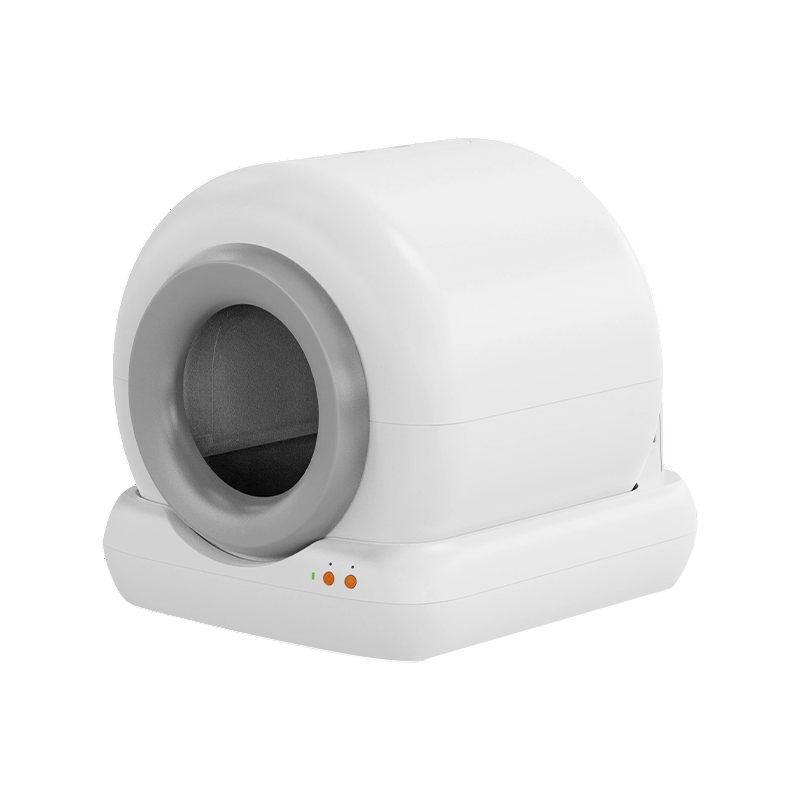
Two cats, a 7:30 a.m. meeting, and a litter box that needed scooping again. That is the moment most owners start searching for an automatic cat litter box. For the right household, it is a genuine upgrade—but only when the cleaning mechanism, safety sensors, and daily capacity match how the cats actually behave. The biggest cost is not the retail price; it is whether the unit runs reliably for the next two years. This guide walks through the mechanisms, the must-have design features, the full cost picture, and the supplier criteria that separate a dependable product from a disposable one.
How Automatic Cat Litter Boxes Work
Every automatic box replaces the scoop with one of three mechanisms, and the mechanism determines most of the user experience. The table below summarizes the practical differences.
| Mechanism | Cleaning action | Typical cycle | Noise | Best suited for |
|---|---|---|---|---|
| Rake / scoop arm | A motor-driven rake drags clumps into a sealed waste drawer | 10-20 minutes after each visit | Medium | Most households; works with standard clumping clay litter |
| Rotating drum | The chamber rotates; clumps drop into a rear tray | 5-15 minutes | Medium | Cats that dig and bury waste deeply |
| Sifting tray | A grate lifts and separates clean litter from clumps | 5-10 minutes | Low | Single-cat homes; fine-grain litter |
Sensors separate a safe box from a dangerous one. Weight sensors and infrared break-beam sensors detect when a cat re-enters the box and pause the cycle; the cycle should never continue while a paw is inside. Look for a unit whose defaults favor sensor verification over scheduled cleaning, and confirm the motor stops quickly when interrupted. A sleep mode that pauses cycles for 6-12 hours is useful when the box sits near a bedroom, and a sealed waste drawer with a carbon filter does most of the odor control.
Why Busy Multi-Cat Households Benefit
The value shows up in minutes per day, not in dramatic technology. The practical gains are:
- Faster odor control. Separating urine and stool from clean litter within minutes slows ammonia buildup. Most sealed waste drawers hold 5-7 days of clumps before needing to be emptied.
- Time recovered. Manual scooping takes 5-10 minutes per day, about 60 hours over two years; an automatic box cuts that to minutes a week.
- Health visibility. App-connected models record weight and visit frequency. A sudden rise in bathroom visits is an early clue for urinary issues, and daily weight history helps monitor senior cats.
- Travel flexibility. With a full waste drawer and enough litter, a cat can be left for a long weekend without someone coming in to scoop.
These benefits compound only when sizing is right. The general rule for multi-cat homes remains one box per cat, plus one extra; an automatic box can replace one of those stations without increasing the load on the remaining boxes.
What to Check Before Buying: A Feature Checklist
A budget unit and a premium unit can look identical in product photos; the differences are in sensors, materials, and failure modes. Use the checklist below as a screen.
| Must-have | Why it matters | Nice-to-have | Why you want it |
|---|---|---|---|
| Interruptible cleaning cycle | Prevents injury if a cat enters mid-cycle | Sleep mode | Quiet operation overnight near bedrooms |
| Tamper-resistant waste drawer | Keeps odors and insects contained | Replaceable carbon filters | Lower odor even in hot weather |
| Litter depth indicator | Correct depth prevents clumps from sticking to walls | Drawer liners | Easier, cleaner emptying |
| Sturdy frame material | Withstands enthusiastic digging without tipping | App alerts | Know when the drawer is full or the box is offline |
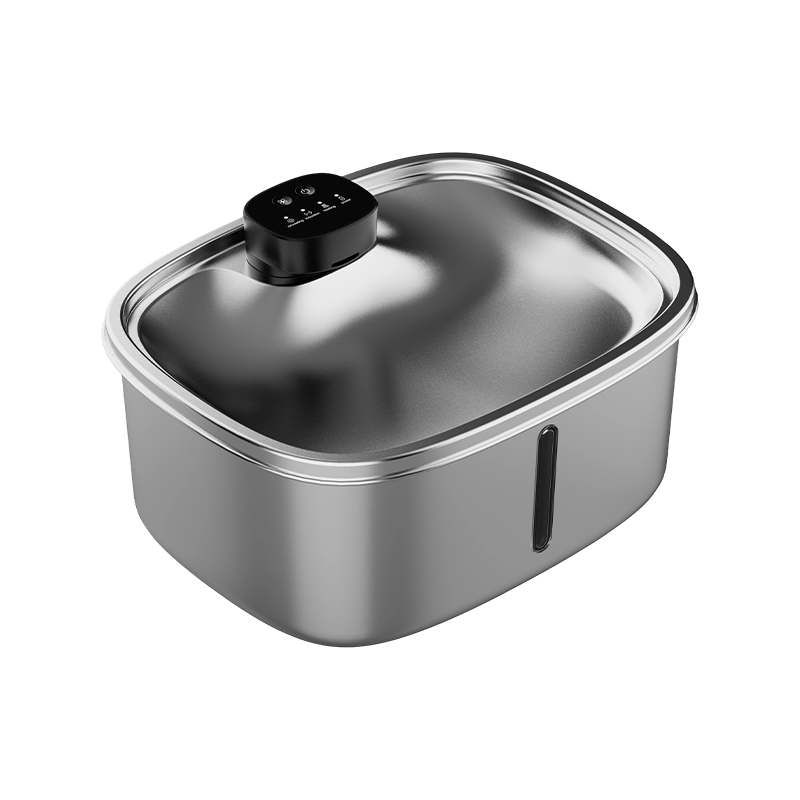
Litter compatibility is the other screen. Fine clumping clay remains the benchmark because it forms hard clumps that survive the sifting process. Crystal, wood pellet, and silica litters work only with mechanisms designed specifically for them, so a claim that a unit handles every litter deserves a test report rather than a marketing line. Capacity matters as much as the mechanism: for multi-cat or large-breed homes, a wide, deep litter surface reduces overfilling and protest behavior, and a larger stainless steel model is often the smarter primary choice.
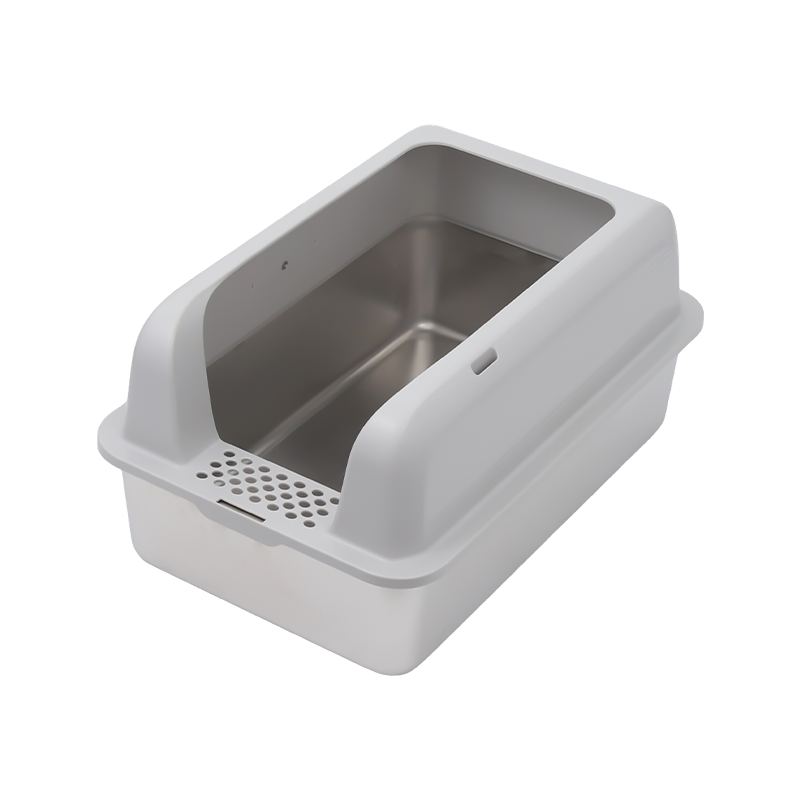
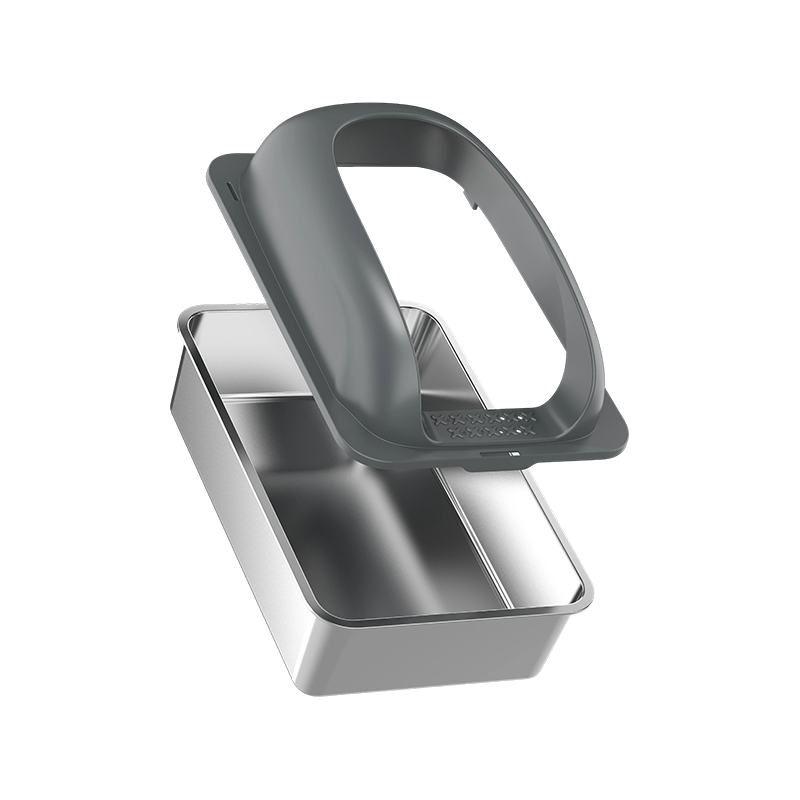 Semi-Enclosed Large Cat Litter Box with Baffle and Waste DrawerThis sizable semi-enclosed box suits multi-cat homes needing a wide, deep litter surface, while its high baffle and non-stick bottom make cleanup straightforward in daily use.View Product →
The Real 24-Month Cost: More Upfront, Comparable Ongoing
The purchase price gets the attention, but total cost of ownership is what matters. The table below uses realistic single-cat figures; actual costs depend on litter quality, cat size, and how often the drawer is emptied.
| Cost item | Manual box (24 months) | Automatic box (24 months) |
|---|---|---|
| Initial hardware | $35 | $399 |
| Clumping litter | $25 per month = $600 | $20 per month = $480 |
| Consumables (liners, filters) | $0 | $60 |
| Total | $635 | $939 |
Looked at year by year, the premium becomes clearer:
The automatic box costs roughly $360 more in the first year; from year two onward, running costs converge because an efficient compaction cycle loses little litter. The danger is not the initial price. It is consumables that quietly push the running cost above a manual routine, or a waste tray design that loses litter on every cycle. Before ordering, ask for part prices, liner dimensions, and filter lifespan, and confirm those components remain available a year later. A discontinued consumable turns a smart box into an expensive manual one.
Pitfalls That Turn Owners Against Automatic Boxes
Most negative reviews trace back to four causes, and all four are preventable.
- The cat refuses the box. Keep the old box running for one to two weeks, place the automatic unit beside it, and use the same litter. Let the cat step in and out while the mechanism is off before running a full cycle.
- Clumps stick to the drum or rake. Usually the cause is fine litter, incorrect litter depth, or humidity. Follow the depth indicator, choose a clumping clay with strong clump integrity, and improve ventilation in damp climates.
- A power cut or motor failure leaves waste locked inside. Some units cannot be emptied manually when power is lost. A non-electric backup prevents late-night crises and supports kittens or seniors that should not rely on automation.
- Odor escapes around the drawer. Replace carbon filters on schedule and wipe the drawer seal monthly.
For cats under four months old, elderly cats, or homes with unstable power, a stainless steel box is often the more dependable primary. Stainless steel does not absorb odors the way plastic does, and it tolerates disinfecting without degrading. If you are stocking a line that will sit alongside an automatic model, a non-electric splash-proof stainless box is a practical companion for consumers and a low-failure-rate option for your catalog.
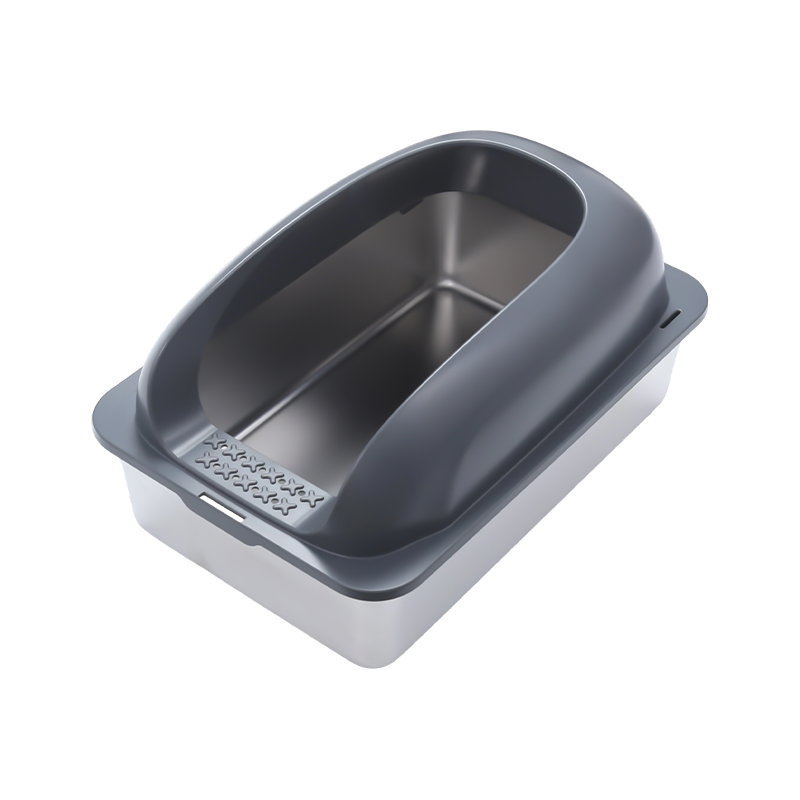
 Stainless Steel Splash-Proof Cat Litter Box for Dependable HygieneAs a non-electric option, this stainless box resists odors and disinfecting, making it a reliable companion for households where automatic units may not fit well.View Product →
What to Demand From a Supplier Before You Commit
For retailers, importers, and private-label programs, the automatic litter box decision is made at the factory, not at retail. These five questions separate a real manufacturing partner from an assembler:
- Where is the tooling made? In-house mold and injection molding capability means a draft angle, sensor boss, or seal groove can change in days, not months, and protects you from tooling transfer disputes later.
- Which components fail, and what is the test protocol? Ask for failure-rate data on the motor, sensors, and power supply; a well-designed unit should log thousands of cycles without a stalling error.
- What are the electrical certifications? For North America and Europe, confirm UL or CE/FCC compliance and the documentation trail before sampling.
- Can the app be private-labeled? For a branded program, the mobile app, firmware, and cloud backend must be separable from the supplier's own brand.
- What is the spare parts commitment? Ask for the minimum stocking period for motors, sensor boards, and liners; a multi-year commitment avoids stranded inventory.
A supplier that fits this profile is Mays (Ningbo Meace Pet Products), which operates a 45,000-square-meter factory with more than 300 employees and 50 injection molding machines. Mays designs its smart self-cleaning litter box in-house and molds the main structural parts on its own lines, giving branded buyers a single point of contact for design changes, quality control, and spare parts. If you are evaluating a smart box for a new SKU, this is the type of vertically integrated manufacturing partner to look for.
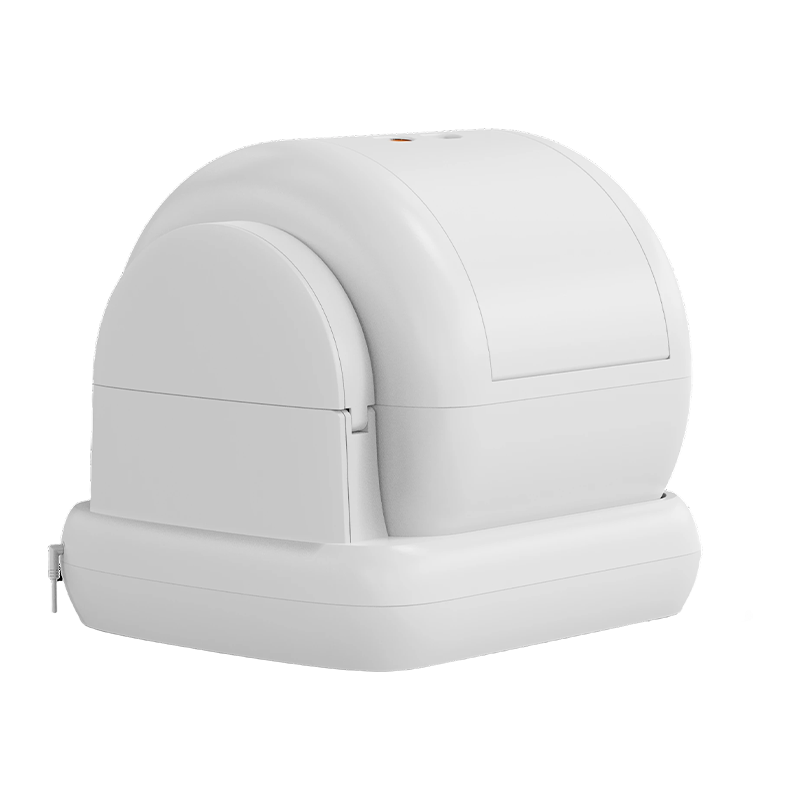 Smart Self-Cleaning Cat Litter Box with App Control and Large CapacityThis vertically integrated supplier's smart box adds automatic waste removal and remote monitoring, giving buyers a single point of contact for design, quality, and spare parts.View Product →
For a broader view of where the category is heading, read our industry analysis of smart pet litter boxes, which covers how AI and IoT are reshaping the market.
The best automatic cat litter box for a household is the one whose mechanism matches the cats, whose sensors make it interruption-safe, and whose consumables stay reasonably priced over two years. For a brand or retail buyer, the same logic applies to the supplier: verify tooling capability, demand failure-rate data, confirm certifications, and negotiate a spare parts commitment. Answer those questions first, and the product itself usually takes care of the rest.

Contact Information
No. 2, Macaotou Road, Mazhu Town, Yuyao City, Zhejiang Province, China
+86-15669283739
Copyright © Ningbo Meace Pet Products Co., Ltd. Rights Reserved
