

 English
 Español
 Português
-
+86-15669283739
-

-
Pet Grooming Tools: Blow Dryers, Combs & Professional Kit Guide
2026-03-12
Content
- 1 Introduction to Pet Care Tools: More Than Just a Brush
- 2 Why You Need Professional-Grade Pet Grooming Tools?
- 3 Exploring Pet Blow Dryers: Why Velocity Matters
- 4 The Essential Pet Comb Guide: Choosing and Using the Right Tool for Each Coat Layer
- 5 Choosing Tools Based on Coat Type
- 6 Building a Complete Pet Grooming Kit: What to Include and Why
- 7 How to Maintain Your Pet Grooming Tools
- 8 References
Introduction to Pet Care Tools: More Than Just a Brush
Every pet owner knows the experience: a dog shaking loose a cloud of fur across the living room, a cat presenting a matted flank that took weeks to develop unnoticed, or a rabbit whose coat has silently become a tangled mass underneath a perfectly tidy topcoat. These are not signs of a neglectful owner they are signs of a gap between intention and the right pet grooming tool for the job. The good news is that the right equipment, used regularly at home, closes that gap entirely.
Professional pet grooming has become a significant industry the global pet grooming market was valued at over USD 9.5 billion in 2023 and continues to grow as pet ownership rises and owners invest more in animal welfare. But professional grooming visits, while valuable, are not a substitute for the consistent at-home care routine that keeps a pet's coat, skin, nails, and ears in genuinely healthy condition between appointments. The combination of professional-grade pet grooming tools used at home and periodic professional grooming visits is the optimal model for most pet owners and achieving it starts with understanding what tools are needed, why quality matters, and how to use them correctly.
The Benefits of Regular At-Home Grooming
Regular at-home grooming delivers benefits that go well beyond a tidy-looking coat. Done consistently and with appropriate tools, it is an active health management practice with measurable outcomes for your pet's physical wellbeing:
- Prevention of matting: Mats form when shed hairs become tangled with live coat rather than falling away naturally. Left unaddressed, mats tighten, pull on the skin, trap moisture, and create warm, dark environments ideal for bacterial and fungal infections. In severe cases which are far more common than most owners realize mats must be shaved rather than combed out, requiring a professional visit that could have been avoided by regular brushing. Brushing three to four times per week prevents mat formation entirely in most coat types, compared to the weeks of development time that makes mat removal difficult.
- Skin health monitoring: Running a brush or comb through the coat forces a close inspection of the skin surface that would otherwise go unnoticed. Lumps, rashes, parasite activity (fleas, ticks, mites), hot spots, dry patches, and the early stages of skin infections are all detectable during a regular grooming session often weeks before they would become clinically significant. Early detection of skin conditions dramatically reduces treatment time, cost, and discomfort for the pet.
- Circulation and coat condition: Brushing stimulates the skin's sebaceous glands to distribute natural oils along the hair shaft, producing a shinier, healthier coat. The mechanical stimulation of brushing also increases local skin circulation. Dogs and cats with regularly brushed coats typically show measurably better coat condition lower dander levels, reduced static electricity buildup, and improved gloss compared to those whose grooming is purely reactive.
- Parasite management: A fine-toothed pet comb drawn through the coat during every grooming session is the most reliable non-chemical method for early flea and tick detection. Finding a flea or two in a weekly combing session prevents the 6–8 week development cycle from producing a household infestation one of the most common and avoidable pet ownership problems.
- Reducing allergens in the home: The Asthma and Allergy Foundation of America estimates that approximately 30% of people with allergies have reactions to cats and dogs. Regular grooming including brushing, deshedding with an undercoat rake, and proper drying after bathing dramatically reduces the quantity of dander and shed hair in the home environment, improving quality of life for household members with sensitivities.
How the Right Tools Save Time and Reduce Pet Anxiety?
The experience of grooming for both the pet and the owner is fundamentally shaped by the tools being used. An owner attempting to brush a double-coated dog with a human hairbrush will spend three times as long achieving a fraction of the result, while the dog experiences the repetitive, ineffective dragging as increasingly unpleasant. The session ends with a frustrated owner, an anxious dog, and a coat that still has most of its dead undercoat intact. Repeat this experience a few times and the dog will begin avoiding grooming sessions entirely creating a cycle of avoidance, increasing anxiety, and deteriorating coat condition.
The right professional pet grooming tool reverses this dynamic. A proper slicker brush for dogs glides through the coat, collecting dead hair and breaking small tangles at the first pass. An undercoat rake reaches the dense inner layer that no surface brush can access, removing the accumulated shed hair that causes the bulk of shedding and odor problems in double-coated breeds. A high-velocity pet blow dryer reduces drying time from 45–60 minutes with a standard human hair dryer to 10–15 minutes dramatically reducing the duration of the least-enjoyed part of the grooming process.
When grooming sessions are efficient, thorough, and low-stress, pets learn that grooming is a neutral or positive experience. This habituation built through repeated positive associations with the tools and process is the single most valuable investment a pet owner can make in long-term grooming compliance. A dog or cat that accepts grooming calmly is one that will be easy to manage throughout its life for veterinary examinations, professional grooming visits, and emergency health checks.
Why You Need Professional-Grade Pet Grooming Tools?
The impulse to use whatever grooming tools are already in the household a human hairbrush, a standard towel, a household blow dryer is understandable and extremely common among first-time pet owners. It is also a significant mistake, and understanding precisely why helps clarify what to look for when building a proper pet grooming kit.
Difference Between Human and Pet Grooming Products
Human and pet hair differ in fundamental ways that make human grooming tools structurally inappropriate for pets, regardless of how similar they appear on the surface:
- Coat structure and density: Most dogs and cats have dual-layer coats a fine, dense undercoat and a coarser outer guard coat that human grooming tools are not designed to penetrate. Human hairbrushes act only on the outer surface, leaving the undercoat entirely unaddressed. Professional pet combs and brushes are engineered with pin lengths, wire gauges, and tooth spacings specifically calculated to reach through the guard coat into the undercoat layer where the majority of shedding, matting, and debris accumulation occurs.
- Skin pH and sensitivity: A dog's skin has a pH of approximately 6.2–7.4 significantly more neutral than human skin (pH 4.5–5.5). This difference makes many human grooming products (shampoos, conditioners, treatments) inappropriate for pets, as human product formulations are optimized for the acidic human skin environment and can disrupt the pet's skin barrier when used regularly. Professional pet grooming products are formulated specifically for the pet's skin pH range.
- Temperature sensitivity: Pet skin is more sensitive to heat than human skin in several contexts. Human blow dryers, for example, operate at temperatures of 60–100°C on high settings temperatures that can cause thermal burns on dog skin, which lacks the same insulating thickness as the human scalp. A professional dog hair dryer is engineered to deliver high airflow at lower temperatures, providing rapid drying through air volume rather than heat the key distinction that makes specialized pet dryers a safety requirement, not an optional upgrade.
- Tool geometry and ergonomics: Professional pet grooming tools are shaped for the task of working on an animal rather than a cooperative human client. Handles are designed for one-handed operation while the other hand manages the pet. Brush heads are sized and angled for working on curved body surfaces in the specific orientations that pet grooming requires. These ergonomic differences translate directly into session efficiency and reduced hand fatigue during extended grooming work.
Long-Term Cost Savings vs. Professional Groomers
Professional grooming services represent a significant ongoing cost for pet owners, particularly those with breeds requiring frequent maintenance. Average professional grooming costs in the United States range from $40–$90 per session for a medium-sized dog, with large breeds or complex coats reaching $100–$150 per visit. For dogs needing grooming every 6–8 weeks, this represents an annual cost of $280–$780 or more per dog and significantly higher for breeds with demanding coat requirements like Poodles, Bichon Frises, or Cocker Spaniels.
A complete professional pet grooming kit including a quality pet blow dryer, slicker brush, undercoat rake, fine-toothed combs, nail clippers, and supporting tools typically costs $150–$350 as a one-time investment for professional-grade equipment. For a pet owner spending $400+ per year on professional grooming, the tool investment pays for itself within the first year, after which the ongoing cost reduction is essentially the full grooming bill minus the time spent doing it at home.
The realistic model for most pet owners is not to eliminate professional grooming entirely but to reduce its frequency from every 6–8 weeks to every 12–16 weeks by handling the between-visit maintenance at home with professional-grade tools. This hybrid approach typically saves $200–$400 per year per dog while maintaining the professional standard of coat management that at-home tools alone may not achieve for complex breed-specific styling.
Exploring Pet Blow Dryers: Why Velocity Matters
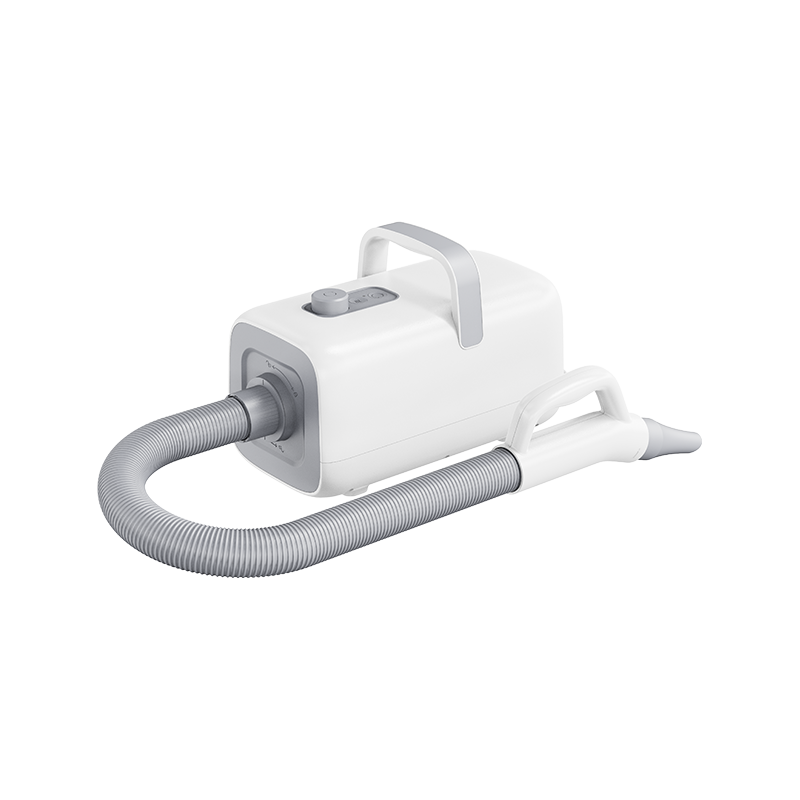
Of all the tools in a professional pet grooming kit, the pet blow dryer is perhaps the most dramatically different from its household equivalent and the one where using the wrong tool creates the most significant risk. Understanding why velocity (airflow) rather than heat is the operative principle of professional pet drying explains why a dedicated dog hair dryer is essential equipment for any serious at-home grooming program.
High-Velocity vs. Standard Dryers
The fundamental difference between a professional high-velocity pet blow dryer and a standard human hair dryer is their operating philosophy. Human hair dryers use heat as the primary drying mechanism hot air raises the temperature of the hair and skin surface, accelerating moisture evaporation. Airflow is secondary. Professional pet blow dryers reverse this priority: high-velocity airflow is the primary drying mechanism, with heat as a minor secondary contributor or, in many professional models, entirely absent (cool-air-only operation).
A professional high-velocity pet blow dryer delivers airflow at 35,000–70,000 RPM motor speed, producing air velocities of 150–200 mph at the nozzle. This air velocity is sufficient to physically force water out of the coat rather than simply evaporating it the stream of high-pressure air separates the coat, blows surface water droplets away from the skin, and reaches the dense undercoat layer that heat-based drying cannot penetrate effectively. The result is a coat that is not only faster to dry but is also straighter, fluffier, and better finished than heat-dried coats because the high-velocity air physically straightens the coat while removing moisture.
The comparison in practical terms is striking. Drying a medium-sized double-coated dog with a standard human hair dryer takes 45–75 minutes and still leaves the undercoat partially damp a condition that promotes hot spots, bacterial skin infections, and odor if the dog is not fully dried. The same dog dried with a high-velocity pet blow dryer takes 10–20 minutes to full dryness including the undercoat, with a better-quality finish and less heat exposure to the skin.
Safety Features: Heat Control and Noise Reduction
For at-home use, two safety and comfort features of a pet blow dryer are non-negotiable: adjustable heat control and active noise reduction or management.
- Heat control: A quality pet blow dryer offers at least two and ideally three heat settings, including a cool/unheated option. The ability to operate on cool air is critical for breeds with short muzzles (brachycephalic breeds such as Pugs, Bulldogs, and French Bulldogs) that are at risk of heat stress, for puppies and senior dogs with more sensitive skin, and for finishing the coat after the bulk of moisture has been removed. Most professional groomers use the heated setting only for the first few minutes to assist initial drying, then switch to cool air for coat finishing a practice that minimizes heat exposure while maintaining efficiency.
- Noise reduction: High-velocity motors are inherently loud standard industrial pet dryers operate at 70–85 decibels, equivalent to a vacuum cleaner at close range. Many pets, particularly noise-sensitive breeds and young puppies, find dryer noise highly stressful, and this stress can generalize to the entire grooming experience if not managed carefully. Quality at-home pet blow dryers designed for noise reduction use motor vibration dampening, acoustic housing, and smoothed airflow pathways to reduce operating noise to 60–70 dB still audible but significantly less alarming than professional salon dryers. Gradual desensitization running the dryer near the pet at low speed before first use further reduces noise-related anxiety.
- Overheat protection: Built-in thermal cutoff protection is a standard safety feature in quality pet dryers the motor shuts off automatically if the internal temperature reaches a preset limit, preventing both motor damage and the risk of thermal injury from sustained use on a single body area.
- Variable airspeed control: Multiple airspeed settings allow the operator to reduce airflow when working around the face, ears, and eyes areas where full-velocity airflow is uncomfortable and potentially distressing for the pet. Starting every drying session at low speed while the pet acclimatizes, then increasing to full velocity for body drying, is the recommended technique for maintaining pet cooperation through the drying process.
The Essential Pet Comb Guide: Choosing and Using the Right Tool for Each Coat Layer
The pet comb category is more diverse than most owners realize and this diversity exists because different combing tasks require fundamentally different tool designs. Using a single multi-purpose comb for every aspect of coat care is like using a single screwdriver for every fastener in a mechanical repair: it works for some tasks and fails badly for others. A professional grooming approach requires at minimum three distinct comb types, each optimized for its specific function in the grooming sequence.
Slicker Brushes for Detangling
The slicker brush is the cornerstone of the professional pet grooming kit and the first tool deployed in any grooming session. Its defining feature is a flat or slightly curved pad studded with fine, closely spaced wire pins set at an angle typically bent at approximately 45° from vertical. This pin geometry allows the brush to enter the coat, catch loose and shed hair on the pins, break small tangles at the root, and exit the coat without significantly disturbing the overall hair direction.
The slicker brush for dogs is available in several sizes and pin configurations targeting different coat types:
- Soft pin slicker brushes: Fine, flexible pins with rounded tips designed for puppies, cats, and dogs with thin or sensitive skin. The flexible pins deflect rather than penetrate at the skin level, reducing the risk of "slicker burn" (the irritation caused by over-aggressive brushing with stiff pins).
- Medium pin slicker brushes: The standard working tool for medium to long-coated adult dogs. Pin stiffness is sufficient to penetrate the guard coat and reach the upper layers of the undercoat while remaining manageable for regular use. This is the slicker brush recommended for daily or every-other-day maintenance brushing on breeds such as Golden Retrievers, Collies, Setters, and Spaniels.
- Firm pin slicker brushes: Stiffer pins for dense, heavy coats appropriate for breeds like Chow Chows, Malamutes, and Newfoundlands whose coat density requires more aggressive pin penetration to be effective. Should be used with a lighter hand pressure to avoid skin irritation.
- Self-cleaning slicker brushes: Feature a retractable pin mechanism that releases collected hair from the brush pad by pressing a button a significant time-saving feature during high-shedding sessions where the brush pad fills rapidly.
Correct slicker brush technique is as important as tool selection. Line brushing the professional standard involves parting the coat horizontally with one hand and brushing the exposed lower section before moving up to the next layer, ensuring every section of coat from skin to tip is addressed rather than only the surface. This technique prevents the common mistake of surface brushing that leaves mats and tangles intact beneath an apparently tidy outer coat.
Undercoat Rakes for Deshedding
The undercoat rake is the single most impactful tool for double-coated breeds the category that includes the most popular dog breeds globally: German Shepherds, Huskies, Golden Retrievers, Labradors, Bernese Mountain Dogs, and dozens of others. These breeds shed their dense undercoat seasonally (and continuously to varying degrees year-round), and no amount of surface brushing addresses this shedding effectively because the undercoat is physically below the reach of standard brushes.
The undercoat rake features widely spaced, longer, and heavier tines compared to a slicker brush designed to pass through the guard coat and engage the undercoat layer directly. Professional-grade undercoat rakes come in two primary configurations:
- Single-row undercoat rake: A single line of tines with rounded tips that penetrate deeply into the coat. Effective for removing loose, ready-to-shed undercoat from thick-coated breeds. The wide tine spacing prevents the rake from catching on the guard coat while still engaging the undercoat the key engineering challenge of undercoat tool design.
- Double-row undercoat rake: Two staggered rows of tines providing higher coverage per stroke. More efficient for large-breed deshedding sessions where working time is a significant factor. Requires more care in mat areas where doubled tine contact can pull more aggressively than a single-row rake.
The impact of regular undercoat rake use on household shedding is dramatic and measurable. Dog owners who add a weekly undercoat raking session to their grooming routine typically report a 60–80% reduction in visible shed hair in the home within the first month the undercoat hair that would otherwise have shed naturally throughout the week is instead removed in a controlled session. This is one of the most immediately satisfying demonstrations of the right professional pet grooming tool making a visible difference in daily life.
Fine-Toothed Combs for Finishing and Flea Checks
Fine-toothed combs are the finishing and inspection tools of the pet grooming sequence used after brushing and raking to complete coat preparation and to conduct systematic parasite and debris checks. Their closely spaced metal teeth serve functions that no brush can replicate:
- Final tangle detection: Running a fine-toothed comb through the coat after slicker brushing confirms that all tangles and mats have been addressed the comb will snag on any remaining tangle that the brush passed over. This final check prevents the embarrassing situation of bringing a pet to a groomer or veterinarian with remaining mats despite recent brushing.
- Flea detection: Flea combs have extremely fine, closely spaced teeth specifically designed to physically catch and remove fleas, flea dirt (flea feces), and flea eggs from the coat. Running a flea comb through the coat over a white paper surface makes flea dirt immediately visible it appears as reddish-black specks that leave a rust-colored stain when dampened. This simple check during every grooming session is the most reliable early flea detection method available to at-home groomers.
- Face and paw area grooming: Fine-toothed combs are the appropriate tool for delicate areas around the eyes, within the ear feathering, between the toes, and on the face where the larger surface area of slicker brushes is inappropriate. The precise control of a single comb row allows careful grooming of these sensitive areas without disturbing the surrounding hair or causing discomfort.
- Coat straightening for finishing: Professional groomers use fine-toothed combs as the final finishing tool after drying the comb aligns the coat uniformly, removes the last traces of static electricity, and produces the polished "finished" appearance associated with professional grooming quality.
Choosing Tools Based on Coat Type
The single most common mistake in pet grooming tool selection is choosing tools based on personal preference or brand recognition rather than the specific coat type of the pet. A tool perfectly suited to a short-coated Beagle can be entirely ineffective on a long-coated Shih Tzu, and vice versa. Coat type not breed name is the correct starting point for building a grooming tool kit, and understanding the categories of coat type makes selection systematic and predictable.
Short, Wiry, and Long-Haired Considerations
Pet coats broadly fall into five functional categories, each with distinct grooming requirements:
- Short smooth coat (Boxers, Beagles, Dalmatians, Dobermans): The simplest coat to manage. Minimal matting risk; primary grooming need is loose hair removal and skin stimulation. Tools required: rubber curry brush or glove mitt for loosening dead hair; fine-toothed comb for flea checking; chamois or hound glove for finishing. A slicker brush is largely unnecessary for this coat type the short hair provides nothing for the pins to work through.
- Double coat medium length (Labrador Retrievers, Huskies, German Shepherds, Golden Retrievers): The coat type requiring the most active deshedding management. Tools required: slicker brush for dead hair and light tangle removal; undercoat rake (essential non-negotiable for this coat type); fine-toothed metal comb for finishing; high-velocity pet blow dryer for bathing sessions. Grooming frequency: at least two to three times per week, increasing to daily during seasonal blowing coat periods.
- Long silky coat (Afghan Hounds, Yorkshire Terriers, Maltese, Setters): High mat risk due to fine, tangle-prone hair texture. Tools required: wide-tooth comb for initial detangling; slicker brush for systematic mat removal using line brushing technique; fine-toothed comb for finishing; detangling spray to assist combing; small scissors or dematting comb for stubborn mats. Daily brushing is required to prevent mat formation; skipping more than two days creates compounding tangles.
- Curly / wavy coat (Poodles, Bichon Frises, Labradoodles, Portuguese Water Dogs): Does not shed in the traditional sense dead hair remains entangled in the growing coat rather than falling away. High mat risk concentrated in friction zones (behind ears, armpits, groin). Tools required: slicker brush with wide pin spacing; wide-tooth metal comb; professional clippers for length management (these coats require regular cutting, not just brushing). Professional grooming every 6–8 weeks is typically unavoidable for these breeds, but at-home brushing every 2–3 days dramatically reduces mat severity at grooming appointments.
- Wiry / harsh coat (Terriers, Schnauzers, Wire Fox Terriers): The outer guard coat has a stiff, bristly texture that requires hand-stripping (pulling dead outer coat by hand) for breed-standard maintenance, though most pet owners opt for clipping instead. Tools required: stripping knife or stripping comb (for hand-stripping maintenance); slicker brush for undercoat removal; fine-toothed comb for finishing. This coat type does not mat easily and sheds relatively little, making it one of the lower-maintenance categories.
The following table provides a structured reference for matching grooming tools to coat type:
| Coat Type | Example Breeds | Primary Tools Needed | Grooming Frequency | Key Challenge |
|---|---|---|---|---|
| Short smooth | Boxer, Beagle, Dalmatian | Rubber mitt, fine comb, chamois | Weekly | Fine shed hair on furniture/clothing |
| Double coat (medium) | Husky, Lab, German Shepherd | Slicker brush, undercoat rake, metal comb, blow dryer | 2–3× per week; daily during shedding season | Heavy seasonal shedding, undercoat management |
| Long silky | Maltese, Afghan, Yorkshire Terrier | Wide-tooth comb, slicker brush, dematting comb, detangling spray | Daily | Rapid mat formation, high tangles |
| Curly / wavy | Poodle, Bichon, Labradoodle | Slicker brush (wide pin), metal comb, clippers | Every 2–3 days | Non-shedding coat grows continuously, dense mats |
| Wiry / harsh | Schnauzer, Wire Fox Terrier | Stripping comb, slicker brush, fine comb | Weekly–Bi-weekly | Coat texture maintenance, hand-stripping |
Sensitive Skin and Hypoallergenic Needs
Pets with sensitive skin, skin allergies, or dermatological conditions require modifications to both tool selection and grooming technique to avoid aggravating the skin barrier during what should be a health-supporting activity.
- Soft-pin slicker brushes: Pets with atopic dermatitis, food allergy-related skin reactions, or chronic dry skin benefit from soft-pin slicker brushes whose flexible tines are less likely to abrade inflamed or sensitive skin. The gentle stimulation of brushing with soft pins also supports the natural oil distribution that helps maintain the skin barrier without the risk of mechanical irritation from firm pins.
- Rubber and silicone tools: For pets whose skin reactions make any metal tool uncomfortable, rubber grooming gloves and silicone brush heads provide effective surface hair removal and skin massage without any risk of metal contact irritation. While not as effective as professional metal tools for undercoat management, rubber tools are appropriate as primary maintenance tools for sensitive-skinned pets and as a supplementary daily light-grooming tool alongside periodic full grooming sessions.
- Hypoallergenic shampoo compatibility: When building a grooming kit for a pet with skin allergies, the shampoo and conditioner selection is as important as the tool selection. Veterinary-recommended hypoallergenic shampoos (oatmeal-based, soap-free, fragrance-free formulations) should be the default for any pet with documented skin sensitivities. The high-velocity pet blow dryer is particularly valuable for sensitive-skinned pets after bathing rapid, thorough drying prevents the prolonged skin dampness that exacerbates bacterial and fungal skin conditions common in atopic dogs.
- Reduced session frequency and duration: For pets with active skin conditions, shorter, more frequent gentle grooming sessions are preferable to longer, less frequent intensive sessions that risk over-stimulating inflamed skin. Working with a veterinary dermatologist to establish a grooming protocol appropriate for the specific skin condition ensures that the grooming program supports rather than disrupts the management plan.
Building a Complete Pet Grooming Kit: What to Include and Why
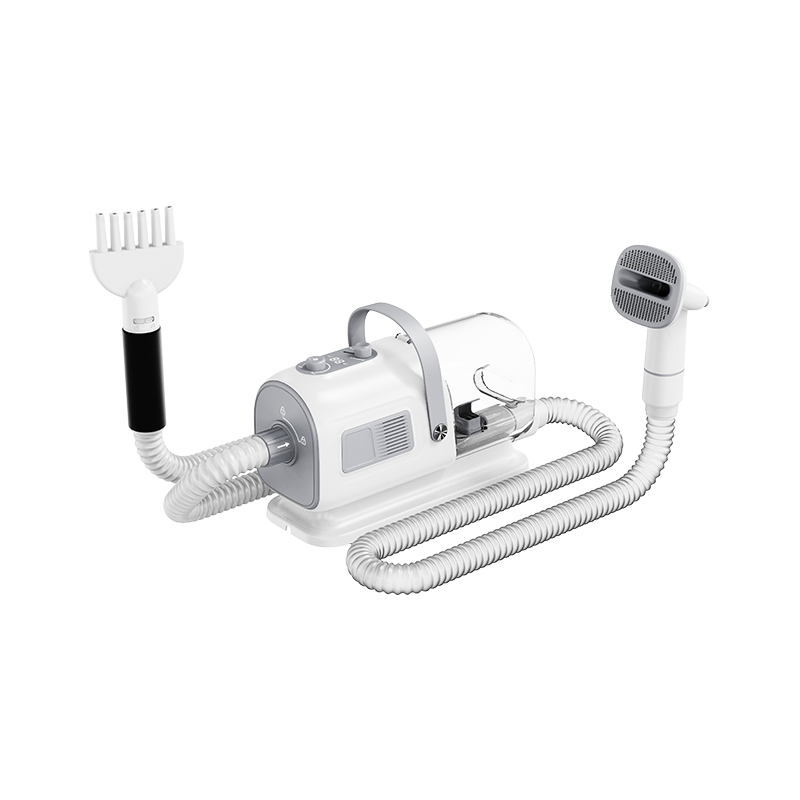
A professional pet grooming kit is not a single product it is a curated collection of tools that collectively cover the full grooming sequence from initial coat preparation through bathing, drying, finishing, and health inspection. The right kit enables an owner to handle the complete at-home grooming program without gaps that require workarounds or compromise on quality. The following components represent the core of a well-specified professional at-home kit:
- Slicker brush (size and pin type matched to coat): The daily workhorse. Should be selected by coat type as described above, with self-cleaning mechanism preferred for high-shedding breeds.
- Undercoat rake: Essential for any double-coated breed; unnecessary for single-coated or smooth-coated pets. Single-row for most uses; double-row for large breeds.
- Metal wide-tooth comb: For initial detangling of long-coated breeds before slicker brushing working a wide-tooth comb through the coat first reduces the resistance the slicker brush encounters and makes the session faster and less uncomfortable for the pet.
- Fine-toothed flea comb: For finishing and systematic flea/parasite checks. Non-optional as a health management tool regardless of coat type.
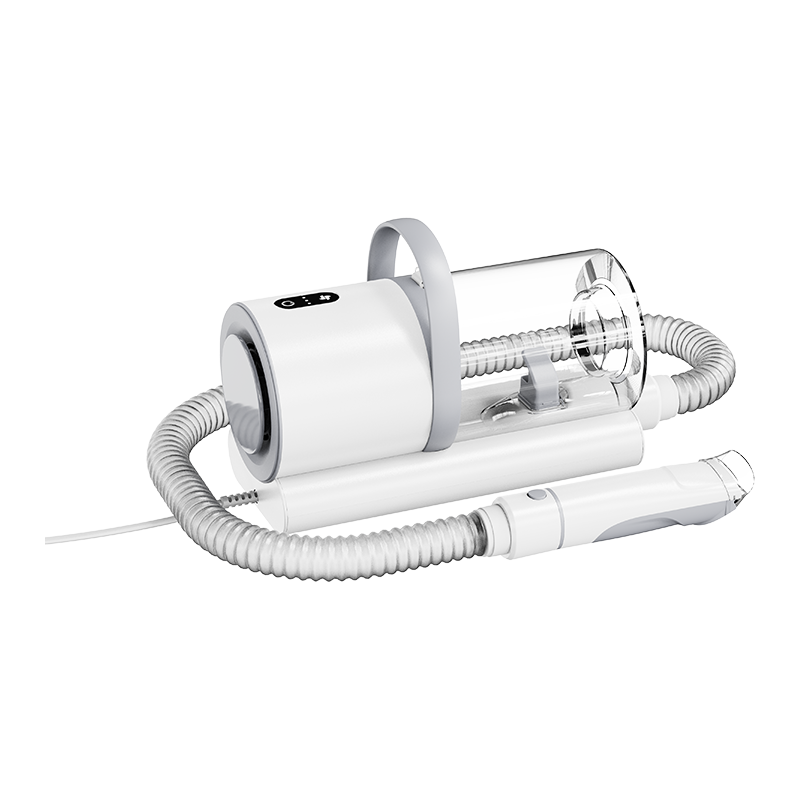
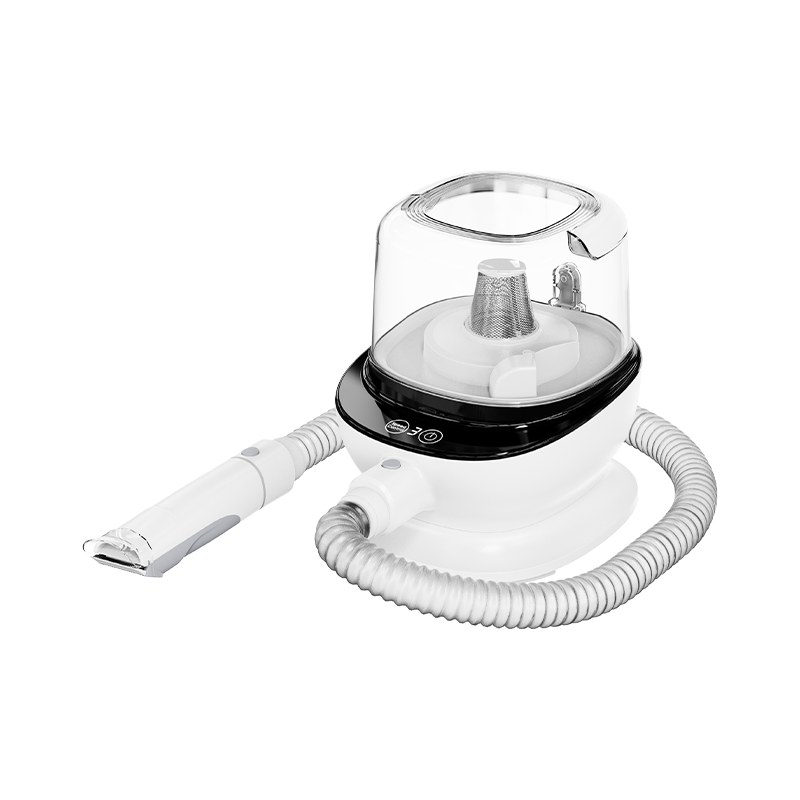
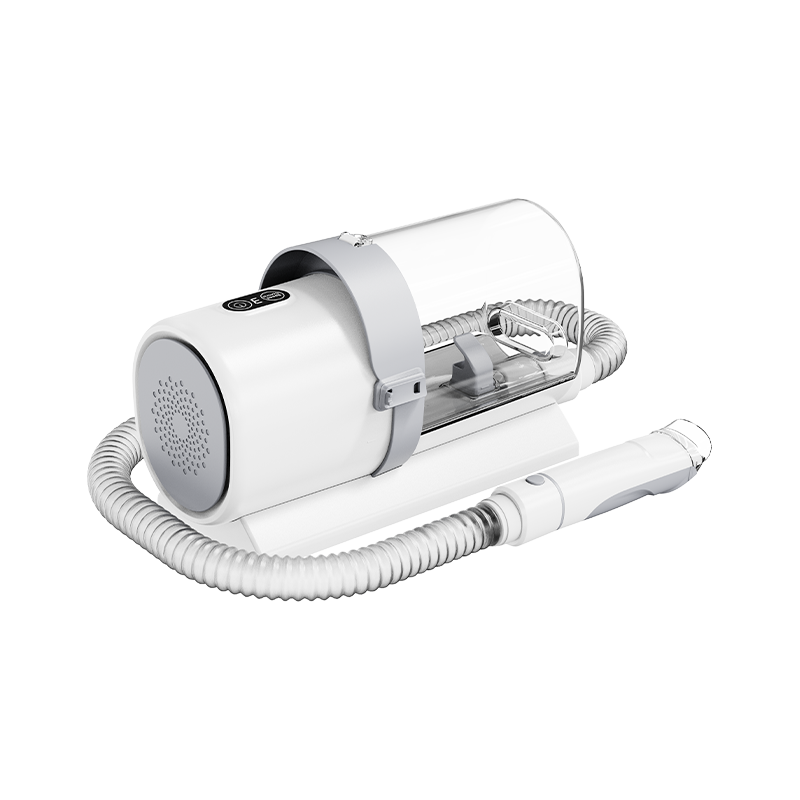
- High-velocity pet blow dryer: For post-bath drying. The single most impactful purchase in the kit for owners who bathe their pets at home. Look for: adjustable heat settings (including cool air), variable airspeed, noise reduction design, and overheat protection.
- Nail clippers or grinder: Regular nail maintenance is a health requirement overgrown nails alter gait, cause discomfort, and increase the risk of nail breakage. Scissor-type clippers for cats and small dogs; guillotine or grinder for large dogs.
- Ear cleaning solution and cotton pads: Weekly ear inspection and monthly cleaning is appropriate for most dogs; weekly for floppy-eared breeds prone to ear infections (Cocker Spaniels, Basset Hounds, Golden Retrievers).
- Non-slip grooming mat: A rubber-backed mat on the grooming surface reduces pet anxiety by providing secure footing dogs are significantly less anxious on grooming surfaces where they cannot slip or slide, making every grooming task easier and faster.
| Tool | Function | Required For | Professional Grade Indicator | Approx. Cost Range |
|---|---|---|---|---|
| Slicker brush for dogs | Dead hair removal, light detangling | All coat types except smooth short | Stainless steel pins; cushioned pad; ergonomic handle | $15–$45 |
| Undercoat rake | Undercoat deshedding | Double-coated breeds | Stainless tines; rotating tines preferred; anti-rust | $12–$35 |
| Metal wide-tooth comb | Initial detangling | Long-coated and curly breeds | Seamless, polished teeth; anti-static treated | $10–$25 |
| Fine-toothed flea comb | Finishing, parasite detection | All coat types | Metal teeth; smooth finish; narrow tooth spacing | $8–$20 |
| Dog hair dryer (high-velocity) | Post-bath drying, coat finishing | All bathed pets | Variable heat/speed; thermal cutoff; noise <75 dB | $60–$180 |
| Nail clippers / grinder | Nail length maintenance | All pets | Stainless blades; safety guard; non-slip grip | $12–$40 |
How to Maintain Your Pet Grooming Tools
Professional pet grooming tools are an investment one that delivers value over years of use if maintained correctly, or degrades rapidly if neglected. The maintenance requirements for pet grooming tools are straightforward but frequently overlooked, with the result that brushes accumulate hair, bacteria, and skin debris; combs develop rust that transfers to the pet's coat; and dryer motors clog with hair and operate at reduced efficiency. A consistent 5–10 minute post-session maintenance routine extends the working life of a professional pet grooming kit by several years and maintains the hygiene standard essential when tools make repeated contact with the pet's skin.
Cleaning and Sanitizing
Each tool type requires a specific cleaning approach to maintain both function and hygiene:
- Slicker brushes and undercoat rakes: Remove accumulated hair from the pin bed or rake tines after every session using a wide-tooth comb or the self-cleaning button (on self-cleaning models). This is non-optional a clogged brush stops collecting hair after only a few strokes and becomes ineffective. Monthly deep cleaning involves soaking the brush pad or rake head in warm water with a small amount of pet shampoo for 10–15 minutes, then agitating to release debris from between the pins, rinsing thoroughly, and air-drying pin-side down to prevent water from penetrating the cushioned pad and promoting mold growth beneath it.
- Metal combs: Wipe clean with a damp cloth after each session; monthly washing in warm soapy water to remove sebum and skin oil deposits that accumulate between teeth. Dry metal combs thoroughly immediately after washing even stainless steel combs will develop surface rust spotting if left wet, and these rust spots abrade the pet's coat on subsequent use. A light wipe with a food-grade mineral oil cloth after drying provides additional rust protection for regular-use combs.
- Pet blow dryer: The most maintenance-intensive tool in the kit. Hair accumulates in the air intake filter and motor housing of a dog hair dryer rapidly particularly after high-shedding sessions. Most professional pet dryers have a removable, cleanable intake filter that should be cleared of hair after every use by tapping clean or using a second brush to remove collected hair. The motor housing should be inspected monthly and any hair accumulation inside the housing removed with a can of compressed air. A clogged intake filter reduces airflow by 20–40% and forces the motor to work harder, significantly reducing motor life and increasing heat output at the nozzle both performance and safety concerns.
- Nail clippers: Wipe blades with isopropyl alcohol after each session to remove blood and tissue debris from the cutting surface. Apply a single drop of food-grade mineral oil to the blade pivot point monthly to maintain smooth cutting action. Replace blades or the entire clipper when cutting action becomes rough or requires increased force blunt nail clippers crush rather than cut the nail, causing pain and potential nail fracture.
- Sanitization between pets: For households with multiple pets, particularly where one pet has a known skin condition or suspected parasite activity, tools should be sanitized between uses. Veterinary-grade instrument disinfectant spray (quaternary ammonium or accelerated hydrogen peroxide formulation) applied to combs and brush surfaces and allowed to air-dry provides effective cross-contamination prevention.
Storage and Maintenance
How grooming tools are stored between sessions is as important as how they are cleaned improper storage causes physical damage to precision tool components and creates unhygienic conditions that cleaning cannot fully remediate.
- Dedicated storage location: Pet grooming tools should have a designated storage area a drawer, caddy, hanging rack, or grooming bag that is separate from household tools and inaccessible to pets. Pets finding their own grooming tools and chewing them is far more common than owners expect and results in destroyed brushes, bent comb teeth, and chewed dryer power cords.
- Dry storage for metal tools: Combs, rakes, and clippers should be stored in a dry environment not in a humid bathroom cabinet where ambient moisture promotes rust formation. A silica gel desiccant packet in the storage drawer provides low-cost humidity control that significantly extends the rust-free life of metal tool surfaces.
- Avoid stacking brushes pin-side down: Storing slicker brushes with pins resting against a hard surface bends the pins over time, progressively reducing brushing effectiveness. Store brushes with the pin face protected hanging storage, pin-side up in a container, or in individual protective pouches.
- Coil and store dryer cords correctly: The power cord of a pet blow dryer is the most failure-prone component in the tool. Kinking, twisting, or tightly wrapping the cord around the dryer body creates internal wire fatigue that eventually causes intermittent faults or open-circuit failures. Always store the cord in a loose, natural coil a cable tie or velcro strap loosely applied is appropriate; tightly wound cord wrapping is not.
- Periodic inspection schedule: Assign a monthly inspection task to the grooming kit: check pin condition on all brushes (replace any with bent, missing, or corroded pins), inspect comb teeth for burrs or rough spots that could catch and break hair, test dryer at all speed and heat settings, and check nail clipper cutting action. Catching component degradation early prevents the situation of discovering mid-session that a key tool is no longer performing correctly.
Professional groomers who work with the same tools daily typically replace their primary brushes and combs every 12–18 months under heavy use conditions. For the at-home owner using tools several times per week, a quality professional pet grooming kit should last 3–5 years before any component requires replacement provided the cleaning, drying, and storage practices described above are consistently followed. The combination of quality tool selection and disciplined maintenance is what makes professional pet grooming achievable at home over the long term, not as a temporary improvement but as a sustained standard of care that benefits both the pet's health and the owner's relationship with the grooming process.
References
American Pet Products Association (APPA). (2023). APPA National Pet Owners Survey 2023–2024. American Pet Products Association.
Beaver, B. V. (2009). Canine Behavior: Insights and Answers (2nd ed.). Saunders Elsevier.
Bensignor, E., & Germain, P. A. (2009). Skin surface pH in dogs: A study in 49 animals and a review of the literature. Veterinary Dermatology, 20(4), 294–295.
Eckstein, R. A., & Hart, B. L. (2000). The organization and control of grooming in cats. Applied Animal Behaviour Science, 68(2), 131–140.
Fadok, V. A. (1991). Overview of equine pruritus. Veterinary Clinics of North America: Equine Practice, 7(3), 517–530.
Favrot, C., Steffan, J., Seewald, W., & Picco, F. (2010). A prospective study on the clinical features of chronic canine atopic dermatitis and its diagnosis. Veterinary Dermatology, 21(1), 23–31.
Frank, D. (2014). Recognizing behavioral signs of pain and disease: A guide for practitioners. Veterinary Clinics of North America: Small Animal Practice, 44(1), 507–524.
Gross, T. L., Ihrke, P. J., Walder, E. J., & Affolter, V. K. (2005). Skin Diseases of the Dog and Cat: Clinical and Histopathologic Diagnosis (2nd ed.). Blackwell Science.
Harvey, R. G., & McKeever, P. J. (2000). A Colour Handbook of Skin Diseases of the Dog and Cat. Manson Publishing.
Lloyd, D. H. (2007). Reservoirs of antimicrobial resistance in pet animals. Clinical Infectious Diseases, 45(Suppl. 2), S148–S152.
Kustritz, M. V. R. (2006). Clinical Canine and Feline Reproduction: Evidence-Based Answers. Wiley-Blackwell.

Contact Information
No. 2, Macaotou Road, Mazhu Town, Yuyao City, Zhejiang Province, China
+86-15669283739
Copyright © Ningbo Meace Pet Products Co., Ltd. Rights Reserved
