

 English
 Español
 Português
-
+86-15669283739
-

-
What Is the Best Automatic Pet Feeder for Your Cat or Dog
2026-03-12
Content
- 1 What Is an Automatic Pet Feeder and Why Every Pet Owner Needs One
- 2 How an Automatic Pet Feeder Works
- 2.1 The Core Principle Behind Every Automatic Pet Feeder
- 2.2 Dispensing Mechanisms: How Food Actually Moves
- 2.3 Auger / Spiral Screw Mechanism
- 2.4 Rotating Disc / Tray Mechanism
- 2.5 Mechanism Comparison
- 2.6 The Timing and Control System
- 2.7 Food Detection and Anti-Jam Sensors
- 2.8 Power Systems: How the Automatic Pet Feeder Stays Running
- 2.9 How Smart Automatic Pet Feeders Connect and Communicate
- 2.10 From Button Press to Bowl: A Complete Feeding Cycle
- 3 Types of Automatic Pet Feeders
- 3.1 Categorized by Pet Type
- 3.2 Automatic Pet Feeder for Cats
- 3.3 Automatic Pet Feeder for Dogs
- 3.4 Automatic Pet Feeder for Small Animals
- 3.5 Pet Type Comparison Overview
- 3.6 Categorized by Functional Design
- 3.7 Basic Gravity-Fed Automatic Pet Feeder
- 3.8 Timed / Programmable Automatic Pet Feeder
- 3.9 Smart Wi-Fi Automatic Pet Feeder
- 3.10 Automatic Pet Feeder with Camera
- 3.11 Wet Food Automatic Pet Feeder
- 3.12 Functional Type Comparison
- 3.13 Hybrid and Specialty Automatic Pet Feeder Designs
- 4 Key Features to Look for in an Automatic Pet Feeder
- 4.1 Hopper Capacity and Food Storage
- 4.2 Hopper Capacity Reference Guide
- 4.3 Portion Size Control and Meal Frequency
- 4.4 Portion and Meal Frequency Comparison
- 4.5 Anti-Jam and Food Flow Design
- 4.6 Build Quality and Food-Safe Materials
- 4.7 Material Comparison for Key Components
- 4.8 Anti-Moisture and Freshness Protection
- 4.9 App Quality and Smart Home Integration
- 4.10 Smart Home Platform Compatibility
- 4.11 Power Backup and Outage Protection
- 4.12 Power Configuration Reliability Ratings
- 4.13 Ease of Cleaning and Maintenance Design
- 4.14 Feature Priority Guide by User Profile
- 5 FAQ:
- 6 References
What Is an Automatic Pet Feeder and Why Every Pet Owner Needs One
For millions of pet owners around the world, one of the most persistent daily challenges is ensuring their cats and dogs receive meals on time, every time. Whether you're stuck in a meeting, caught in traffic, or traveling for work, the question of whether your pet has been fed is never far from your mind. This is precisely where an Automatic Pet Feeder becomes not just a convenience, but a genuine necessity for responsible pet ownership.
Defining the Automatic Pet Feeder
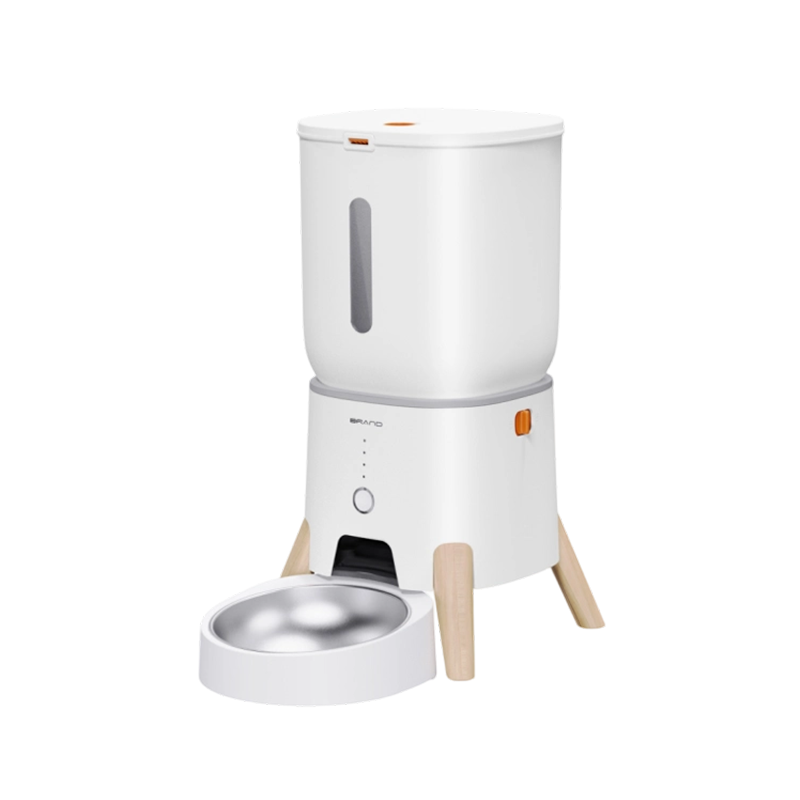
An Automatic Pet Feeder is an electronic device designed to dispense pre-measured portions of food to your pet at scheduled times — without requiring you to be physically present. At its most fundamental level, an Automatic Pet Feeder replaces the manual act of scooping food into a bowl with a programmable, mechanical, or app-controlled system that delivers the right amount of food at the right time.
Modern Automatic Pet Feeders range from simple gravity-based dispensers to sophisticated Wi-Fi-enabled smart devices that stream live video, record feeding history, and send real-time notifications to your smartphone. Regardless of complexity, every Automatic Pet Feeder shares the same core promise: your pet gets fed consistently, even when you cannot be there to do it yourself.
The concept of automated feeding is not new — basic timed feeders have existed for decades — but the rapid advancement of smart home technology over the past ten years has transformed what an Automatic Pet Feeder can do. Today's devices are smarter, more reliable, and more connected than ever before, making them accessible and practical for a wide range of pet owners and living situations.
The Daily Feeding Challenges That Pet Owners Face
To understand why an Automatic Pet Feeder has become such a popular household device, it helps to first acknowledge the very real difficulties that come with manually feeding a pet in a modern lifestyle.
Irregular work schedules are one of the most common pain points. Many pet owners work shifts, attend early morning meetings, or stay late at the office — situations that make it difficult to feed a pet at consistent times. Cats and dogs thrive on routine, and irregular feeding times can cause stress, anxiety, behavioral problems, and digestive issues.
Commute times and unexpected delays add another layer of unpredictability. A journey home that normally takes 30 minutes can turn into a two-hour ordeal, leaving a hungry pet waiting well past their scheduled mealtime. Over time, chronic delays in feeding can affect a pet's metabolic health and eating behavior.
Multi-pet households present their own unique challenge. When two or more pets share the same living space, ensuring that each animal receives the correct portion — without one pet eating the other's share — requires close supervision that is simply not possible around the clock.
Overnight feeding needs are particularly relevant for certain animals. Some pets, especially those with medical conditions requiring small, frequent meals, need to be fed during early morning hours when owners are asleep. Without an Automatic Pet Feeder, this means disrupted sleep for the owner or skipped meals for the pet.
Short-term travel and overnight stays away from home often force pet owners to rely on neighbors, friends, or paid pet sitters — all of which come with their own complications, costs, and reliability concerns. An Automatic Pet Feeder offers a degree of independence that reduces this reliance significantly.
How an Automatic Pet Feeder Solves These Problems
The Automatic Pet Feeder directly addresses each of the challenges described above through a combination of programmable scheduling, portion control, and increasingly, remote connectivity.
By programming an Automatic Pet Feeder to dispense food at specific times — say, 7:00 AM, 12:00 PM, and 6:00 PM — a pet owner creates a consistent feeding routine that does not depend on human punctuality. The device becomes the reliable constant in a pet's day, delivering meals with mechanical precision regardless of what is happening in the owner's life.
Portion control is another major advantage. Many Automatic Pet Feeder models allow owners to set exact gram or cup measurements for each meal. This removes the guesswork from feeding, prevents accidental overfeeding, and makes it far easier to manage a pet's caloric intake — something that is increasingly important given rising rates of pet obesity in domestic animals.
For multi-pet households, certain Automatic Pet Feeder designs include RFID-based locking lids that open only for the specific microchipped pet they are assigned to, ensuring each animal receives only their designated portion.
Smart Automatic Pet Feeder models go even further, offering remote feeding via a smartphone app, two-way audio so owners can talk to their pets during meal times, built-in cameras for visual confirmation, and feeding logs that track every dispensed meal over time.
Who Benefits Most from an Automatic Pet Feeder
While virtually any pet owner can benefit from using an Automatic Pet Feeder, certain groups find them especially valuable:
| User Profile | Primary Benefit of Automatic Pet Feeder |
|---|---|
| Full-time office workers | Consistent midday feeding without coming home |
| Frequent business travelers | Multi-day feeding coverage with remote monitoring |
| Pet owners with irregular shifts | Stable feeding schedule regardless of work hours |
| Owners of overweight pets | Precise portion control to manage caloric intake |
| Multi-pet households | Individual feeding stations to prevent food stealing |
| Owners of senior or diabetic pets | Frequent small meals on a strict medical schedule |
| Light sleepers with early-hungry cats | Scheduled early morning feeding without waking up |
The Automatic Pet Feeder is not a replacement for human companionship, care, or interaction. A pet still needs playtime, affection, and regular veterinary attention. However, as a tool for managing one specific and critical aspect of daily pet care — feeding — the Automatic Pet Feeder is one of the most practical and impactful investments a pet owner can make.
The Growing Role of Automatic Pet Feeders in Modern Pet Care
The global pet care industry has grown substantially over the past decade, with more households than ever treating their pets as full family members. This shift in attitude has driven demand for products that support higher standards of pet welfare, and the Automatic Pet Feeder sits at the center of this evolution.
Pet owners today are not just looking for convenience — they are looking for tools that actively contribute to their pet's health, happiness, and longevity. An Automatic Pet Feeder that delivers precise portions on a consistent schedule is no longer seen as a luxury gadget but as a standard component of responsible, modern pet ownership.
As smart home ecosystems continue to expand and connectivity becomes a baseline expectation in consumer electronics, the Automatic Pet Feeder will only become more integrated, more intelligent, and more indispensable in households around the world. Understanding what these devices are, how they work, and how to choose the right one is the essential first step for any pet owner considering making the switch.
How an Automatic Pet Feeder Works
Understanding the internal mechanics and technology behind an Automatic Pet Feeder is essential for making an informed purchase decision. Not all Automatic Pet Feeders operate the same way, and the differences in their working mechanisms directly affect reliability, food compatibility, portion accuracy, and long-term performance. This section breaks down exactly how an Automatic Pet Feeder functions — from its most basic form to its most advanced smart configuration.
The Core Principle Behind Every Automatic Pet Feeder
At its heart, every Automatic Pet Feeder operates on one fundamental principle: store a quantity of dry or wet food in a reservoir, and release a controlled amount of that food into a bowl at a pre-determined time. How that release is triggered, how the portion is measured, and how the timing is controlled varies significantly depending on the type and price point of the device.
The three core components found in virtually every Automatic Pet Feeder are:
A food storage container — typically a hopper or tank that holds anywhere from 1 to 20+ liters of dry kibble
A dispensing mechanism — the physical system that moves food from storage into the bowl
A timing and control system — the electronic or mechanical brain that tells the device when and how much to dispense
These three elements work together as a system. The quality, design, and precision of each component determines how well the Automatic Pet Feeder performs in real-world conditions.
Dispensing Mechanisms: How Food Actually Moves
The dispensing mechanism is arguably the most important mechanical component of any Automatic Pet Feeder, as it directly determines portion accuracy, food compatibility, and the risk of jamming. There are two primary dispensing systems used in modern Automatic Pet Feeder designs:
Auger / Spiral Screw Mechanism
The auger mechanism uses a rotating spiral screw — similar in concept to a drill bit — that sits inside a cylindrical food channel. When the motor activates, the screw rotates and pushes food forward along the channel, dropping it into the bowl below.
How it works step by step:
Dry kibble fills the hopper above the auger channel. The timer triggers the motor at the scheduled feeding time. The auger rotates for a set number of turns, corresponding to a specific portion size. Food is pushed forward and falls into the bowl. The motor stops when the programmed number of rotations is complete.
The auger system is the most widely used mechanism in mid-range and premium Automatic Pet Feeder products because of its portion accuracy and relatively low risk of jamming with standard-sized kibble.
Rotating Disc / Tray Mechanism
The rotating disc mechanism uses a flat circular tray divided into individual compartments, each pre-filled with a single meal. At the scheduled time, the disc rotates to align the next filled compartment with the bowl opening, releasing that portion.
How it works step by step:
The owner manually fills each compartment with one meal. The tray rotates one position at each scheduled feeding time. The open compartment aligns with the feeding bowl. Food drops or slides into the bowl. The process repeats for each subsequent meal.
This system is simpler and more reliable mechanically, but limits flexibility since portions must be pre-loaded and cannot be adjusted remotely.
Mechanism Comparison
| Feature | Auger / Spiral Screw | Rotating Disc / Tray |
|---|---|---|
| Portion accuracy | High | Medium (manual pre-fill) |
| Wet food compatibility | Limited | Yes (some models) |
| Risk of jamming | Low to medium | Very low |
| Remote portion adjustment | Yes (smart models) | No |
| Meal quantity limit | Unlimited (large hopper) | Limited by compartment count |
| Suitable kibble size | Small to medium | Any size |
| Complexity of mechanism | Medium | Low |
| Best for | Dry food, daily use | Wet food, short trips |
The Timing and Control System
The control system is the brain of an Automatic Pet Feeder. It receives programmed instructions and sends signals to the dispensing motor at the right moments. There are three generations of control systems found in Automatic Pet Feeder products on the market today:
Basic Mechanical Timer
The earliest Automatic Pet Feeder designs used a simple mechanical dial timer — similar to those found on older kitchen appliances. The owner turns the dial to set feeding intervals, and the mechanism activates at those intervals. These systems are straightforward and require no batteries beyond basic operation, but offer very limited precision and no customization beyond fixed intervals.
Digital LCD Timer
Most modern entry-level and mid-range Automatic Pet Feeder models use a digital control panel with an LCD screen. The owner programs specific feeding times (e.g., 07:30, 12:00, 18:30) and portion sizes using physical buttons. The internal clock maintains the schedule independently of any external connectivity. These systems are reliable, user-friendly, and do not require a smartphone or internet connection to operate.
Smart Wi-Fi Control System
Premium Automatic Pet Feeder models replace the physical control panel with a Wi-Fi module that connects the device to the owner's home network and links it to a dedicated smartphone application. Through this app, the owner can set and modify feeding schedules from anywhere in the world, adjust portion sizes remotely in real time, receive push notifications when each meal is dispensed, view feeding history and logs, activate manual feeding with a single tap, stream live video (on models with built-in cameras), and speak to their pet through two-way audio.
The smart control system transforms the Automatic Pet Feeder from a standalone appliance into a connected node within the owner's digital life, offering a level of oversight and flexibility that was previously impossible.
Food Detection and Anti-Jam Sensors
Higher-end Automatic Pet Feeder units incorporate sensors that monitor the feeding process in real time. The most common sensor types include:
Infrared food level sensors — detect when the food hopper is running low and send a notification to the owner's smartphone before the reservoir empties completely.
Jam detection sensors — monitor motor resistance and rotational feedback to identify when a food blockage has occurred. When a jam is detected, the device can automatically reverse the auger to clear the obstruction and alert the owner.
Bowl fill sensors — some models detect whether food has actually reached the bowl after a dispensing cycle, providing confirmation that the meal was successfully delivered rather than blocked internally.
These sensor systems significantly increase the reliability of an Automatic Pet Feeder, particularly in unattended scenarios such as when an owner is traveling.
Power Systems: How the Automatic Pet Feeder Stays Running
One of the most critical but often overlooked aspects of how an Automatic Pet Feeder works is its power source. A feeder that loses power during a scheduled meal time will fail to dispense food — a potentially serious problem if the owner is away. For this reason, most quality Automatic Pet Feeder designs incorporate one of three power configurations:
| Power Configuration | Description | Reliability | Best Use Case |
|---|---|---|---|
| AC Adapter Only | Plugs directly into wall outlet | High (while power is on) | Home use with stable electricity |
| Battery Only | Runs entirely on D-cell or AA batteries | Medium (battery life varies) | Areas with frequent outages |
| Dual Power (AC + Battery Backup) | Primary AC with battery fallback | Highest | Recommended for all situations |
| USB-C Charging | Rechargeable internal battery via USB | Medium-High | Portable or travel use |
The dual power configuration is strongly recommended for any Automatic Pet Feeder being used in an unattended setting. In the event of a power outage, the battery backup seamlessly takes over, ensuring scheduled meals continue to be dispensed without interruption. Most dual-power Automatic Pet Feeder models notify the owner via app when they have switched to battery mode, allowing them to address the power issue promptly.
How Smart Automatic Pet Feeders Connect and Communicate
For Wi-Fi enabled Automatic Pet Feeder models, the connectivity workflow typically follows this sequence:
Initial Setup — the Automatic Pet Feeder is powered on and placed in pairing mode. App Download — the owner downloads the manufacturer's dedicated app on their iOS or Android device. Network Pairing — the app guides the owner through connecting the feeder to their 2.4GHz home Wi-Fi network (most smart feeders do not support 5GHz). Account Creation — a user account is created to store device settings and feeding history in the cloud. Schedule Programming — the owner sets feeding times and portion sizes through the app interface. Remote Access — once connected, the owner can control the Automatic Pet Feeder from any location with internet access.
The cloud-based architecture means feeding schedules and logs are preserved even if the app is deleted or the phone is changed. Multiple users — such as both members of a household — can often share access to the same Automatic Pet Feeder account, enabling coordinated feeding management.
From Button Press to Bowl: A Complete Feeding Cycle
To bring all of these systems together, here is what happens during a single feeding cycle on a typical mid-range Automatic Pet Feeder with a digital timer and auger mechanism:
The internal clock reaches the programmed feeding time (e.g., 07:30 AM). The control board sends an activation signal to the DC motor. The motor engages the auger, which begins rotating inside the food channel. Dry kibble from the hopper feeds into the auger channel under gravity. The rotating auger pushes food forward and drops it through the dispensing chute. Food falls into the stainless steel or plastic bowl below. The motor completes the programmed number of rotations (corresponding to the set portion size). The motor deactivates and the feeding cycle ends. On smart models, a push notification is sent to the owner's smartphone confirming the meal was dispensed. The feeding event is logged in the app with a timestamp and portion record.
This entire cycle typically takes between 15 and 45 seconds depending on the portion size and the speed of the auger motor. The process is quiet enough in most modern Automatic Pet Feeder designs to avoid startling the pet, and many animals quickly learn to associate the sound of the motor with meal time.
Types of Automatic Pet Feeders
Choosing the right Automatic Pet Feeder starts with understanding that not all devices are built for the same animal, lifestyle, or feeding requirement. The market offers a diverse range of Automatic Pet Feeder configurations, each designed with specific use cases in mind. This section categorizes the main types of Automatic Pet Feeders by both pet type and functional design, helping you identify which category best matches your situation before diving into specific features and recommendations.
Categorized by Pet Type
Automatic Pet Feeder for Cats
The cat-specific Automatic Pet Feeder is the most widely available category on the market, reflecting the fact that cats are among the most commonly owned pets globally. Cat-oriented feeders are typically designed around the following considerations:
Smaller kibble compatibility — cats generally eat smaller, lighter dry food pellets that require a finer-tuned auger or dispensing system.
Portion precision — cats have smaller stomachs and benefit greatly from multiple small meals per day rather than one or two large ones, making precise portioning a critical feature.
RFID / microchip locking — in multi-cat households, certain Automatic Pet Feeder models for cats include a lid that opens only when the assigned cat approaches, identified by their microchip or a collar tag.
Compact footprint — cat feeders tend to be smaller and lighter, suited to countertops, floor corners, or elevated feeding stations.
A cat-specific Automatic Pet Feeder typically supports between 2 and 6 meals per day, with individual portions ranging from as little as 5 grams up to 200 grams per meal depending on the model.
Automatic Pet Feeder for Dogs
Dog-oriented Automatic Pet Feeder designs vary significantly based on the size of the dog being fed. A feeder appropriate for a Chihuahua is entirely different from one needed for a Labrador or a Great Dane.
Small dog feeders share many characteristics with cat feeders — compact size, smaller hoppers, and fine portion control. The key differences are typically in bowl height and chute diameter.
Large and giant breed dog feeders require high-capacity hoppers (10 liters or more), wider dispensing chutes to accommodate large kibble sizes, heavier and more stable bases to prevent tipping, larger portion ranges (up to 500 grams or more per meal), and more powerful motors capable of moving dense, heavy kibble.
Some large-breed Automatic Pet Feeder models also include slow-feed bowl inserts, which are particularly important for breeds prone to bloat (gastric dilatation-volvulus), a potentially life-threatening condition associated with eating too quickly.
Automatic Pet Feeder for Small Animals
Though less common, dedicated Automatic Pet Feeder devices exist for smaller household pets including rabbits, guinea pigs, hamsters, and birds. These feeders are characterized by very small hopper capacities (typically under 1 liter), minimal portion sizes (often measured in single grams), simple mechanical timers rather than smart connectivity, and pellet-optimized dispensing systems.
Small animal feeders are generally more basic in design and are intended primarily for convenience during short absences rather than as full smart-home devices.
Pet Type Comparison Overview
| Feature | Cat Feeder | Small Dog Feeder | Large Dog Feeder | Small Animal Feeder |
|---|---|---|---|---|
| Typical hopper capacity | 2–6 liters | 2–5 liters | 6–20 liters | 0.3–1 liter |
| Portion range per meal | 5–200g | 10–250g | 50–500g | 1–20g |
| Kibble size compatibility | Small | Small–Medium | Medium–Large | Extra small (pellets) |
| RFID locking available | Yes | Rare | No | No |
| Smart connectivity | Common | Common | Available | Rare |
| Slow-feed bowl option | Rare | Rare | Common | No |
Categorized by Functional Design
Beyond the pet-specific distinctions, Automatic Pet Feeder devices can also be grouped by their core functional design. Each category represents a different balance of simplicity, capability, and price.
Basic Gravity-Fed Automatic Pet Feeder
The gravity-fed design is the simplest form of Automatic Pet Feeder available. It requires no electricity, no programming, and no connectivity. Food flows from a sealed reservoir into the bowl purely under the force of gravity — as the pet eats from the bowl, more food slides down to refill it automatically.
Key characteristics: No power source required. No portion control — food is available continuously. Zero programming or setup required. Lowest cost entry point in the Automatic Pet Feeder category. Suitable only for pets that self-regulate their food intake.
Limitations: Not suitable for overweight pets or those prone to overeating. No scheduled feeding — food is always accessible. Cannot be monitored or controlled remotely. Not truly an "automatic" feeder in the timed sense.
Despite its limitations, the gravity feeder serves as a useful supplementary Automatic Pet Feeder for water (in the form of gravity water dispensers) or for grazing pets that are medically cleared for free feeding.
Timed / Programmable Automatic Pet Feeder
The timed programmable Automatic Pet Feeder is the most common category and represents the standard expectation most consumers have when searching for an Automatic Pet Feeder. These devices use a digital or mechanical timer to dispense pre-set portions at scheduled times.
Key characteristics: Supports 1–6 scheduled meals per day (varies by model). Portion sizes set via physical buttons and LCD display. Operates independently without internet connection. Available in both auger-mechanism and rotating tray configurations. Battery or AC powered (or dual).
This category is ideal for pet owners who want reliable, consistent feeding automation without the complexity or cost of smart connectivity. A timed Automatic Pet Feeder is the practical workhorse of the category — not flashy, but dependably effective.
Smart Wi-Fi Automatic Pet Feeder
The smart Automatic Pet Feeder adds wireless internet connectivity to the core timed feeder concept, enabling remote control and monitoring through a smartphone app. This is the fastest-growing segment of the Automatic Pet Feeder market.
Key characteristics: Full schedule management via iOS or Android app. Remote manual feeding from any location. Real-time push notifications for each feeding event. Feeding history logs with timestamps and portion records. Low food level alerts sent to smartphone. Compatible with smart home platforms (Amazon Alexa, Google Home on select models). Some models integrate with voice assistants for hands-free feeding commands.
The smart Automatic Pet Feeder is the recommended choice for pet owners who travel regularly, work long or unpredictable hours, or who want ongoing visibility into their pet's eating habits.
Automatic Pet Feeder with Camera
A growing number of Automatic Pet Feeder models now incorporate a built-in HD camera, combining the function of a pet feeder with that of a pet monitoring camera. These all-in-one devices allow owners to visually check on their pets at any time, confirm that food has been eaten, and interact with their animals remotely.
Key characteristics: Built-in 1080p or higher resolution camera. Live video streaming via companion app. Two-way audio for voice communication with the pet. Night vision capability for low-light monitoring. Motion and sound detection alerts. Some models include video recording and cloud storage.
The camera-equipped Automatic Pet Feeder is particularly popular with cat owners who experience separation anxiety or whose pets have health conditions requiring regular behavioral observation.
Wet Food Automatic Pet Feeder
Standard auger-based Automatic Pet Feeder devices are designed exclusively for dry kibble — wet food cannot pass through an auger system without clogging. For pet owners who feed wet food, a specialized wet food Automatic Pet Feeder is required.
Key characteristics: Uses rotating tray mechanism with sealed individual compartments. Ice pack insert under the tray to keep wet food fresh between meals. Typically supports 2–5 meals maximum per loading. Compartments are dishwasher-safe for easy cleaning. Suitable for both wet food pouches and home-prepared meals.
Limitations compared to dry food feeders: Cannot support large numbers of meals without manual reloading. Ice pack effectiveness is limited (typically 12–24 hours). Less suitable for long absences beyond one day.
Functional Type Comparison
| Feature | Gravity Fed | Timed/Programmable | Smart Wi-Fi | Camera Model | Wet Food |
|---|---|---|---|---|---|
| Scheduled feeding | No | Yes | Yes | Yes | Yes |
| Portion control | No | Yes | Yes | Yes | Yes (manual) |
| Remote control | No | No | Yes | Yes | No |
| Live video | No | No | No | Yes | No |
| Two-way audio | No | No | Some models | Yes | No |
| Wet food compatible | No | No | No | No | Yes |
| Power required | No | Yes | Yes | Yes | Yes |
| App connectivity | No | No | Yes | Yes | No |
| Feeding history log | No | No | Yes | Yes | No |
| Approximate complexity | Very Low | Low | Medium | Medium–High | Low |
| Best for | Free feeders | Routine feeding | Travelers | Anxious owners | Wet food diets |
Hybrid and Specialty Automatic Pet Feeder Designs
Beyond the five core categories, a small but growing number of Automatic Pet Feeder products combine features from multiple categories or serve highly specific use cases:
Multi-pet station systems consist of several individual Automatic Pet Feeder units linked through a single app, allowing a household with three or four pets to manage all feeding schedules from one centralized interface. Each unit operates independently but is monitored collectively.
Puzzle-integrated feeders combine the mechanical function of an Automatic Pet Feeder with cognitive enrichment elements — the food is dispensed into a puzzle tray rather than a standard bowl, encouraging the pet to work for their meal. This design is particularly beneficial for high-energy breeds and cats prone to boredom.
Elevated automatic feeders are designed with adjustable stand heights, making them suitable for senior pets or large breeds for whom eating from floor level causes joint strain. The elevated Automatic Pet Feeder maintains all the standard scheduling and portioning features while positioning the bowl at a more ergonomically appropriate height.
Understanding which type of Automatic Pet Feeder aligns with your pet's species, size, dietary needs, and your own lifestyle is the critical foundation for everything that follows — from evaluating key features to setting up and maintaining your device for long-term performance.
Key Features to Look for in an Automatic Pet Feeder
With so many Automatic Pet Feeder options available across different price points and design categories, narrowing down the right choice can feel overwhelming. The most effective way to cut through the noise is to evaluate each device against a consistent set of core features. Understanding what each feature does, why it matters, and how different implementations compare will give you the clarity needed to select an Automatic Pet Feeder that genuinely serves your pet's needs and fits your lifestyle.
Hopper Capacity and Food Storage
The hopper — the food storage reservoir at the top of the Automatic Pet Feeder — determines how long the device can operate between refills. Choosing the right capacity depends on your pet's daily food consumption and how frequently you are available to refill the device.
A general calculation for determining minimum required capacity: Daily food intake (grams) multiplied by the number of days between refills equals the minimum hopper capacity needed.
For example, a cat eating 60g per day that you want to refill weekly needs a minimum hopper capacity of 420g — though a 1–2 liter hopper (approximately 500–1,000g depending on kibble density) would be the practical minimum for comfortable operation.
Hopper Capacity Reference Guide
| Pet Type | Daily Food Intake | Recommended Minimum Capacity | Ideal Capacity for Weekly Refill |
|---|---|---|---|
| Cat (average) | 50–80g | 1 liter | 2–3 liters |
| Small dog (under 10kg) | 80–150g | 1.5 liters | 3–4 liters |
| Medium dog (10–25kg) | 150–300g | 3 liters | 5–7 liters |
| Large dog (25–45kg) | 300–500g | 5 liters | 8–12 liters |
| Giant breed (45kg+) | 500g+ | 8 liters | 12–20 liters |
Beyond raw capacity, pay attention to the hopper design. A wide-mouth opening makes refilling easier and reduces spillage. A sealed or locking lid prevents the pet from accessing stored food directly — an important consideration for clever cats and food-motivated dogs that may attempt to manipulate the feeder between scheduled meals.
Portion Size Control and Meal Frequency
Portion accuracy is one of the most functionally important features of any Automatic Pet Feeder, particularly for pets on a calorie-managed diet or a veterinary feeding plan. The two key variables here are the range of portion sizes the device supports and the number of meals that can be scheduled per day.
Portion and Meal Frequency Comparison
| Feeder Tier | Portion Range per Meal | Meals per Day | Adjustment Increment |
|---|---|---|---|
| Basic timed feeder | 10–100g | 1–3 | 10g steps |
| Mid-range feeder | 5–200g | 1–6 | 5g steps |
| Premium smart feeder | 2–300g | 1–12 | 1–2g steps |
| Wet food tray feeder | Fixed (manual fill) | 2–5 | Manual |
For healthy adult pets on standard diets, a mid-range Automatic Pet Feeder offering 5g increments across up to 6 meals per day is typically sufficient. For pets with specific medical requirements — such as diabetic cats needing precisely timed insulin-correlated meals or post-surgical dogs on strict recovery diets — a premium feeder with finer adjustment increments and higher meal frequency is worth the additional investment.
It is also worth noting that portion accuracy can degrade over time as the auger mechanism experiences wear, or if kibble size is inconsistent. Look for Automatic Pet Feeder models that have been independently tested for dispensing consistency, ideally maintaining within plus or minus 5% of the programmed portion across repeated cycles.
Anti-Jam and Food Flow Design
Kibble jamming is one of the most common failure points in any Automatic Pet Feeder using an auger mechanism. When food clumps, bridges across the hopper opening, or becomes wedged in the dispensing channel, the feeder fails to dispense — leaving a pet without their scheduled meal.
The best Automatic Pet Feeder designs address this risk through several engineering approaches:
Hopper agitator — a small mechanical arm or secondary rotor inside the hopper that continuously breaks up food clusters and prevents bridging above the auger inlet.
Wide-bore dispensing chute — a generously sized channel that accommodates slight variations in kibble size without creating bottlenecks.
Motor reversal on jam detection — sensors that detect motor resistance and automatically reverse the auger to clear blockages.
Recommended kibble size guidelines — most quality Automatic Pet Feeder manufacturers specify a maximum kibble diameter (typically 8–15mm) for optimal performance. Staying within this range significantly reduces the risk of jamming.
When evaluating an Automatic Pet Feeder, check whether the manufacturer provides jam-related warranty coverage or replacement guarantees, as this reflects confidence in their dispensing system's reliability.
Build Quality and Food-Safe Materials
The materials used in an Automatic Pet Feeder directly affect both the pet's health and the device's longevity. Since food will be stored and dispensed through these components for months or years, material safety is non-negotiable.
Material Comparison for Key Components
| Component | Recommended Material | Material to Avoid | Why It Matters |
|---|---|---|---|
| Food hopper | BPA-free ABS plastic or Tritan | Standard plastic, recycled plastics | Prevents chemical leaching into food |
| Feeding bowl | Stainless steel or ceramic | Low-grade plastic | Easier to clean, resistant to bacteria |
| Auger / dispensing parts | Food-grade PP or stainless | Unknown grade plastics | Prevents contamination of food |
| Exterior housing | ABS plastic | Thin, brittle plastic | Durability and impact resistance |
Stainless steel bowls are strongly preferred over plastic bowls in any Automatic Pet Feeder for hygiene reasons. Plastic bowls develop micro-scratches over time that harbor bacteria, and some pets develop feline acne or skin reactions from prolonged contact with low-grade plastic food surfaces.
Additionally, assess the overall build quality of the Automatic Pet Feeder by examining whether components fit together tightly without gaps (which can trap food residue), whether the device feels stable on a flat surface without wobbling, and whether the motor housing is adequately sealed against moisture exposure.
Anti-Moisture and Freshness Protection
Dry kibble that is exposed to moisture or humidity can become soft, clump together, grow mold, or lose nutritional value — all outcomes that compromise your pet's health and clog the Automatic Pet Feeder's dispensing mechanism.
Quality Automatic Pet Feeder designs address moisture through:
Sealed hopper lids with silicone gaskets that create an airtight seal between refills, slowing oxidation and humidity ingress.
Desiccant compartments — some premium models include a small desiccant holder inside the hopper that actively absorbs ambient moisture.
Elevated bowl platforms — positioning the bowl slightly above floor level helps prevent condensation from pooling beneath the unit.
Twist-lock or snap-lock closures on the hopper opening that prevent accidental opening while also creating a tighter seal than simple press-fit lids.
If you live in a high-humidity environment or your pet's feeding station is located in a kitchen or near a water source, moisture protection should be weighted heavily in your Automatic Pet Feeder selection criteria.
App Quality and Smart Home Integration
For any Wi-Fi connected Automatic Pet Feeder, the companion app is the primary interface through which the owner interacts with the device. A poorly designed app can make an otherwise excellent feeder frustrating to use, while a well-built app significantly enhances the ownership experience.
Key app quality indicators to evaluate:
Scheduling interface — is programming feeding times intuitive and quick, or does it require multiple menus and confirmation steps?
Notification reliability — do feeding alerts arrive promptly and consistently, or are they delayed or intermittent?
Feeding history presentation — is the log easy to read and export if needed for veterinary consultations?
Offline functionality — does the Automatic Pet Feeder continue to execute its pre-programmed schedule if the Wi-Fi connection drops?
Multi-device access — can two household members access the same feeder account simultaneously?
Firmware update delivery — does the app provide automatic firmware updates to keep the feeder's software current?
Smart Home Platform Compatibility
| Platform | Compatibility Level | Typical Functionality |
|---|---|---|
| Amazon Alexa | Common | Voice-activated manual feeding |
| Google Home | Common | Voice-activated manual feeding |
| Apple HomeKit | Rare | Full integration on select models |
| IFTTT | Some models | Custom automation triggers |
| SmartThings | Limited | Basic on/off control |
The ability of an Automatic Pet Feeder to continue operating on its pre-programmed schedule without an active Wi-Fi connection is a critical reliability feature that is sometimes overlooked. If the feeder requires a continuous internet connection to function and your home network experiences an outage, your pet may miss scheduled meals entirely. Always verify that offline schedule execution is supported before purchasing a smart Automatic Pet Feeder.
Power Backup and Outage Protection
Power continuity is essential for an Automatic Pet Feeder operating in an unattended environment. The importance of this feature cannot be overstated — a feeder that goes dark during a power outage provides no feeding coverage at exactly the moment reliability is most needed.
Power Configuration Reliability Ratings
| Power Type | Outage Protection | Recommended For |
|---|---|---|
| AC only | None | Never recommended as sole power source |
| Battery only | Full (until batteries deplete) | Short-term or travel use |
| Dual AC + battery backup | Full switchover | All permanent home installations |
| Rechargeable (USB-C) | Depends on battery charge | Travel or secondary feeder use |
Always ensure the Automatic Pet Feeder you select either includes battery backup as standard or offers it as an easily installable option. For extended travel scenarios, calculate the expected battery life against the number of days away and maintain a fresh set of backup batteries in the device at all times.
Ease of Cleaning and Maintenance Design
An Automatic Pet Feeder that is difficult to clean is one that will be cleaned less frequently — and infrequent cleaning creates hygiene risks including bacterial buildup, mold growth, and food contamination. Ease of disassembly and cleaning should be a genuine evaluation criterion, not an afterthought.
Features that indicate a cleaning-friendly Automatic Pet Feeder design:
Fully removable hopper that separates from the motor base without tools. Dishwasher-safe bowl and hopper (top rack safe at minimum). Smooth interior surfaces without crevices or ridges that trap food residue. Removable auger assembly that can be rinsed separately. Sealed electronics that allow the non-electronic components to be washed without risk of water damage to the motor or control board.
A well-designed Automatic Pet Feeder should be fully disassembled, cleaned, and reassembled in under 10 minutes during routine weekly maintenance. If the cleaning process is overly complex or time-consuming, compliance will suffer and hygiene standards will slip.
Feature Priority Guide by User Profile
| User Profile | Top Priority Features |
|---|---|
| Busy professional, single pet | Reliable scheduling, app notifications, dual power |
| Frequent traveler | Smart Wi-Fi, camera, low food alerts, dual power |
| Multi-pet household | RFID locking, individual portion control, multi-unit app |
| Owner of overweight pet | Fine portion increments (1–2g), high meal frequency |
| Owner of senior/medical pet | High meal frequency, portion precision, vet-log export |
| Budget-conscious owner | Reliable timer, dual power, stainless bowl, anti-jam |
| Tech-forward smart home user | Alexa/Google integration, API access, HD camera |
Selecting an Automatic Pet Feeder based on a clear understanding of these features — rather than brand recognition or price alone — is the most reliable path to finding a device that will serve both you and your pet effectively for years to come.
FAQ:
Even after a thorough understanding of how an Automatic Pet Feeder works, what types exist, and which features matter most, many pet owners still have specific practical questions before committing to a purchase. The following frequently asked questions address the most common concerns and uncertainties that arise around Automatic Pet Feeder use in real-world households.
Q1: Can an Automatic Pet Feeder handle wet food?
Standard Automatic Pet Feeder models that use an auger or spiral screw mechanism are designed exclusively for dry kibble and cannot handle wet food. Wet food's moisture content causes it to clump, stick to internal components, and rapidly clog the dispensing channel — creating both a mechanical failure and a food safety hazard.
For pet owners whose animals eat wet food, the correct solution is a rotating tray Automatic Pet Feeder with sealed individual compartments. These models allow each compartment to be pre-filled with a portion of wet food, pate, or home-prepared meals. Most wet food Automatic Pet Feeder designs include an ice pack insert that fits beneath the tray to keep portions cool and fresh between meals.
Key limitations to understand with wet food Automatic Pet Feeder use:
| Factor | Wet Food Feeder Reality |
|---|---|
| Maximum meals per load | 2–5 compartments only |
| Food freshness window | 12–24 hours with ice pack |
| Suitable for long absences | No — requires daily reloading |
| Cleaning frequency required | After every use |
| Compatible food types | Wet food, raw, home-cooked |
For owners who feed a combination of dry and wet food, the practical solution is to use a standard dry food Automatic Pet Feeder for scheduled kibble meals and supplement with a wet food tray feeder for one daily wet meal that is loaded fresh each morning.
Q2: How long can an Automatic Pet Feeder run on battery backup?
Battery backup duration varies significantly between Automatic Pet Feeder models and depends on several factors including battery type, motor efficiency, the number of daily feeding cycles, and ambient temperature.
Battery Backup Duration Reference
| Battery Configuration | Typical Backup Duration | Feeding Cycles Supported |
|---|---|---|
| 3x D-cell alkaline batteries | 3–6 months (backup only) | Hundreds of cycles |
| 4x AA alkaline batteries | 4–8 weeks (backup only) | 50–150 cycles |
| Built-in rechargeable (USB-C) | 5–15 days (primary power) | 30–90 cycles |
| 6x D-cell alkaline batteries | 6–12 months (backup only) | 300+ cycles |
It is important to note that battery backup in most dual-power Automatic Pet Feeder models is designed to maintain the existing programmed schedule during an outage — not to serve as the primary power source indefinitely. For this reason, always keep fresh batteries installed in your Automatic Pet Feeder regardless of whether AC power is currently active.
Replace backup batteries every 6 months as a preventive maintenance practice, even if they have not been depleted, to ensure full capacity is available when needed.
Q3: Is an Automatic Pet Feeder safe to use when traveling for a week?
An Automatic Pet Feeder can safely support a pet's feeding needs during a week-long absence, provided several conditions are met. Feeding automation is only one component of responsible extended-absence pet care — water supply, litter maintenance, veterinary emergencies, and social interaction must also be accounted for through other means.
For a week-long absence using an Automatic Pet Feeder, verify the following checklist:
| Requirement | Action Required |
|---|---|
| Sufficient hopper capacity | Confirm hopper holds 7+ days of food |
| Power backup | Install fresh batteries before leaving |
| Wi-Fi monitoring | Enable push notifications for missed meals |
| Low food level alert | Set alert threshold to notify at 2-day reserve |
| Camera monitoring | Verify live feed is accessible remotely |
| Water supply | Use a separate automatic water fountain |
| Emergency contact | Arrange a neighbor or pet sitter for welfare checks |
| Veterinary access | Leave emergency vet contact with a trusted person |
A smart Automatic Pet Feeder with camera, low-food alerts, and dual power is strongly recommended for any absence exceeding 48 hours. For absences of a full week, at least one in-person welfare check per day by a trusted person remains advisable, even with full Automatic Pet Feeder coverage.
Q4: Can multiple pets share one Automatic Pet Feeder?
Whether multiple pets can share a single Automatic Pet Feeder depends on the animals involved, their dietary needs, and their feeding behavior. In general, sharing one feeder between multiple pets presents significant challenges:
Portion control becomes impossible — when two or more pets eat from the same Automatic Pet Feeder, there is no reliable way to ensure each animal receives only their designated share. A dominant or faster-eating pet will typically consume a disproportionate amount.
Dietary conflicts arise — if pets require different food types, portion sizes, or feeding schedules (such as one pet on a prescription diet and another on standard food), a single shared Automatic Pet Feeder cannot accommodate both simultaneously.
The recommended solution for multi-pet households is to assign each pet their own individual Automatic Pet Feeder unit, programmed with that animal's specific schedule and portions. Some manufacturers offer companion apps that manage multiple feeder units from a single interface, making this approach practical and convenient.
For households where pets have identical dietary needs and feeding schedules, the one exception is large-capacity communal bowl feeders designed for multiple small animals — though even in this case, behavioral monitoring is important to ensure equitable food access.
| Scenario | Shared Feeder Viable? | Recommended Approach |
|---|---|---|
| 2 cats, same diet, same schedule | Marginal | Separate feeders preferred |
| 2 cats, different diets | No | Individual feeders required |
| Cat + dog | No | Individual feeders required |
| 2 dogs, same diet, same size | Marginal | Monitor closely |
| Pet on prescription diet | No | Individual feeder mandatory |
Q5: What happens if my Automatic Pet Feeder jams while I'm away?
A jam in an Automatic Pet Feeder while the owner is absent is one of the most serious operational risks associated with these devices. If the dispensing mechanism becomes blocked and the owner is not present to intervene, the pet may miss one or more meals — a situation that ranges from uncomfortable to medically concerning depending on the animal's health status and how long the jam persists.
Modern premium Automatic Pet Feeder models address this risk through:
Automatic jam clearing — the motor reverses direction to dislodge blockages without manual intervention.
Jam alert notifications — a push notification is sent to the owner's smartphone immediately when a jam is detected.
Feeding confirmation alerts — the feeder notifies the owner whether food successfully reached the bowl after each scheduled cycle.
To minimize jam risk proactively: use kibble sizes within the manufacturer's recommended range for your specific Automatic Pet Feeder model; avoid mixing kibble sizes or types in the same hopper load; keep the hopper no more than 80% full to maintain proper food flow dynamics; clean the dispensing channel monthly to remove fine food dust that can compact over time; and store the Automatic Pet Feeder in a low-humidity environment to prevent kibble from softening and clumping.
If a jam occurs and cannot be cleared remotely, contact your emergency pet care contact to perform a manual inspection and feeding if necessary.
Q6: Are Automatic Pet Feeders suitable for kittens and puppies?
Young animals have specific nutritional requirements that differ meaningfully from adult pets, and these differences have direct implications for Automatic Pet Feeder use.
Kittens (under 12 months) require more frequent meals than adult cats — typically 3 to 4 times per day — and their portions must be carefully sized for their smaller stomachs and higher metabolic rates. An Automatic Pet Feeder with high meal frequency (up to 6 meals per day) and fine portion control (increments of 5g or less) can support kitten feeding schedules effectively.
Puppies (under 12 months, or longer for large breeds) similarly require 3 to 4 meals per day and highly precise portioning relative to their rapidly changing body weight. Because puppy feeding requirements change frequently as they grow, the owner must update the Automatic Pet Feeder's portion settings regularly — ideally every 2–4 weeks in accordance with veterinary growth guidelines.
| Age Stage | Meals Per Day | Automatic Pet Feeder Suitability |
|---|---|---|
| Kitten under 3 months | 4–6 | Limited — very small portions required |
| Kitten 3–6 months | 3–4 | Good with fine portion control |
| Kitten 6–12 months | 3 | Good |
| Puppy under 3 months | 4–6 | Limited — supervision recommended |
| Puppy 3–6 months | 3–4 | Good with frequent portion updates |
| Puppy 6–12 months | 3 | Good |
| Adult cat/dog | 2–3 | Excellent |
| Senior cat/dog | 3–4 | Excellent |
One important caution: very young kittens and puppies under 12 weeks should not be left unattended for extended periods regardless of Automatic Pet Feeder coverage, as they require more frequent welfare monitoring than older animals.
Q7: How do I know if my pet is eating properly with an Automatic Pet Feeder?
Monitoring eating behavior is an important aspect of responsible Automatic Pet Feeder use, as changes in appetite are often early indicators of health issues. Without direct observation at every mealtime, owners must rely on other signals to assess whether their pet is eating normally.
Technology-based monitoring methods:
Feeding logs on smart Automatic Pet Feeder apps record every dispensed meal with timestamp — if you notice food remaining in the bowl at the next scheduled feeding, your pet may have skipped or reduced their intake. Built-in cameras allow real-time or recorded visual confirmation of whether the pet approached the feeder and ate during each scheduled mealtime. Weight tracking — periodic weigh-ins (weekly for pets on calorie-managed diets) provide objective evidence of whether food intake is appropriate.
Behavioral indicators to monitor:
Consistent approach to the Automatic Pet Feeder at scheduled meal times indicates the pet has learned and accepted the feeding routine. Prolonged time spent at the feeder after dispensing may indicate the portion is insufficient. Complete disinterest in the feeder at meal times may indicate illness, pain, or food dissatisfaction and warrants veterinary attention. Attempting to access the hopper or paw at the feeder between meals typically indicates the pet is hungry and portions may need to be increased.
Establishing a behavioral baseline during the first two weeks of Automatic Pet Feeder use — when you are present to observe normal eating patterns — makes it far easier to identify deviations from that baseline when you are away.
References
Case, L. P., Daristotle, L., Hayek, M. G., & Raasch, M. F. (2011). Canine and Feline Nutrition: A Resource for Companion Animal Professionals (3rd ed.). Mosby Elsevier. — Referenced for daily caloric intake guidelines and meal frequency recommendations by life stage.
American Animal Hospital Association (AAHA). (2021). AAHA Nutrition and Weight Management Guidelines for Dogs and Cats. — Referenced for portion control recommendations and obesity prevention feeding strategies.
Association of American Feed Control Officials (AAFCO). (2023). Pet Food Labeling and Nutritional Adequacy Standards. — Referenced for food-safe material standards and nutritional completeness requirements relevant to storage and dispensing.
Zoran, D. L. (2002). The carnivore connection to nutrition in cats. Journal of the American Veterinary Medical Association, 221(11), 1559–1567. — Referenced for feline feeding frequency and metabolic rate considerations in Automatic Pet Feeder programming.
German, A. J. (2006). The growing problem of obesity in dogs and cats. Journal of Nutrition, 136(7), 1940S–1946S. — Referenced for the role of portion-controlled automated feeding in managing and preventing pet obesity.
Buff, P. R., Carter, R. A., Bauer, J. E., & Kersey, J. H. (2014). Natural pet food: A review of natural diets and their impact on canine and feline physiology. Journal of Animal Science, 92(9), 3781–3791. — Referenced for food freshness and storage considerations relevant to wet food Automatic Pet Feeder design.
U.S. Consumer Product Safety Commission (CPSC). (2022). Safety Standards for Electronic Pet Care Devices. — Referenced for electrical safety and material standards applicable to Automatic Pet Feeder products sold in the United States.

Contact Information
No. 2, Macaotou Road, Mazhu Town, Yuyao City, Zhejiang Province, China
+86-15669283739
Copyright © Ningbo Meace Pet Products Co., Ltd. Rights Reserved
