

 English
 Español
 Português

-
+86-15669283739
-

-
Home / News / Industry News / Automatic Pet Food Feeder Buying Guide: Dosing, Power Backup, and Capacity
Automatic Pet Food Feeder Buying Guide: Dosing, Power Backup, and Capacity
2026-11-12
Content
- 1 What an automatic feeder genuinely solves
- 2 Five feeder types, sorted by dosing mechanism
- 3 Portion accuracy and hopper capacity
- 4 Power design and failure behaviour
- 5 Materials and the parts that fail first
- 6 Multi-pet homes and dual-bowl designs
- 7 Remote control: who actually needs it
- 8 What to verify before placing an order
- 9 Building the rest of the feeding station
A 5-gram overshoot per meal looks harmless on a specification sheet. For a 4 kg cat eating three meals a day, it adds roughly 105 g of kibble a week, close to a quarter of the animal's weekly calories, and the weight gain shows up long before the warranty claim does.
That number explains why the automatic pet food feeder category splits so sharply between products that look identical in a listing. The practical buying order is dosing mechanism and portion tolerance first, power-failure behaviour second, capacity third, and app features last.
This guide is written from the manufacturing side of that decision, for buyers and brand owners who need a feeder to behave predictably once it leaves the factory.
What an automatic feeder genuinely solves
Feeders are sold on convenience, but the measurable benefits are narrower and more useful.
- Schedule consistency. Meals land within minutes of the same time daily, which matters for cats that vomit on irregular feeding and for dogs on weight-management plans.
- Portion discipline. A programmed 12 g dose is not a judgement call at 6 a.m., and two owners can no longer double-feed by accident.
- Less competition. Separate stations lower tension in multi-pet homes, provided each animal has its own bowl or an RFID collar reader.
- Coverage for absences. A long shift or a weekend away no longer means a missed meal.
The limits are worth stating too. Dry kibble holds quality in a sealed hopper for weeks; wet food does not, and a wet-food unit without a chilled compartment is a two-meal device. Feeders also do not resolve multi-cat competition without individual identification, and a unit without battery backup stops feeding the moment the mains drop.
Five feeder types, sorted by dosing mechanism
Catalogue confusion usually disappears once products are grouped by how they move food rather than by feature list.
| Type | Dosing mechanism | Portion control | Best fit | Main procurement risk |
|---|---|---|---|---|
| Gravity feeder | Food falls through a chute as the bowl empties | None, free feeding | Low-cost single-pet homes | No scheduling, overeating |
| Timer or rotary drum | Rotating tray exposes sealed compartments | Fixed meal size, 2 to 5 meals | Wet food, short trips | Manual refill, no remote control |
| Programmable auger | Screw or paddle driven by motor and timer | 5 to 15 g steps, 1 to 6 meals a day | Dry food, everyday feeding | Jam risk with irregular kibble |
| App-connected smart | Auger plus Wi-Fi module and sensors | Auger range plus remote adjustment | Owners who travel often | 2.4 GHz dependency, firmware support |
| Wet-food carousel | Chilled rotating tray with ice pack | Fixed portions, 2 to 5 meals | Wet diets, cats and small dogs | Cooling duration limits |
Gravity units remain the cheapest entry point; the behavioural trade-off against timed feeding is set out in this comparison of automatic and gravity feeders.
Portion accuracy and hopper capacity
Portion tolerance separates a reliable feeder from a frustrating one. A drive that holds plus or minus 5% on a 12 g dose delivers 11.4 to 12.6 g; a loose mechanism at plus or minus 15% swings between 10.2 g and 13.8 g, enough drift to matter over a month.
5%
Auger drive
8%
Rotary impeller
10%
Cup carousel
20%
Gravity chute
Tolerance is not only a motor question. Kibble geometry matters: pieces under 5 mm bridge in the hopper throat, pieces over 15 mm can stall a screw auger. Test across the full kibble range you intend to sell with, not a single sample.
How long a hopper really lasts
Capacity is quoted in litres, which tells a buyer very little. Kibble sits at roughly 0.35 to 0.5 kg per litre, so a 6 L hopper holds about 2.1 to 3.0 kg. Divide by the daily ration and the real service interval appears.
These figures assume 0.45 kg per litre and typical rations. A 6 L feeder is a month-long solution for one cat and a week-long one for a large dog, which is why the same unit can be marketed honestly to both.
Power design and failure behaviour
Every feeder should answer three questions before it ships: what happens on a mains failure, what happens on a Wi-Fi drop, and what happens when the hopper empties.
- Dual power. A 5 V adapter plus three or four D cells is the common standard. Confirm whether the batteries are backup only or can run the unit alone, and for how long.
- Schedule retention. A good controller keeps the plan in non-volatile memory and keeps dispensing offline; a weak one resets to defaults after a power cut.
- Alerts. Low-battery and empty-hopper warnings are cheap to add and expensive to omit, because silent failure drives most negative reviews.
- Network limits. Most feeder modules are 2.4 GHz only. Print it on the box, or expect a support ticket within a day.
For a private-label programme, settle early whether the app is yours or a white-label build; firmware ownership decides how fast you can fix bugs after the first container.
Materials and the parts that fail first
Feeders live in kitchens, so the material story is mostly food contact and cleaning. Food-grade ABS for hopper and body, a stainless steel or BPA-free bowl, and a hopper that detaches without tools cover most of it. Kibble-contact parts should be top-rack dishwasher safe; the motor housing should not be, and the manual must say so.
The parts that fail first are rarely electronic. They are the silicone seal at the hopper outlet, the auger bushing and the bowl locking tabs. Ask for cycle testing on those specifically: a 3,000-dispense run on a production sample exposes wear a 50-cycle demo never will.
Multi-pet homes and dual-bowl designs
Two bowls on one base solve a real problem: a single unit can hold kibble and water, or two foods for two animals of similar size and appetite. It does not fix competition between a fast eater and a slow one; that needs separate stations or RFID collar recognition.
On a dual-bowl model, check bowl depth against flat-faced breeds, confirm the divider is structural rather than cosmetic, and verify that the second bowl is fed by the same dosing mechanism rather than by gravity.
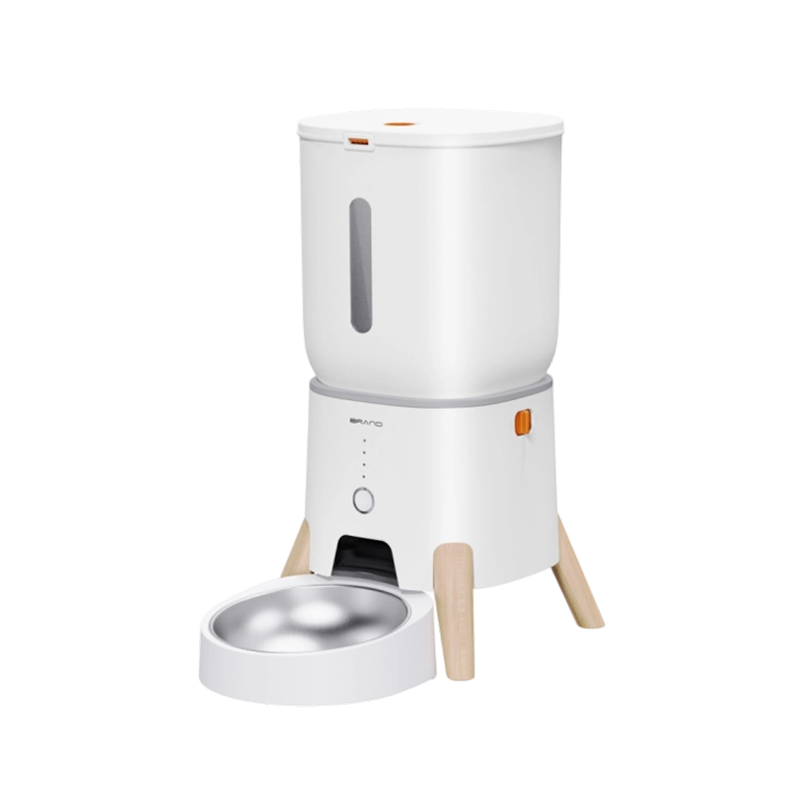
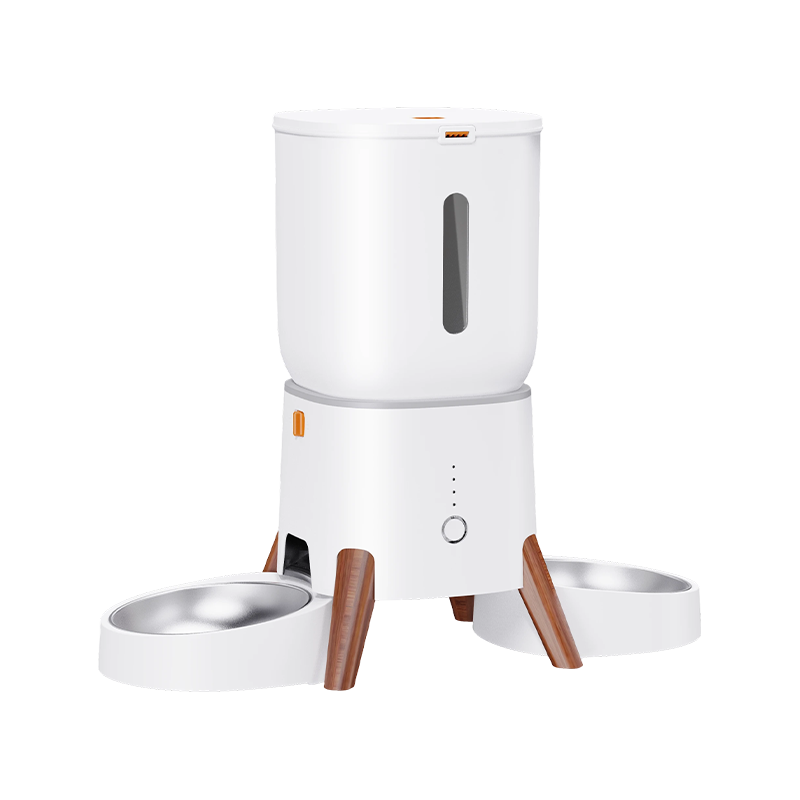 EZ3003 Dual-Bowl Automatic Pet Feeder with App ControlA compact 5 L stainless-steel dual-bowl feeder with adjustable compartments and app-controlled timed portions, suited to households comparing bowl depth and divider design.View Product →
Remote control: who actually needs it
App control suits households that travel, but it adds cost, certification work and support load. A remote-controlled model sits between the two extremes: an infrared or RF remote lets an owner add a portion or shift the schedule without pairing a phone, which helps older users and markets with congested 2.4 GHz bands.
Fix the button logic early. Owners forgive a plain interface; they do not forgive an accidental double feed at 3 a.m. caused by an unlabelled long press.
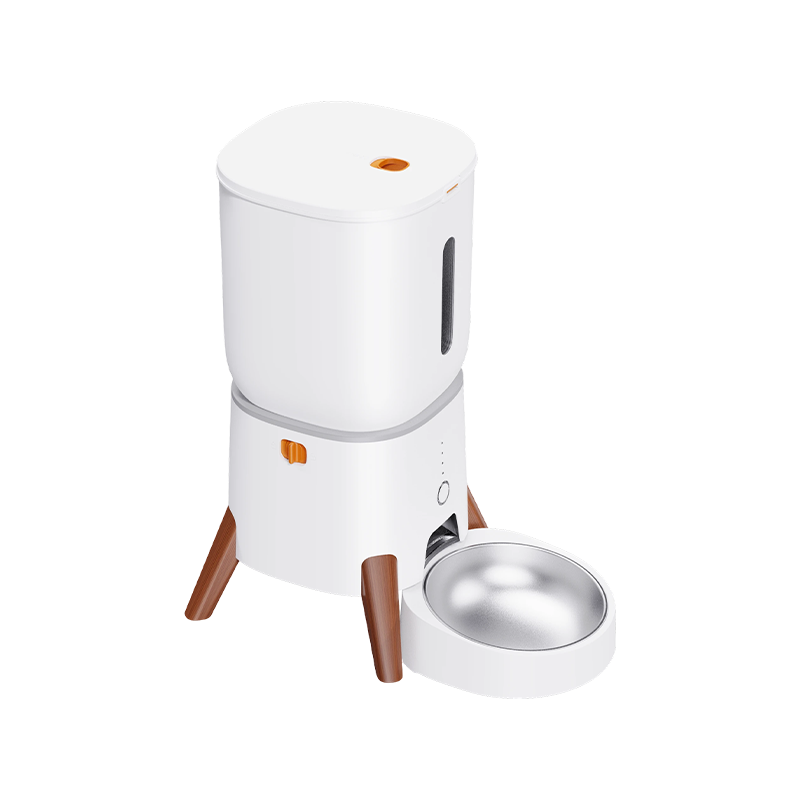 EZ3003 Single-Bowl Remote-Controlled Automatic Pet FeederA 5 L stainless-steel feeder with app scheduling and voice recording; its button logic deserves early review to prevent accidental double feeds.View Product →
What to verify before placing an order
Incoming inspection should test behaviour, not just appearance. A workable checklist for a first shipment:
- Dose-weight audit at three portion sizes, ten cycles each, recorded against the declared tolerance.
- Jam test with the smallest and largest kibble diameter in your range.
- Power-cut test: pull the adapter mid-schedule and confirm the plan survives.
- Carton drop test, plus a 24-hour loaded-hopper test for lid and latch creep.
- Battery runtime measured rather than quoted; a claimed 30 days is often 12 in practice.
- Documents: CE, FCC, RoHS or ETL for your market, plus a spare-parts list.
Tooling ownership is the other question worth asking. A supplier with its own mould shop and injection capacity can hold tolerances on the auger housing and revise a design without re-quoting the project. Ningbo Meace Pet Products, which has built pet products since 2012, runs a 45,000 m² plant with 50 injection machines and more than 10 production lines, the kind of setup that keeps a feeder programme on schedule when a mould needs a revision.
Building the rest of the feeding station
Feeders are rarely bought alone. A filtered water source keeps the station hygienic, gives the retailer a bundle to sell, and usually shares the same plastic-part and pump supply base. Matching bowl height, footprint and colour across the pair makes the products look designed rather than assembled, a small detail that shows up in conversion.
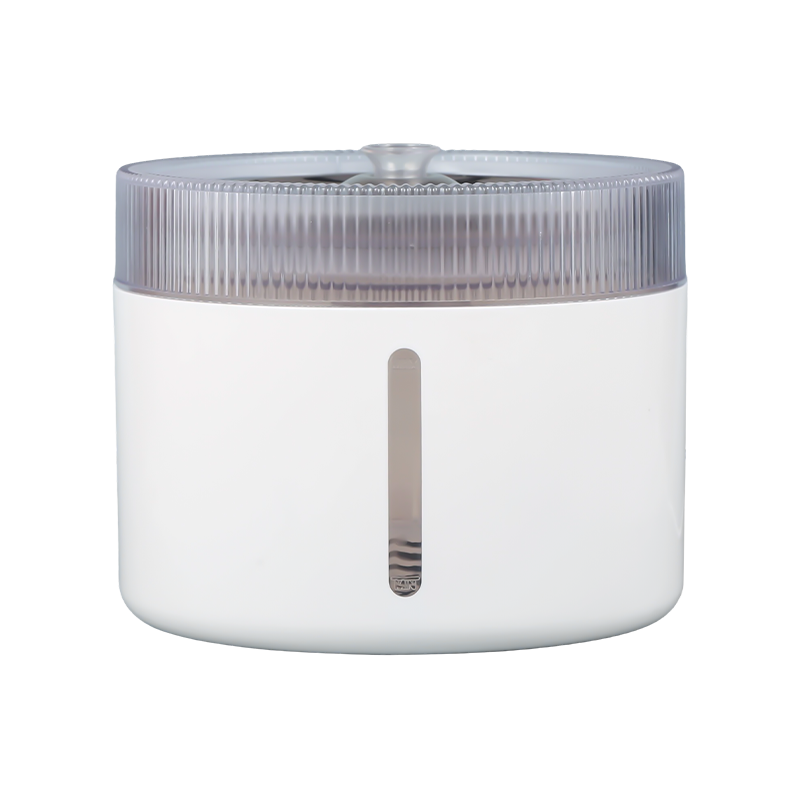
If you are planning a station range, review the pet water fountain line alongside the feeder range so moulding, packaging and certification work are shared.
Three questions settle most automatic pet food feeder decisions. How tight is the dose on your own kibble, rather than on the supplier's sample? What happens when power or Wi-Fi drops? And who owns the tooling if the design changes in year two? Answer those and the feature list becomes a question of price rather than risk.
Contact Information
No. 2, Macaotou Road, Mazhu Town, Yuyao City, Zhejiang Province, China
+86-15669283739
Copyright © Ningbo Meace Pet Products Co., Ltd. Rights Reserved
