

 English
 Español
 Português

-
+86-15669283739
-

-
Home / News / Industry News / Automatic Pet Food Feeder: Portion Accuracy, Jam Rates, and Sourcing Specs
Automatic Pet Food Feeder: Portion Accuracy, Jam Rates, and Sourcing Specs
2026-11-05
Content
- 1 The Three Numbers to Ask For First
- 2 Portion Accuracy: What a Realistic Tolerance Looks Like
- 3 Kibble Geometry, Hopper Slope, and Jam Rates
- 4 Power Loss, Dropout, and What Happens at 3 A.M.
- 5 Matching the Feeder to the Household
- 6 A Procurement Checklist That Catches Field Failures
- 7 Why Tooling Depth Changes Delivery and Cost
A feeder set to 10 grams that actually drops 13 grams three times a day adds about 9 grams of kibble daily — roughly 30 kcal, or the difference between a stable weight and a slow creep upward on a 4 kg cat. Nothing on the box warns you, and the app still shows "10 g."
That single number explains why dispense tolerance, jam behavior, and power-loss handling should decide the purchase. Wi-Fi, cameras and voice recording are accessories once those three hold up. Below is how to specify a feeder that keeps its portion size after 5,000 cycles, how to screen kibble compatibility before tooling, and where in-house mold and injection capacity changes the delivery math.
The Three Numbers to Ask For First
Before discussing design language or packaging, request three figures in writing. Suppliers who can answer immediately usually have a test bench on site; suppliers who answer with "smart app control" usually do not.
- Dispense tolerance at the smallest setting, given in grams and as a percentage — for example ±2 g on a 10 g portion, or ±20%.
- Jam rate per 1,000 cycles, measured with a named kibble diameter and shape, not with plastic test pellets.
- Battery backup hours and whether the schedule survives a full outage without re-pairing to a phone.
Each of these maps to a real household failure: an overweight pet, a missed meal, and a feeder that forgets breakfast after a storm.
Portion Accuracy: What a Realistic Tolerance Looks Like
Three mechanisms dominate the category, and each carries a different error profile. Screw or auger conveyors meter by rotation count, which is cheap and repeatable but sensitive to kibble size. Rotating drums drop fixed volumes and are the most consistent per portion, though cup walls wear over time. Gravity flaps are the least predictable because portion size depends on how the kibble settles.
| Feed mechanism | Typical spread at a 10 g portion | Best fit | Failure mode to watch |
|---|---|---|---|
| Auger / screw conveyor | ±2–3 g | Single pet, 8–10 mm kibble | Bridging in the hopper; kibble crushed at the outlet lip |
| Rotating drum with volume cups | ±1–2 g | Cats on 4–6 small meals daily | Cup volume drift after roughly 8,000 cycles |
| Gravity flap / hopper release | ±5 g or worse | Budget dry-climate markets | Humidity clumping; no true portioning at small settings |
Write the tolerance as a percentage of the smallest setting, not the largest. A feeder that holds ±3% at 100 g can still be off by 40% at 10 g, and small-portion accuracy is what owners notice first.
Kibble Geometry, Hopper Slope, and Jam Rates
Most feeding complaints trace back to a mismatch between the food and the outlet. Three design rules prevent it: keep the discharge opening at least 2.5 times the largest kibble dimension, hold hopper walls at 60–65° for kibble above 12 mm, and avoid sharp lips that shatter pellets into dust, which then absorbs humidity and bridges across the inlet.
| Kibble diameter | Jam rate per 1,000 cycles | Design adjustment |
|---|---|---|
| 6–7 mm (cats, small breeds) | ~12 | Tighter auger clearance, slower motor, shorter flight pitch |
| 8–10 mm | ~2 | Standard auger configuration performs well |
| 11–12 mm | ~5 | Widen the outlet, reduce auger pitch |
| 13–15 mm (large breed) | ~21 | Drum or gravity-assist beats a single auger |
The practical takeaway: decide the kibble range you will support before the mold is cut, not after. Changing an outlet diameter later means reworking the cavity, which is where schedules slip.
Power Loss, Dropout, and What Happens at 3 A.M.
Four AA cells typically carry 8–12 hours of scheduled feeds, which is enough for a power cut but not for a weekend away. Two behaviors matter more than capacity. First, non-volatile memory: the schedule must survive 72 hours unplugged and resume without a phone. Second, local execution — if the feeder needs the cloud to dispense, it stops the moment the router reboots.
Also test near-empty performance. Many auger designs over-dispense once the hopper drops below 20% capacity, so the last two days of a fill cycle deliver heavier portions than the app reports.
Matching the Feeder to the Household
Selection is mostly a routing exercise. Work down the tree before comparing prices.
- One pet, one bowl, fixed schedule → timer feeder with auger metering
- Portion under 15 g per meal → verify small-portion tolerance first
- Two pets or a food-and-water station → dual-bowl configuration
- Same food, two pets → split hopper with independent settings
- Food plus water → dual bowl plus a separate circulating fountain
- Irregular hours, sitter visits, travel → remote-controlled unit with local schedule fallback
- Cat needing 5–6 small meals → drum feeder with multiple compartments
For a two-pet home, the dual-bowl format removes a second appliance from the floor and keeps feeding on one schedule.
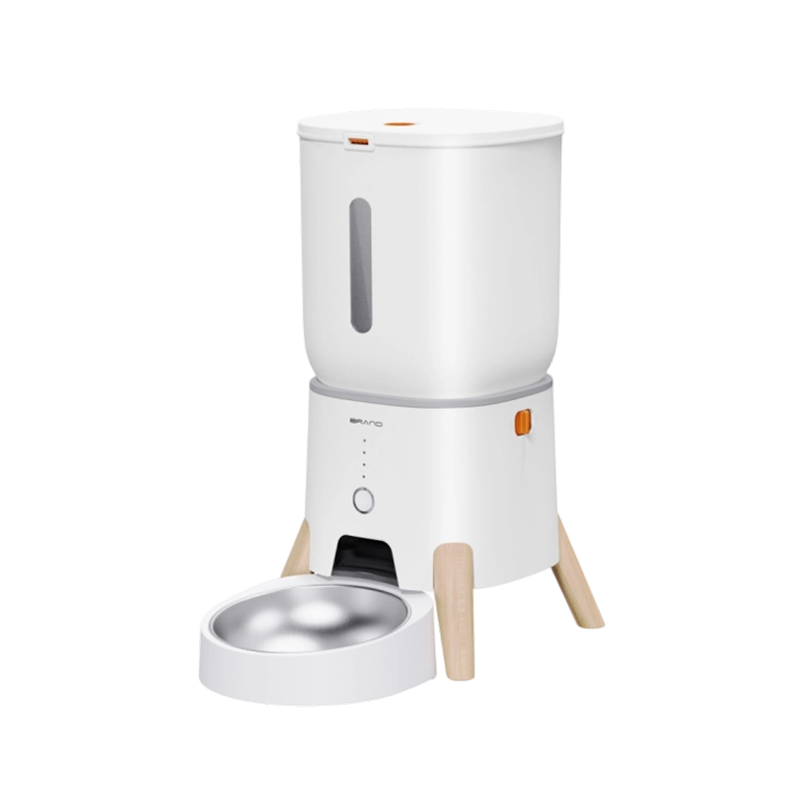
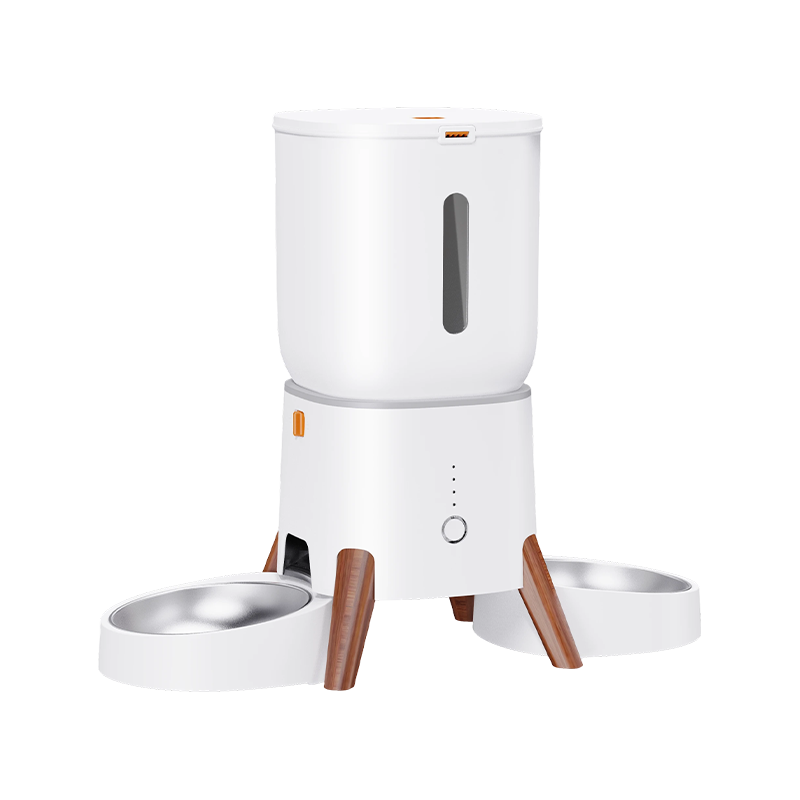 EZ3003 Dual-Bowl Smart Pet FeederCompact dual-bowl feeder with 5L storage, stainless steel bowls, and timed/app-controlled feeding for two-pet homes sharing one schedule.View Product →
When the owner is away and meal timing shifts, a remote-controlled model gives manual dispensing without walking to the unit — verified against the local schedule so a dropped connection never means a skipped meal.
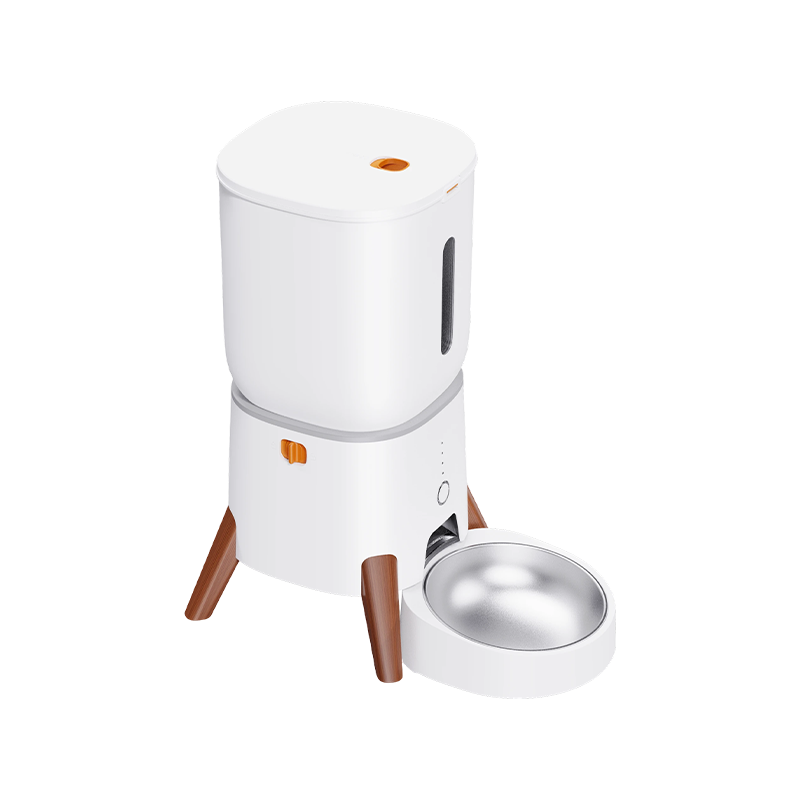 EZ3003 Single-Bowl Remote-Controlled Automatic Pet Feeder5L automatic feeder for small-to-medium pets with app-controlled portions and timed feeding; app control requires mains power, while battery mode still operates.View Product →
Where the station includes drinking, a filtered fountain pairs naturally with any feeder above, since both share the same cleaning routine and floor footprint.
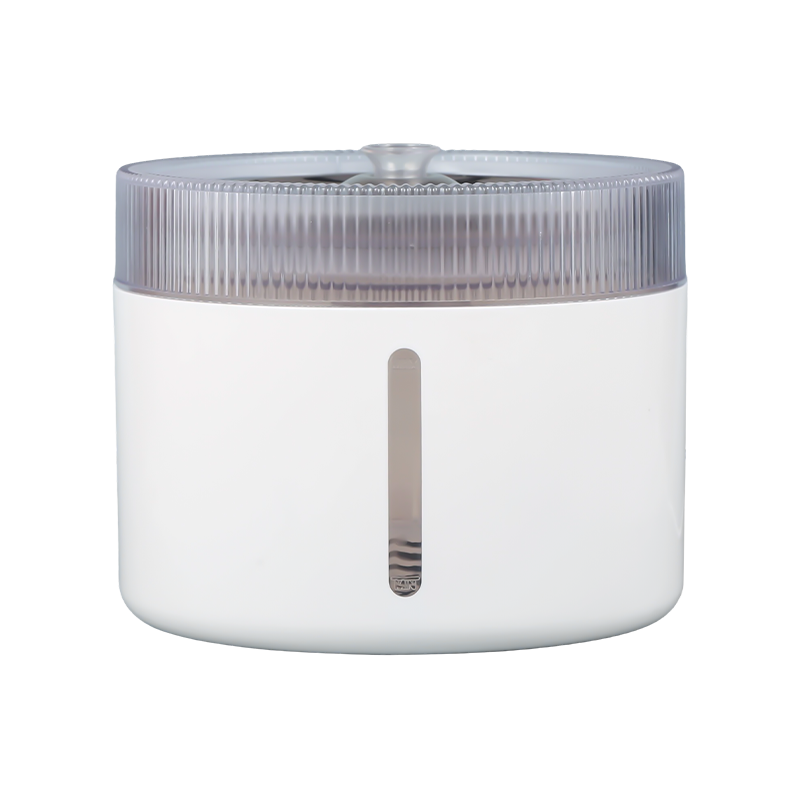
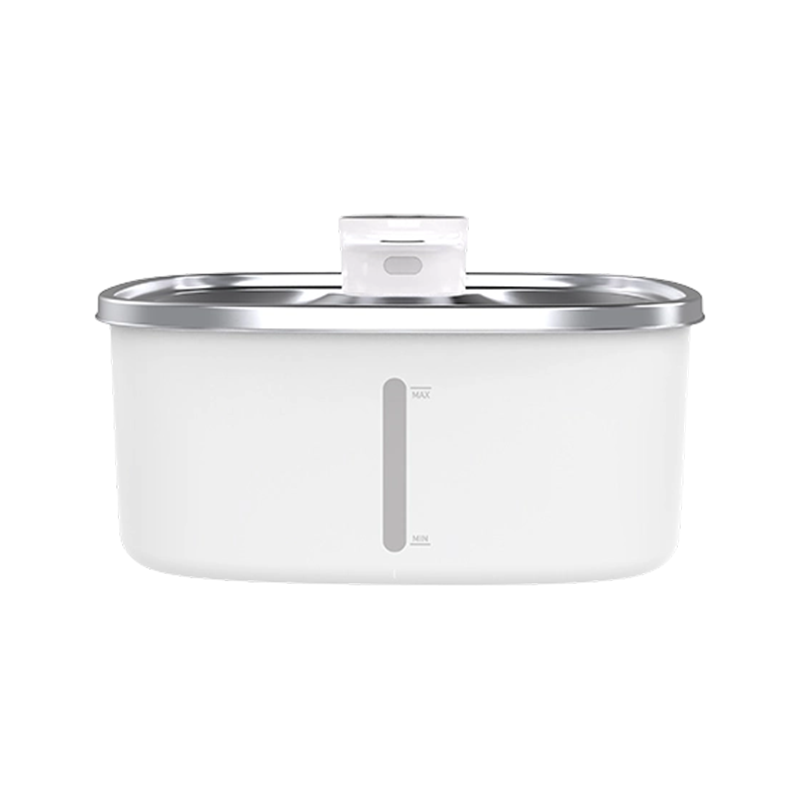 EZ1005 Circulating Filter Smart Pet Water Fountain5L circulating fountain for cats and dogs, with 304 stainless steel, 4000mAh battery and timed, sensor or continuous modes to encourage hydration.View Product →
A Procurement Checklist That Catches Field Failures
- Run 5,000 dispensing cycles with production kibble and weigh every 100th portion; plot drift, not just the average.
- Drop-test the packed carton to ISTA 3A before approving artwork — retail packaging hides a loose hopper.
- Cycle the hopper lid latch 2,000 times; it is the first part to fail in homes with dogs.
- Request food-contact migration reports against FDA 21 CFR and EU 10/2011, not only a compliance statement.
- Confirm the low-battery warning triggers with at least 10% capacity remaining, so owners get a night's notice.
- Verify schedule retention after 72 hours without power and no app interaction.
- Test the smallest and largest kibble in your SKU range on the same unit.
- Settle tooling ownership and cavity maintenance costs in the contract before the first mold is cut.
Why Tooling Depth Changes Delivery and Cost
Portion accuracy is a mechanical outcome, so the supplier's mold and injection capability sits directly behind the specification. Ningbo Meace (Mays) has manufactured pet products since 2012 from a 45,000 m² site in Yuyao, with more than 300 staff, an in-house mold shop, its own injection shop running 50 machines, and 10-plus production lines — the arrangement that allows an outlet diameter or auger pitch to be revised without an external tooling queue.
Feeder buyers weighing formats can start with this comparison of automatic versus timed feeder designs, then work through the automatic pet feeder range for hopper sizes and bowl configurations. Both pages reflect the same manufacturing base, which matters when a private-label program needs consistent cavity quality across repeat orders rather than a one-off sample.
If you take one thing from this, take the tolerance: fix the dispense spread at the smallest portion, prove it over thousands of cycles with the kibble you will actually ship, and write the power-loss behavior into the spec sheet. Features sell the first unit; portion consistency sells the reorder.

Contact Information
No. 2, Macaotou Road, Mazhu Town, Yuyao City, Zhejiang Province, China
+86-15669283739
Copyright © Ningbo Meace Pet Products Co., Ltd. Rights Reserved
