

 English
 Español
 Português

-
+86-15669283739
-

-
Home / News / Industry News / Pet Blow Dryer Buying Guide: Speed, Heat, Noise, and Grooming Workflow
Pet Blow Dryer Buying Guide: Speed, Heat, Noise, and Grooming Workflow
2026-11-26
Content
A wet double-coated dog can hold a surprising amount of water close to the skin. A towel removes the surface moisture, but the undercoat stays damp, and that is where a pet blow dryer earns its place. The practical conclusion is simple: choose a dryer by airflow and control, not by heat alone. A hot, low-air machine can frighten the pet and leave the coat damp near the skin; a high-velocity dryer with adjustable heat and a noise level the animal tolerates usually finishes the job faster and more safely.
That rule holds for a home groomer buying one unit and for a buyer sourcing a container load. The differences are in duty cycle, serviceability, and how well the specification matches the coats the dryer will actually meet.
Start With the Drying Job, Not the Wattage
Coat type changes the specification more than wattage does. A short-coated beagle may dry in 10 to 15 minutes with a compact unit; a thick double coat or a long, dense doodle coat can take 30 to 60 minutes and needs more airflow, a wider nozzle, and more careful heat management. Wattage tells you about power draw, not how much air moves. Airflow, static pressure, and nozzle design determine whether you can push water out of the undercoat instead of just warming the surface.
| Coat type | Drying priority | Typical planning range | What to check |
|---|---|---|---|
| Short or smooth coat | Surface water and speed | 10-20 minutes | Wide nozzle, moderate heat, easy control |
| Double coat | Undercoat penetration | 30-60 minutes | High velocity, cool air, comb or slicker support |
| Long or silky coat | Tangle control | 20-40 minutes | Low heat, diffuser, section-by-section drying |
| Curly or dense coat | Lift and separation | 30-50 minutes | Wide nozzle, pre-comb, cool shot |
| Puppy or senior pet | Low stress | 15-30 minutes | Low noise, low heat, short sessions |
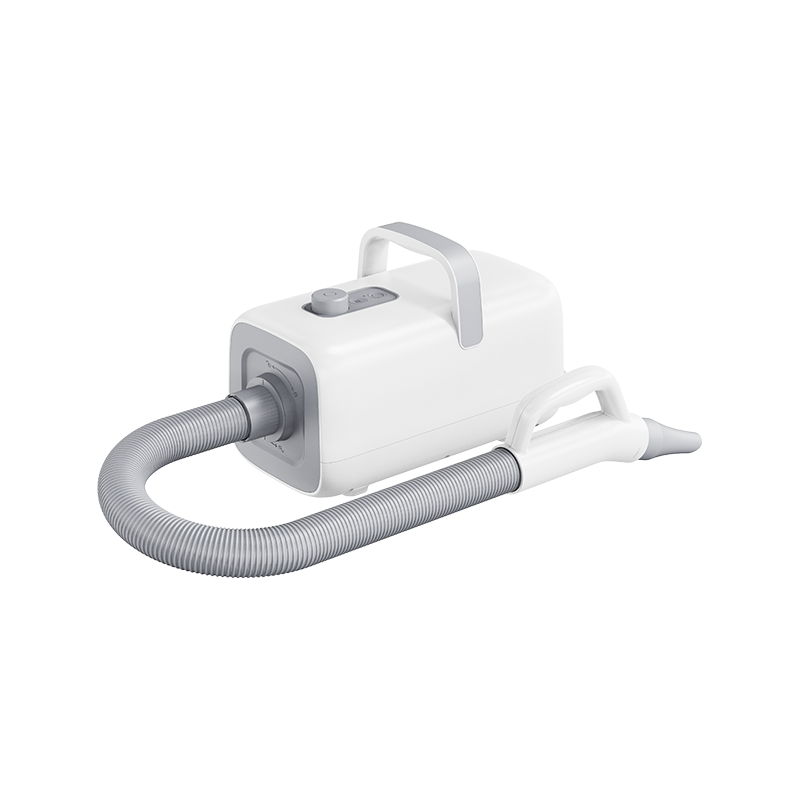
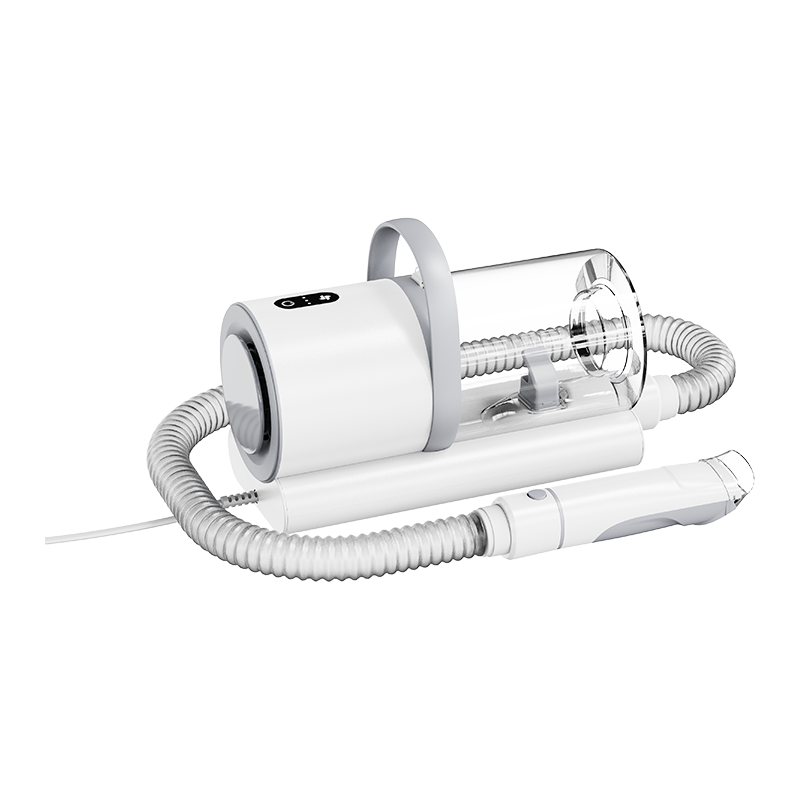
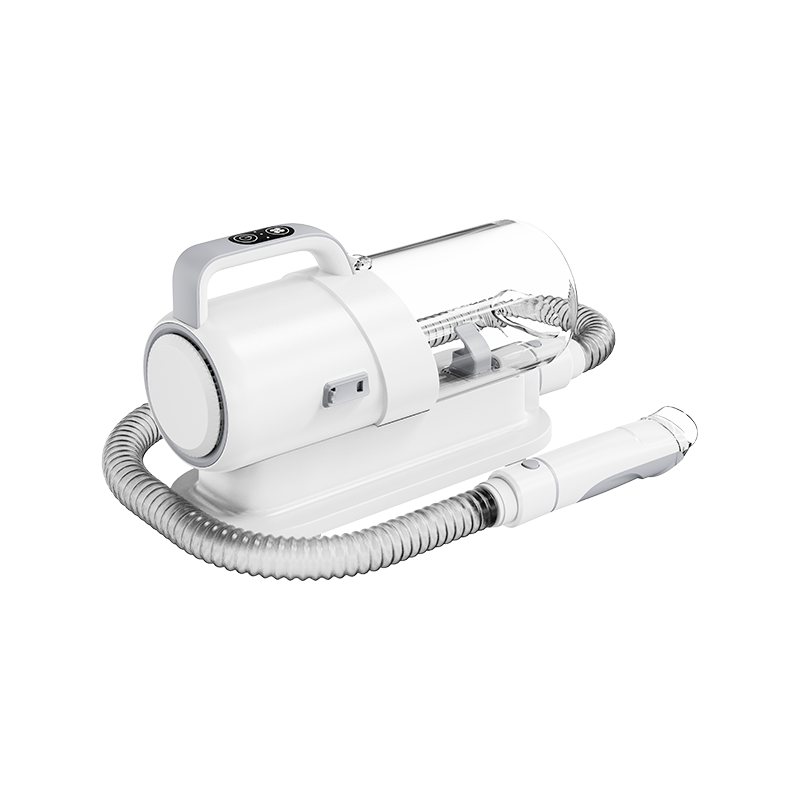
For a compact smart option, the smart pet blow dryer is one reference point for home and light professional use. Check the nozzle set and noise figure against the coat you handle most often, not against the best-case demo coat.
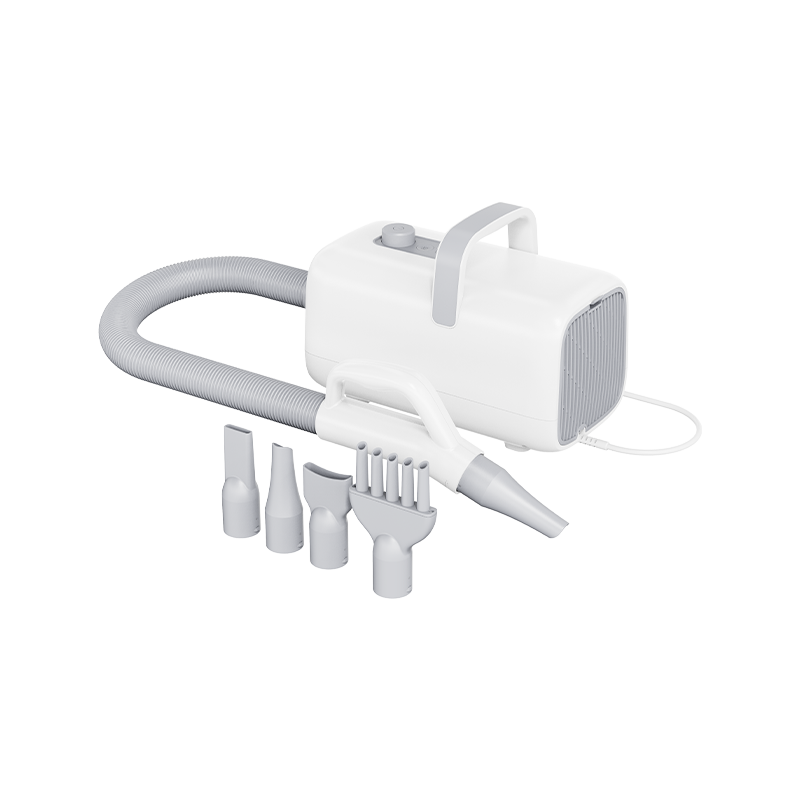 Smart Pet Blow Dryer MAS520Compact smart dryer with adjustable airflow, one-button heat, negative ions, and multiple nozzles; check nozzle set and noise level against your usual coats.View Product →
Airflow, Heat, and Noise Are a System
A dryer that wins on airflow but loses on noise can still fail in a home or salon. Many pets tolerate 60-70 dB better than 80-90 dB, but individual sensitivity matters. Use the lowest noise setting that still moves air, and let the pet acclimatize with the dryer off, then on low. Heat should be controlled, not guessed. The air at the nozzle should feel comfortable to the back of your hand, and the dryer should never be held in one spot. For double coats, keep the nozzle moving with the grain and then against it in small sections; for curly coats, use a diffuser or wide nozzle and work in layers.
- Motor and airflow: look for air speed, static pressure, and a motor rated for the expected duty cycle.
- Heat control: variable heat, a cool setting, and a thermal cut-off matter more than a single maximum temperature claim.
- Noise: check dBA at one meter, tone quality, and vibration, not just the lowest number on the box.
- Safety: confirm certification for the target market, fuse protection, grounded plug, and insulated hose.
- Filtration: a washable filter protects the motor and keeps dust from blowing back into the coat.
- Ergonomics: weight, hose length, and nozzle changes affect how long a groomer can work without fatigue.
The most expensive mistake is not a failed motor; it is a dryer that the pet will not tolerate. A noisy, hot dryer turns grooming into a struggle, and that affects finish quality, staff time, and repeat business. In a salon, a dryer that is 10 dB louder than needed can slow down every appointment. In a home, a dryer that is too heavy or too bulky may stay in the cupboard. For a broader look at grooming tools, blow dryers, and combs as a professional kit, this grooming tools guide is useful when you are building a full setup rather than buying a single unit.
For Manufacturers and Buyers: What to Specify
When sourcing a pet blow dryer, write the specification around the use case. A salon unit may need continuous duty, a 2-3 m hose, a 3-4 nozzle set, and a washable filter. A home unit may prioritize low weight, storage, and a lower noise level. A mobile groomer needs secure storage, low vibration, and a power plan that matches the vehicle. The housing matters too: resin choice, wall thickness, screw bosses, and vent design affect noise, heat, and durability. If the factory controls its own mold and injection molding, changes to the housing, nozzle, or filter cover are easier to validate and repeat. That is a real advantage when a buyer needs a custom color, a private-label nozzle set, or a packaging change without losing tooling control.
| Area | What to specify | Why it matters |
|---|---|---|
| Airflow | Air speed at nozzle, static pressure, nozzle set | Determines drying time and undercoat penetration |
| Heat | Variable heat range, cool setting, thermal cut-off | Reduces skin stress and overheating risk |
| Noise | dBA at one meter, tone quality, vibration | Affects pet tolerance and staff comfort |
| Safety | Certification for target market, fuse, grounded plug, hose insulation | Reduces returns and compliance risk |
| Materials | Housing resin, wall thickness, vent design, drop test | Affects durability and perceived quality |
| Service | Filter, nozzle, hose, and motor replacement | Protects after-sales cost and brand reputation |
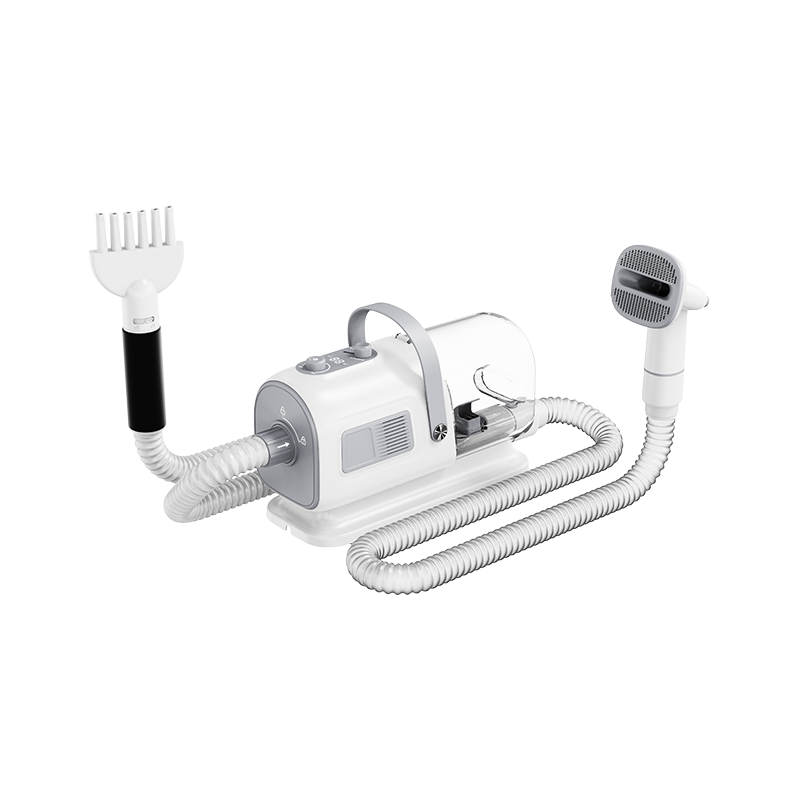
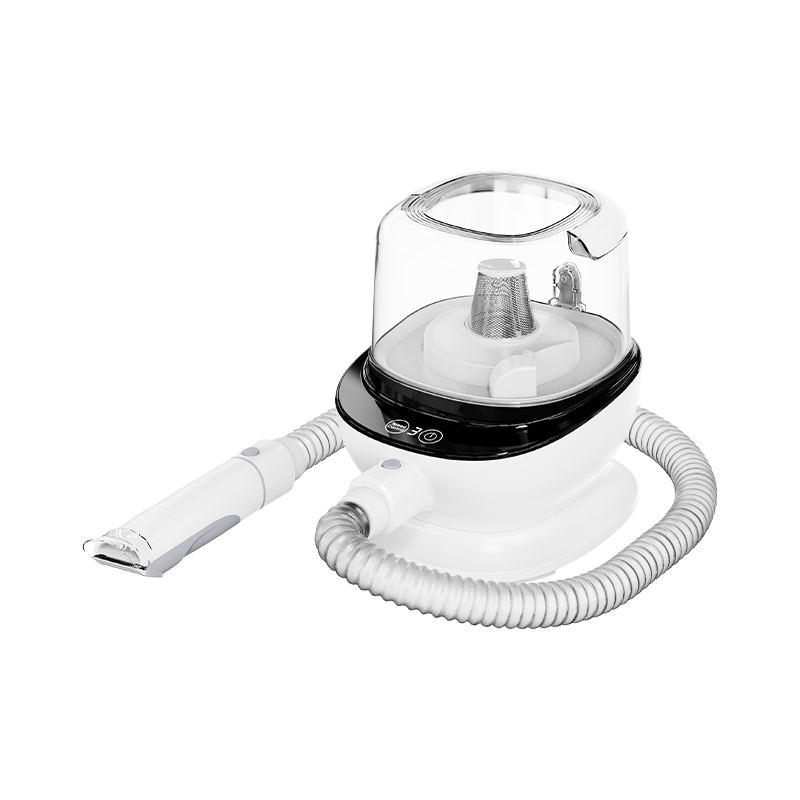
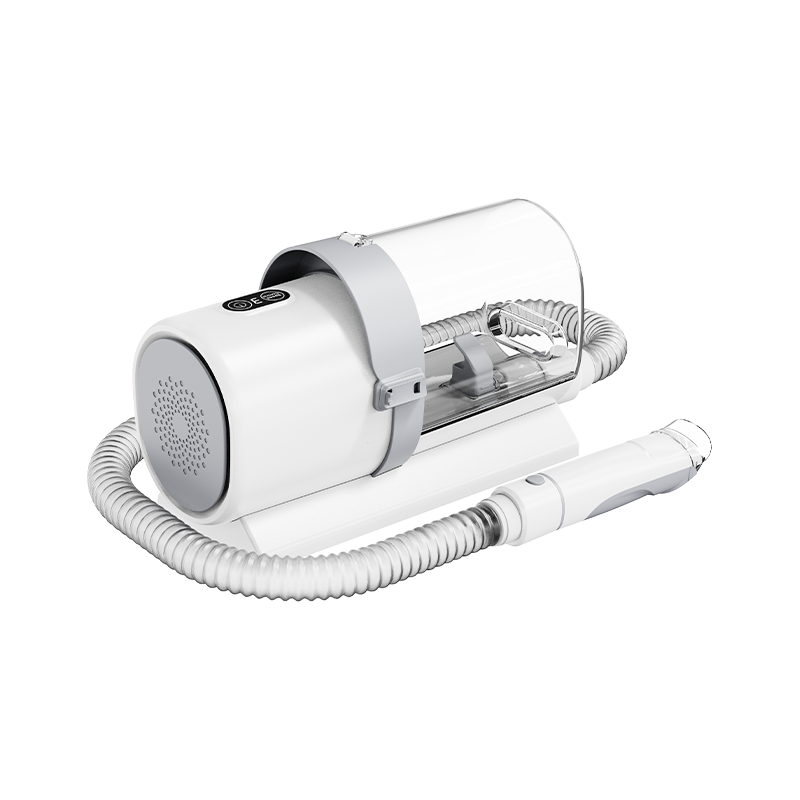
For a combined vacuum and blower workflow, the pet hair vacuum and blower all-in-one machine is a practical reference for buyers building a grooming kit rather than a single-purpose dryer.
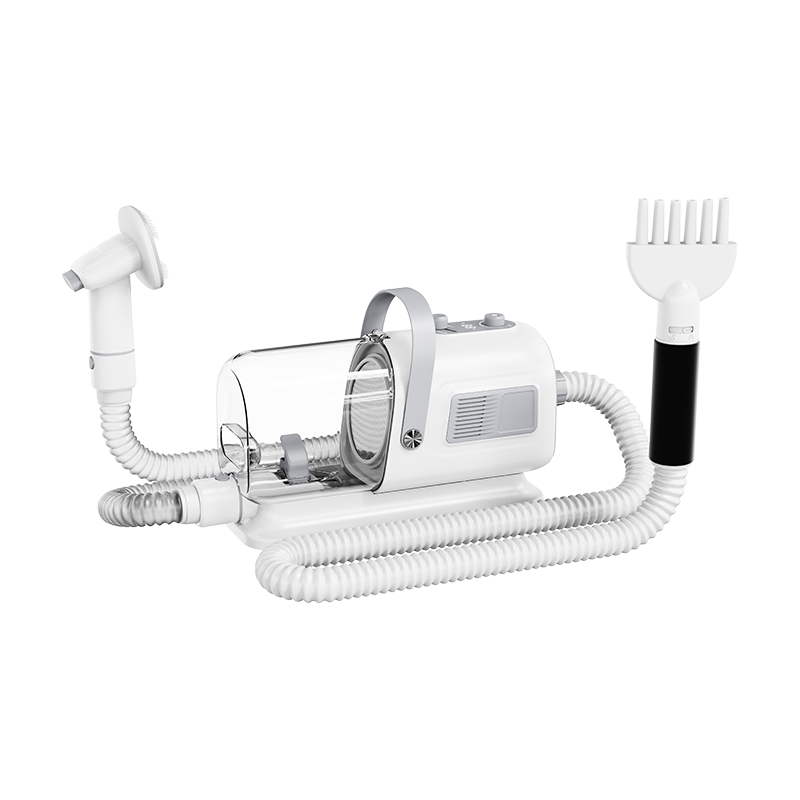 Pet Hair Vacuum and Blower All-in-One MAS531Combines vacuuming, blowing, trimming, and combing with variable speed, digital temperature control, and a display; useful for building a multi-step grooming kit.View Product →
Matching the Dryer to the Grooming Setup
Home users, salons, and mobile groomers need different balances. A home dryer can be compact and quieter, but it still needs enough velocity to reach the skin. A salon dryer should handle back-to-back use and have serviceable parts. A mobile unit needs secure storage, low vibration, and a power plan that matches the vehicle. A retail or private-label buyer should test the unit with the actual coat types and nozzle set the market uses, not just a bench test.
Use this simple decision tree before shortlisting:
- Mostly short coats at home
- Choose a compact, low-noise unit with moderate airflow and easy storage.
- Thick double coats or heavy shedding
- Prioritize high velocity, cool air, a wide nozzle, and a motor rated for longer sessions.
- Salon or mobile grooming
- Check continuous-duty rating, serviceable filters, spare nozzles, and hose length.
- Private-label or retail program
- Confirm tooling ownership, packaging control, spare-parts supply, and consistent noise and heat performance across batches.
A Practical Selection Checklist
- Measure airflow and noise at the nozzle and at one meter, not only at the factory setting.
- Confirm the heat range and cool setting with the coat type you handle most often.
- Check safety certification for the target market before comparing price.
- Ask for motor life and continuous-duty data if the dryer will be used in a salon.
- Match the nozzle set to coat types, especially for double coats and curly coats.
- Check filter access and replacement cost, because a clogged filter reduces airflow and raises heat.
- Test weight and hose balance with one hand, as a tired groomer makes more mistakes.
- For B2B orders, confirm tooling ownership, MOQ, packaging, and after-sales parts supply.
What Good Drying Looks Like
A good dry is not a hot dry. The coat should feel dry at the skin, with no damp patches behind the ears, under the harness area, or between the toes. The pet should be calm enough to stand, and the groomer should not need to chase the animal with the nozzle. If the coat is still damp after the planned time, increase airflow or reduce coat thickness with a pre-dry towel and comb, rather than raising heat. That habit protects skin and keeps the dryer within its duty cycle.
The bottom line: a pet blow dryer should shorten drying time without turning grooming into a stress event. Match airflow to the coat, keep heat under control, and treat noise as a specification rather than an afterthought. Buyers who write those points into the brief get fewer returns, calmer pets, and a dryer that keeps earning its place in the grooming room.

Contact Information
No. 2, Macaotou Road, Mazhu Town, Yuyao City, Zhejiang Province, China
+86-15669283739
Copyright © Ningbo Meace Pet Products Co., Ltd. Rights Reserved
