

 English
 Español
 Português
-
+86-15669283739
-

-
Home / News / Industry News / Pet Smart Products: How to Choose Reliable Ones for Your Brand and Market
Pet Smart Products: How to Choose Reliable Ones for Your Brand and Market
2026-09-24
Content
- 1 What Is a Pet Smart Product?
- 2 What Should a B2B Buyer Check First?
- 3 Why Manufacturing Structure Matters
- 4 Automatic Feeders: Portion Control Is the Core
- 5 Self-Cleaning Litter Boxes: Safety Is the Differentiator
- 6 Water Fountains: Pump Quality Determines Longevity
- 7 How to Plan a Smart Pet Product Order
Finding a supplier for pet smart products can feel like walking into a crowded trade show: every manufacturer claims the same mix of automation, safety, and modern design. The real difference shows up later, in the first batch inspection, in customer reviews, and in warranty claims. Based on our experience manufacturing automatic feeders, water fountains, litter boxes, and grooming tools since 2012, we have learned that a reliable pet smart product is one that keeps working safely when the owner is not watching it. That simple standard should guide every purchasing decision.
What Is a Pet Smart Product?
A pet smart product is not simply a plastic item with a sensor. It is a device that performs a recurring pet-care task automatically, allowing the owner to save time or avoid common mistakes. The category includes automatic feeders, self-cleaning litter boxes, circulating water fountains, and some grooming tools with suction or drying functions. What separates a genuinely smart product from a gadget is whether it can handle real-world conditions: a dog pulling on a retractable leash, a cat that jumps into the litter box while it is cycling, or a feeder jamming after weeks of use. In other words, intelligence is measured by reliability, not by the number of buttons.
In retail catalogs, many simple products carry the word smart. A feeder with a digital timer, a fountain with LED lights, a litter box with a remote alert - all are called smart. The label is useful for marketing, but it does not tell you whether the product can survive daily use in a home. When you source for a brand, you need a product that can handle clumsy pets, curious children, power fluctuations, and owners who do not read the manual.
| Category | Typical Feature | Risk to Check |
|---|---|---|
| Automatic pet feeder | Scheduled or remote dispensing | Jammed rotation, portion drift, battery failure |
| Self-cleaning litter box | Automatic cleaning cycle | Sensor mistrigger, pet trapped during cycle |
| Pet water fountain | Circulating filter and pump | Noisy pump, motor burnout, leaking seam |
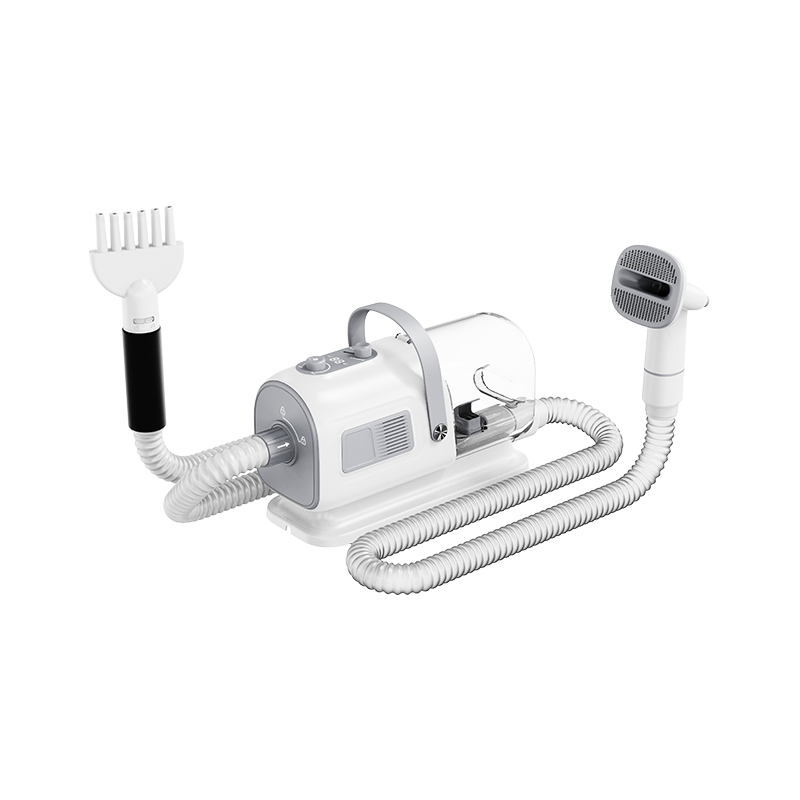
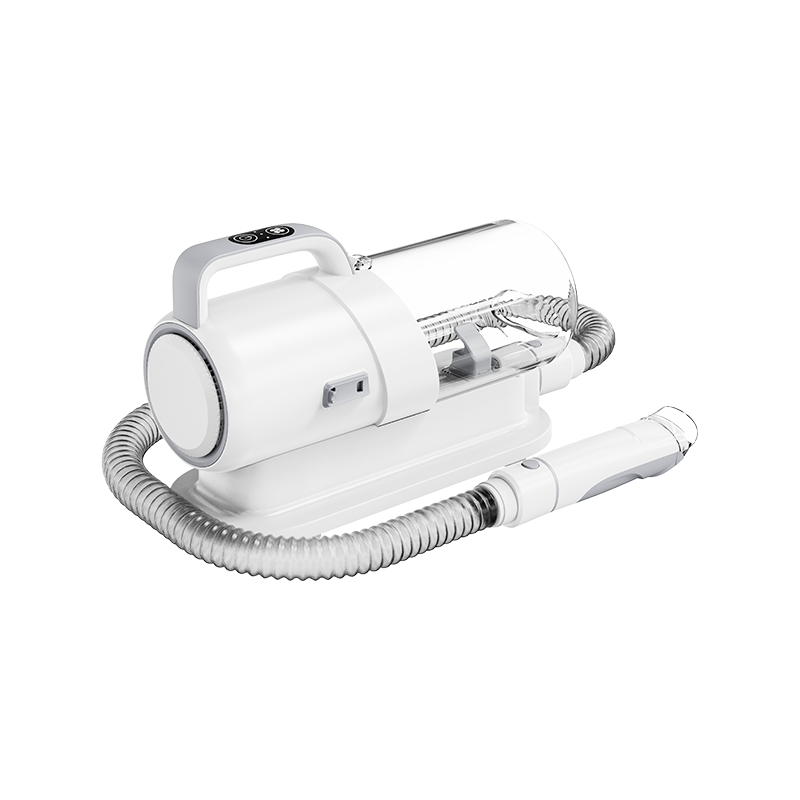
| Pet grooming tools | Suction, clipping, or drying functions | Weak suction, clogged hair path, overheating |
What Should a B2B Buyer Check First?
Start with the product's failure mode, not its feature list. For each smart product, ask what happens when a sensor fails or a motor stalls. A feeder should still allow manual feeding. A litter box should stop its rake if resistance is detected. A water fountain should shut off before the pump runs dry. These fail-safe behaviors are what keep warranty claims low and reviews positive.
- Material safety: use food-grade or BPA-free materials for feeders and fountains, and stainless steel for litter boxes that need frequent sanitizing.
- Electrical safety: check low-voltage design, overheat protection, and water-resistant motors. Confirm the destination market's certification requirements.
- Noise level: measure decibel ratings, especially for devices used at night. A quiet pump and gear motor are worth the extra cost.
- Spare parts and service: ask whether replacement pumps, rakes, and sensors are available. This determines how easy it is to support the product after the container arrives.
We have seen products fail for reasons that had nothing to do with the electronics. A drain plug that is hard to remove, a bowl that is too shallow, or a filter that is difficult to buy again can all kill a product. Therefore, the quality definition should come from the end user's daily routine.
Why Manufacturing Structure Matters
Many suppliers of pet smart products are not manufacturers at all. They buy finished goods from different factories and add their own logo. That approach can work for simple items, but for smart products it creates inconsistency from batch to batch. At Meace, we run our own mold shop and injection molding workshop. The shell, gears, and structural parts come out of the same quality system as the final assembly. With 50 injection molding machines, more than 10 assembly lines, and a 45,000-square-meter factory, we can control tolerances and delivery dates better than a trading company can. Our product range shows how this capability applies across multiple categories.
A manufacturer with in-house tooling can respond faster when a buyer requests a correction. If a dimensional problem appears during assembly, the mold shop can adjust the mold without waiting for an outside vendor. Injection molding in-house also means the buyer can compare material cost and cycle time in real time. This is why we describe ourselves as one of the few suppliers in this category with a complete production chain.
Automatic Feeders: Portion Control Is the Core
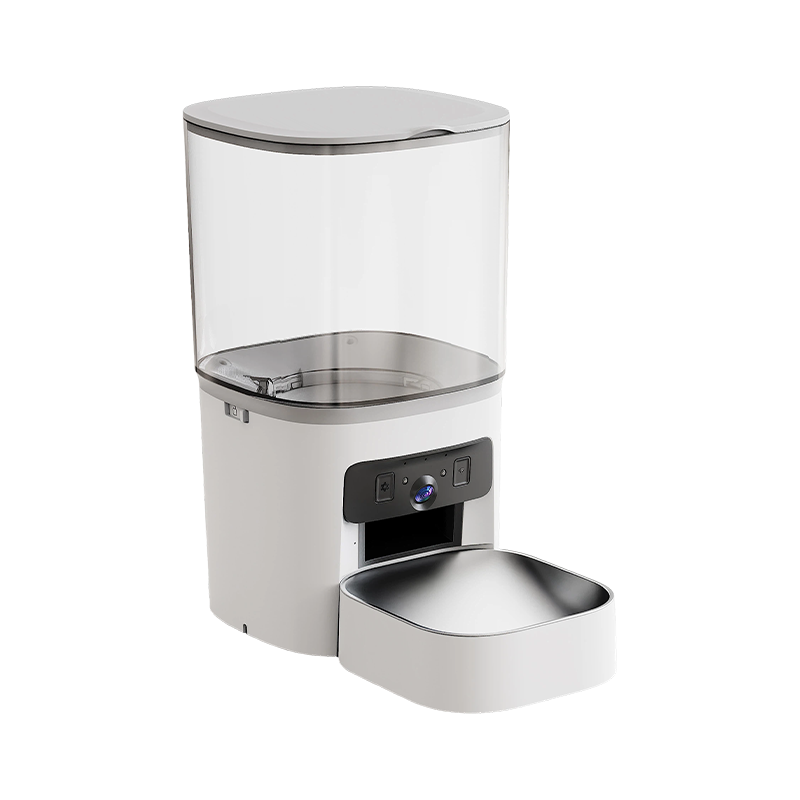
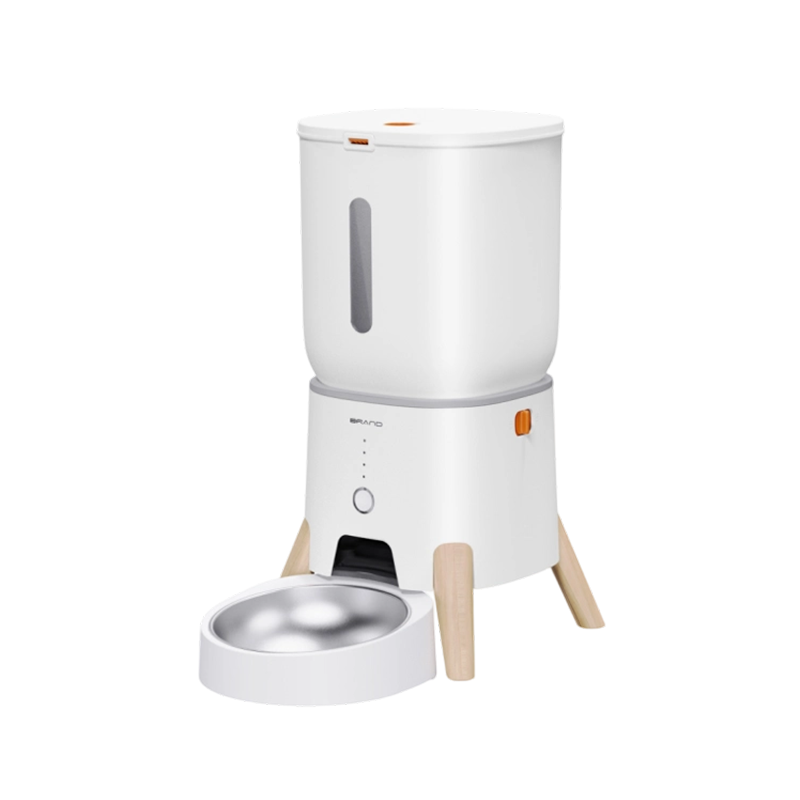
Automatic feeders solve one problem: consistent portioning. But a good feeder depends on the rotor and the hopper seal. If the rotor skips or the hopper lets in humidity, the food can clump and jam the mechanism. The buyer should also look at the size of the dispensing portion, the ease of cleaning, and whether the feeder has a backup battery or a gravity-feed mode. We have compared automatic feeders with gravity feeders in detail, and the key trade-off is control versus simplicity. That comparison can help you decide which model fits your market. Read the automatic feeder vs. gravity feeder guide for a deeper look.
Another consideration is the food type. Dry food feeders are common, but some models support semi-moist food. The buyer should confirm that the rotor and dispensing opening match the pellet size and shape of the food that will be sold in their market. If the food is oily, the hopper and rotor should be easy to detach and wash without tools.
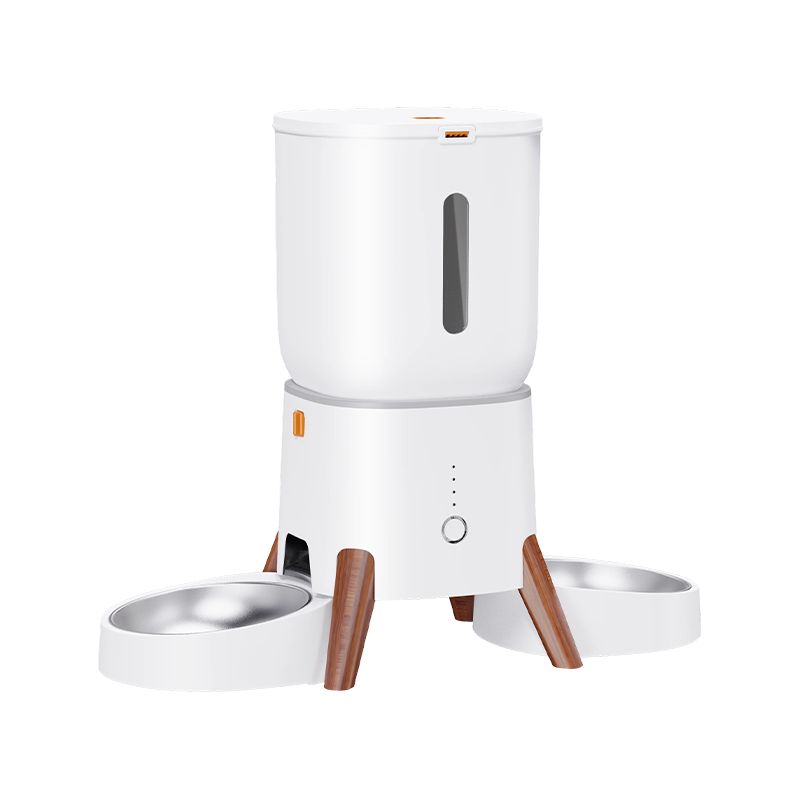 One-Piece Dual-Bowl Smart Pet FeederThis stainless steel dual-bowl feeder supports various dry food types and offers scheduled or app-controlled dispensing. Its adjustable compartments and easy-clean design address catalog concerns about hopper maintenance and pellet compatibility.View Product →
Self-Cleaning Litter Boxes: Safety Is the Differentiator
Self-cleaning litter boxes are the most complex product in a pet supply catalog. They combine sensors, motors, gears, and odor management. The most critical safety feature is the system that stops the cleaning cycle when the cat re-enters the box. Check the detection mechanism and the reaction time. Also evaluate the waste bin capacity and the type of litter required. A smart unit can reduce the owner's daily work, but if it fails, the result is a mess and an unhappy customer. Look for a design that uses fewer moving parts and a clear cleaning path, and make sure the manufacturer can supply spare sensors and motors.
A stainless steel litter box is a more traditional alternative. It is less automated but more durable and easier to sanitize. Some buyers start with a standard metal box to establish the brand, then move to smart versions later. For the smart version, ask for a video of a full cleaning cycle with a realistic amount of clumping litter. The video should show whether the rake leaves residue on the bottom or pushes waste against the motor housing.
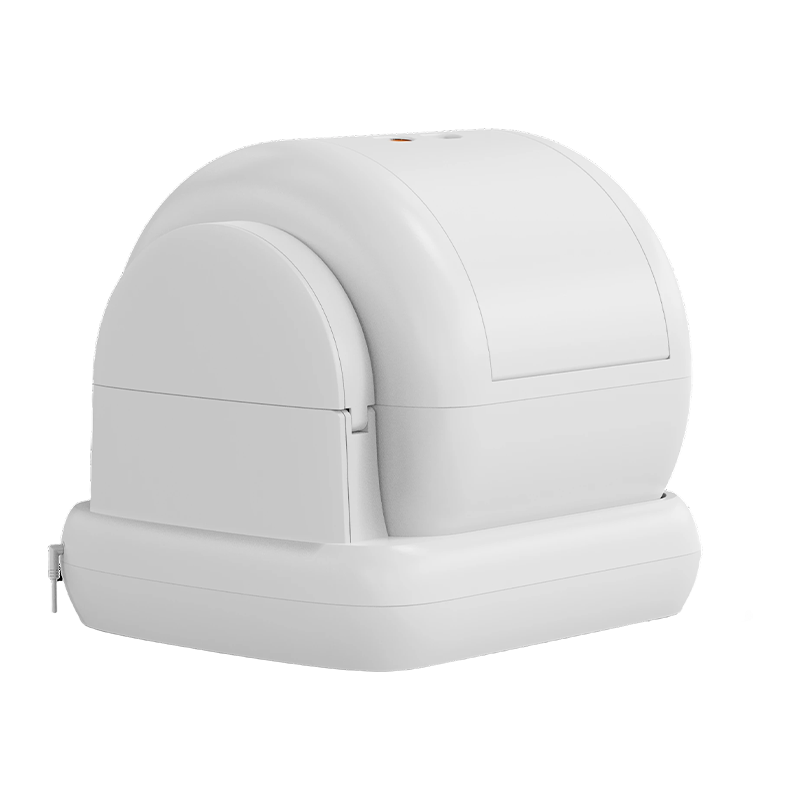 Smart Self-Cleaning Cat Litter BoxAn app-connected self-cleaning litter box with PP/ABS housing, manual and automatic modes, and a 5.5L waste bin. Its detection and cycle controls are key safety features for evaluating reliability in a busy multi-pet home.View Product →
Water Fountains: Pump Quality Determines Longevity
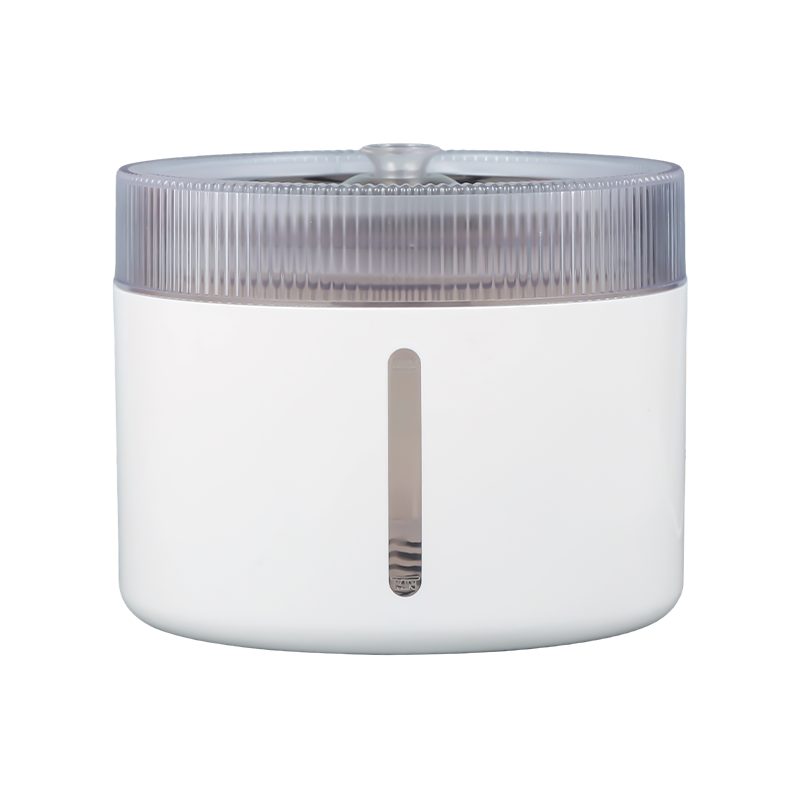
Water fountains encourage pets to drink more, but the pump is the part that fails first. A quiet, low-power brushless pump, a multi-layer filter, and a removable water tank are the features that matter. LED night lights and transparent water windows help owners see when the water level is low, but they do not fix a weak pump. Buyers should also check the seam sealing and the food-safe rating of the plastic. In our experience, the water flow path design is just as important as the motor: it affects noise, residue buildup, and how easy the fountain is to clean.
Water fountain filters need to be replaced regularly. The availability of filter refills is an important supply decision. If the buyer will distribute consumables, this becomes a recurring revenue stream. When evaluating a sample, run the pump continuously for 72 hours and check the noise level at night. Check whether the water tank develops a bio-film that is difficult to remove. These simple tests separate a solid product from a decorative one.
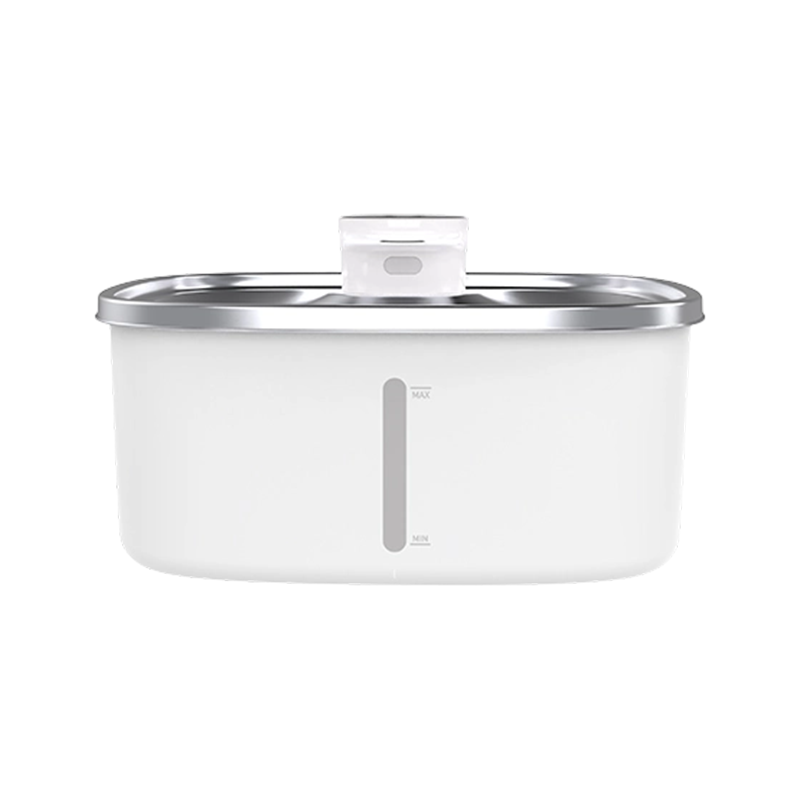 Circulating Filter Pet Smart Water FountainA large-capacity water fountain with multi-layer filtration, quiet operation, and three dispensing modes. Its 10L tank and sensor-activated flow address hydration needs while the pump and sealing are critical for long-term use.View Product →
How to Plan a Smart Pet Product Order
After the product category is selected, focus on the order process. Minimum order quantity is not the only number that matters. Ask about the historical defect rate, the warranty formula, and the lead time for spare parts. A mature supplier will provide a quality inspection plan and a clear process for corrective action. Customization is also possible on many items, including colors, logos, and even features. For example, retractable dog leashes can be tailored for your brand easily because the mechanical parts are mature. The same principle applies to feeders and fountains: the more standardized the internal platform, the more flexible the outer design.
- Request defect rate and warranty data for the actual model.
- Ask for a spare parts kit that covers the main failure points.
- Set a sample review period of at least two weeks with real pets.
- Confirm packaging dimensions and carton strength for the intended shipping route.
Including these steps in your sourcing plan reduces the risk of discovering a weakness after the product is already on shelves.
In the pet smart products category, the cheapest quote is rarely the cheapest in the long run. A product that fails in the field creates returns, negative reviews, and lost channel trust. By checking fail-safe design, material safety, noise, and the manufacturer's own production depth, a buyer can avoid most of these problems. Whether you are planning a private-label order or expanding an existing range, these four questions will keep your catalog competitive and your customers satisfied.

Contact Information
No. 2, Macaotou Road, Mazhu Town, Yuyao City, Zhejiang Province, China
+86-15669283739
Copyright © Ningbo Meace Pet Products Co., Ltd. Rights Reserved
