

 English
 Español
 Português
-
+86-15669283739
-

-
Smart Pet Litter Box vs. Traditional Boxes: The Ultimate Upgrade
2026-07-23
Content
- 1 Core Mechanics: How Automated Systems Differ from Plastic Basins
- 2 Financial Implications: Upfront Costs Versus Long-Term Value
- 3 Health Monitoring and Behavioral Insights
- 4 Odor Mitigation and Living Environment Integration
- 5 Feline Adaptability and Behavioral Considerations
- 6 Frequently Asked Questions
The Verdict Up Front
For multi-cat households or busy professionals with disposable income, an automated smart pet litter box saves an estimated 4.5 hours of scooping time per month while drastically reducing ambient odor. However, budget-conscious pet owners or those with anxious cats requiring strict monitoring of subtle medical changes may find standard, low-cost basins or specialized manual sifting setups more practical and reliable over a 5-year lifecycle.
Managing feline waste is the single most persistent chore of cat ownership. As automated home appliances become standard for cleaning, cooking, and security, the pet care sector has followed suit with advanced technological solutions designed to eliminate daily scooping entirely.
Core Mechanics: How Automated Systems Differ from Plastic Basins
The traditional setup is deceptively simple: an open or enclosed plastic tray filled with clay, paper, or crystal litter. The human caretaker assumes the role of daily maintenance, manually inspecting waste, scooping clumps, and topping off the supply.
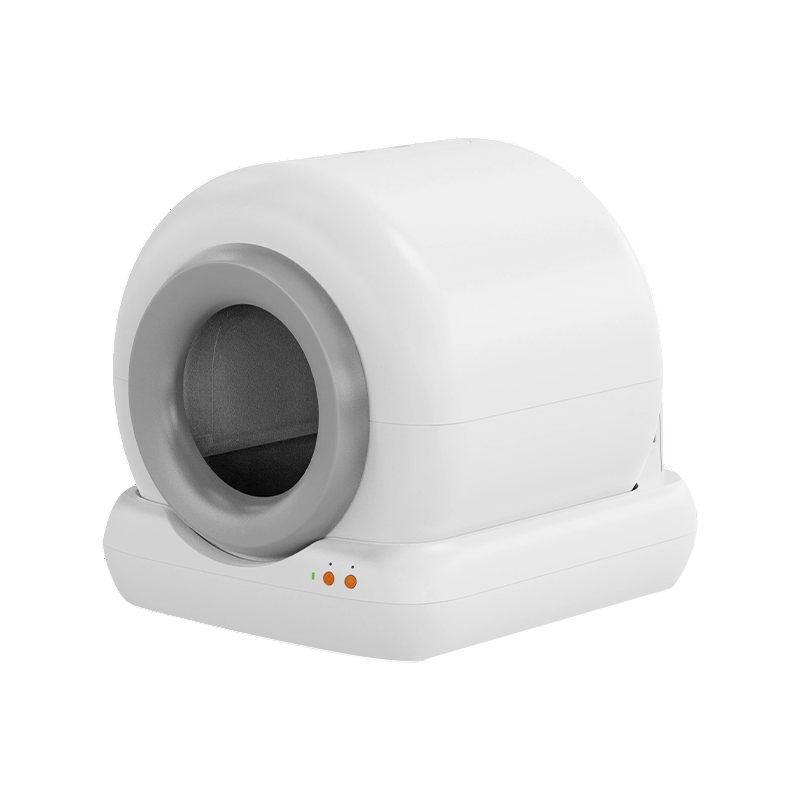
Conversely, a modern smart pet litter box introduces electromechanical engineering into the equation. These units utilize infrared weight sensors, proximity detectors, and rotating rakes or tumbling drums to separate waste from clean litter automatically. Once a cat exits the enclosure, a preset timer (usually ranging from 3 to 20 minutes to allow clumping agents to set) triggers a cleaning cycle. The waste is securely deposited into a sealed compartment beneath the unit, isolated from the open air.
Feature-by-Feature Comparison Matrix
Financial Implications: Upfront Costs Versus Long-Term Value
When analyzing high-value household upgrades, discerning buyers look beyond the initial purchase price to calculate true cost-of-ownership. A traditional open-air pan is remarkably cheap upfront, but it carries hidden costs in terms of human labor, frequent litter replacement due to saturation, and potential damage to flooring if tracking occurs extensively.
On the other hand, investing in a smart pet litter box requires a substantial initial cash commitment. Premium models feature sophisticated pinch-protection sensors, companion smartphone applications, and sleek architectural designs meant to blend into modern home decor. However, owners must factor in recurring expenses: many automated units mandate specific clumping clay litters to prevent motor jamming, alongside custom-fit waste disposal bags that cost more than standard grocery plastic liners.
Over a three-year span, the math shifts. While a standard box costs less overall, the time reclaimed by an automated system represents significant value for busy households. Furthermore, advanced units prevent litter waste through precise sifting mechanisms, ensuring that only soiled clumps are discarded while clean granules remain intact.
Health Monitoring and Behavioral Insights
One of the most compelling advantages of integrating technology into pet sanitation lies in preventive veterinary care. Cats are notorious for masking illnesses, particularly lower urinary tract disorders, kidney disease, and diabetes. Subtle changes in elimination habits are often the earliest warning signs of medical distress.
Traditional Observation
Relies entirely on human visual checks. Spotting a smaller clump, increased frequency, or blood in the urine requires vigilant daily inspection of the litter pile—a task that is easily overlooked during hectic work weeks or when multiple cats share a single facility.
Smart System Tracking
Connected applications log every visit, recording exact cat weight, duration of stay, and frequency of use over time. If a pet visits the box five times in an hour without producing significant waste, an alert is sent directly to the owner's smartphone, prompting an immediate veterinary visit.
This data-driven approach transforms basic sanitation hardware into an active wellness monitor, offering peace of mind that justifies the premium price tag for dedicated pet parents.
Odor Mitigation and Living Environment Integration
Odor control remains the primary driving factor for consumers seeking alternatives to open plastic pans. In compact urban apartments or open-concept modern homes, the presence of an uncleaned litter box quickly compromises indoor air quality.
Traditional setups rely on scented litters, baking soda additives, or manual scooping multiple times a day to manage smells. Despite these efforts, porous plastic absorbs urea over time, causing chronic odors that regular washing struggles to eliminate entirely.
Automated appliances approach odor control systematically. By sweeping waste into an enclosed drawer immediately after use, the surface area exposed to the air is minimized. Many high-end designs incorporate activated carbon filters or ozone-neutralization modules right above the waste compartment, neutralizing volatile organic compounds before they escape into the living space. The result is a genuinely odor-neutral environment, even in homes with multiple feline residents.
Feline Adaptability and Behavioral Considerations
Technology must ultimately serve the animal, not just the human. Introducing a mechanical appliance into a cat's daily routine requires careful consideration of feline psychology and ergonomics.
- Noise Sensitivity: Unlike silent traditional pans, motorized devices emit mechanical whirs and hums during cleaning cycles. Timid cats may startle if the unit cycles while they are nearby, though modern units feature whisper-quiet gearboxes.
- Spatial Restrictions: Enclosed automatic globes or tunnels offer less overhead clearance than an open industrial pan, which can discourage large-breed cats (such as Maine Coons or large Savannahs) from entering comfortably.
- Transition Protocols: Successfully switching a cat from a traditional basin to an automated system requires a gradual transition period—leaving the smart unit unplugged initially, using familiar litter, and utilizing positive reinforcement.
Frequently Asked Questions
Are smart pet litter boxes safe for multi-cat households?
Yes, modern units feature multiple redundant safety mechanisms, including infrared weight sensors and pinch-detection curtains. If a cat approaches or re-enters the device during a cleaning cycle, the motor immediately halts and reverses to ensure complete safety.
Do automated waste systems require special types of cat litter?
Most units require hard-clumping clay litter, fine grain litter, or specialized silica crystal formulations designed specifically for automated sifters. Lightweight or non-clumping paper pellets will typically cause mechanical jams or fail to pass through the sifting grate.
How often do I need to empty the waste compartment?
For a single-cat household, the waste drawer typically needs to be emptied once every 7 to 10 days. In a two-cat household, expect to empty and line the waste receptacle every 4 to 6 days depending on the cats' diet and size.
Can kittens use an automated self-cleaning litter box?
Most manufacturers advise against using automatic cleaning cycles with kittens under 4 pounds or younger than 6 months old. Their low body weight may fail to trigger weight sensors properly, and curious kittens can injure themselves if they explore moving parts.
How do I clean and sanitize the device itself?
While daily scooping is eliminated, deep cleaning is still required. Depending on the model, the globe or interior liner can be detached, wiped down with pet-safe enzymatic cleaners, or hosed off every 1 to 3 months to prevent buildup.


Contact Information
No. 2, Macaotou Road, Mazhu Town, Yuyao City, Zhejiang Province, China
+86-15669283739
Copyright © Ningbo Meace Pet Products Co., Ltd. Rights Reserved
