

 English
 Español
 Português
-
+86-15669283739
-

-
Home / News / Industry News / Steel or Plastic? What Really Determines How Easy — and How Clean — Your Litter Box Stays
Steel or Plastic? What Really Determines How Easy — and How Clean — Your Litter Box Stays
2026-07-09
Content
- 1 Material comparisonStainless Steel vs Plastic: Which Litter Box Is Actually Easier to Clean
- 2 Daily routineThe Daily Scooping Routine That Prevents Bigger Problems
- 3 Full washHow to Deep Clean a Litter Box Step by Step
- 4 Why it happensWhy Bacteria Builds Up Faster in Some Materials Than Others
- 5 Product safetyCleaning Products That Are Safe and Products to Avoid
- 6 What to avoidMistakes That Shorten a Litter Box's Lifespan
- 7 SchedulingBuilding a Cleaning Schedule Around Household Size
Litter Box Care
The box itself decides how hard the cleaning is — not the other way around.
Short answer: keep a pet litter box clean by scooping waste daily and washing the entire box with mild soap and warm water every one to two weeks. How long that upkeep actually takes, and how quickly odor and bacteria come back, depends heavily on whether the box is plastic or a stainless steel pet litter box — a difference this article breaks down step by step.
Every litter box cleaning routine is built from the same two habits — a quick daily scoop and a deeper periodic wash. What changes the experience is the surface underneath the litter. Plastic is porous at a microscopic level and scratches with every scoop, and those scratches trap bacteria and ammonia that no amount of scrubbing fully removes. A stainless steel surface doesn't absorb liquid or hold odor the same way, so the same fifteen-minute cleaning routine produces a noticeably cleaner result. The rest of this guide walks through the daily and deep-cleaning process, then compares how each material performs at every stage.
2× daily
Recommended scooping frequency in multi-cat households to prevent odor buildup and litter box avoidance.
1–2 yrs
Typical replacement cycle for a plastic litter box once scratches begin holding bacteria permanently.
0 pores
Stainless steel has no porous surface for ammonia to soak into, unlike molded plastic trays.
Material comparisonStainless Steel vs Plastic: Which Litter Box Is Actually Easier to Clean
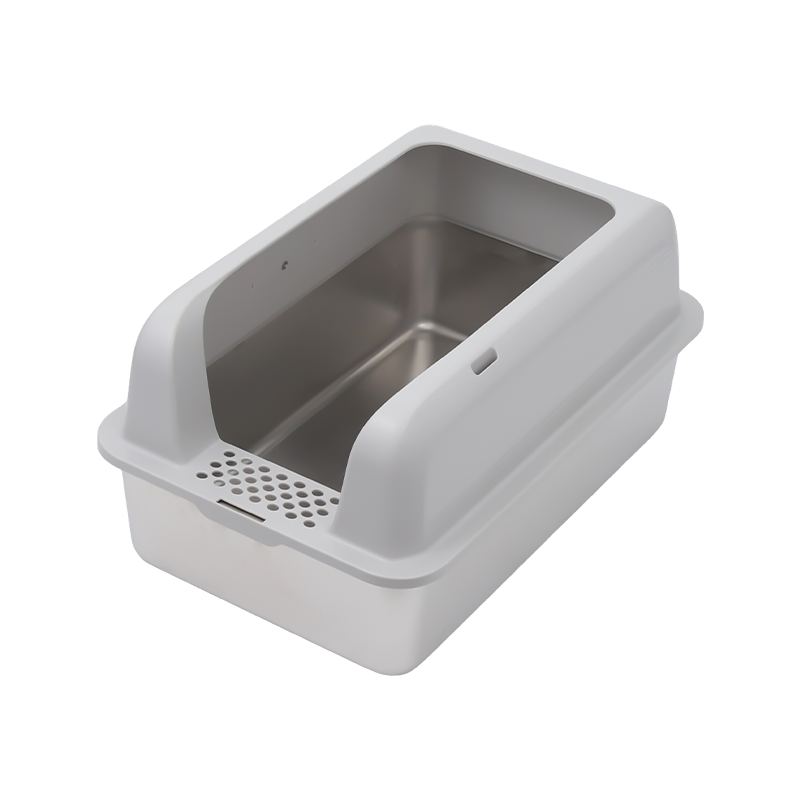
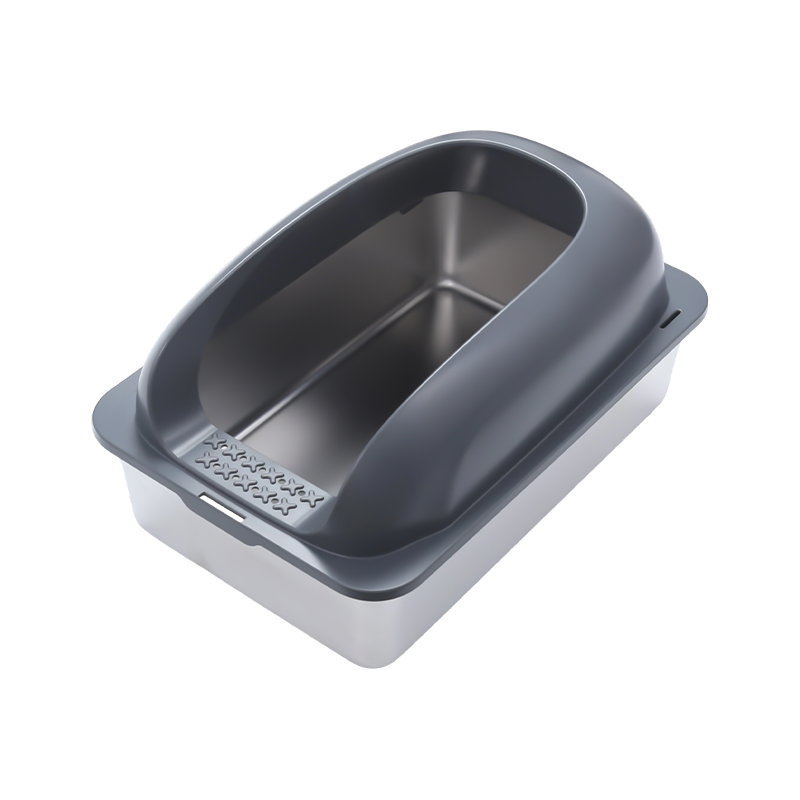
Before getting into technique, it helps to know what you're cleaning. A plastic litter box is lightweight and inexpensive, but the surface develops micro-scratches from scooping and from a cat's claws almost immediately. Those grooves become long-term storage for bacteria and ammonia crystals, which is why a plastic box can smell faintly "off" even minutes after a full wash. A stainless steel box costs more upfront but presents a non-porous, scratch-resistant surface that wipes clean the same way a kitchen countertop does.
| Metric | Stainless Steel | Plastic |
| Odor absorption | Minimal — non-porous surface releases odor during rinsing | High — ammonia soaks into scratches over time |
| Scratch resistance | Withstands metal scoops and claws without pitting | Visible scratching within weeks of regular scooping |
| Bacterial buildup | Low, since bacteria have no grooves to colonize | Higher, concentrated along scoop marks and corners |
| Disinfection safety | Tolerates diluted bleach or vinegar without surface damage | Repeated bleach use can degrade and discolor plastic |
| Average lifespan | 5+ years with routine washing | 1–2 years before odor retention becomes permanent |
| Weekly cleaning time | Roughly 5–8 minutes for a full wash | 10–15 minutes, often needing extra scrubbing on stains |
The difference isn't cosmetic. A cat's sense of smell is many times more sensitive than a human's, so a tray that looks clean to a person can still register as "dirty" to the cat if odor has settled into scratches. That's a common reason cats avoid boxes that owners insist they just washed.
Daily routineThe Daily Scooping Routine That Prevents Bigger Problems
Daily scooping is the single habit that determines whether deep cleaning stays quick or turns into a scrubbing session. Waste and urine clumps left in place for more than a day begin to harden and bond to the tray surface — a process that happens faster on plastic than on steel because plastic's texture gives clumps something to grip.
- Check every corner and edge of the tray, not just the center, since waste tends to collect where litter piles against the walls.
- Sift thoroughly with a slotted scoop, shaking gently so clean litter falls back through and only waste is removed.
- Seal waste in a lined bin immediately rather than leaving it in an open scoop or tray nearby.
- Top off litter to a consistent 3–4 inch depth so clumps form fully and absorb moisture before it reaches the tray floor.
This step matters slightly more for plastic owners: because the surface is more likely to retain moisture in fine scratches, delayed scooping on a plastic box accelerates staining and odor in a way it simply doesn't on a smooth steel surface.
Full washHow to Deep Clean a Litter Box Step by Step
A full wash removes what daily scooping can't — the residue and bacteria that accumulate along the base and walls of the tray. The process is the same regardless of material, but the results and effort involved differ noticeably.
- Empty all litter into a sealed trash bag; never flush litter, since it can clog plumbing regardless of type.
- Rinse the empty tray with warm water to loosen loose debris before applying any soap.
- Wash with a mild, unscented dish soap using a dedicated brush or sponge, scrubbing corners and the tray floor where residue concentrates most.
- Rinse multiple times until no soap film remains — leftover residue is one of the most common reasons a cat avoids a freshly washed box.
- For lingering odor, wipe with a diluted white vinegar solution, let sit for several minutes, then rinse thoroughly.
- Dry completely before refilling; any trapped moisture encourages mold, especially in tray corners.
- Refill with 3–4 inches of fresh litter once the tray is fully dry.
On a stainless steel pet litter box, steps three and four typically take half the time — soap and residue rinse away cleanly instead of clinging to scratched plastic.
Why it happensWhy Bacteria Builds Up Faster in Some Materials Than Others
The reason material matters so much comes down to surface science rather than marketing. Plastic is a polymer that develops microscopic fractures under repeated mechanical stress — every pass of a metal or plastic scoop leaves a mark too small to see but large enough for bacteria to lodge in. Over months of use, those marks multiply across the tray floor, creating a rough terrain that traps organic material even after washing.
Stainless steel is a dense, non-porous alloy. Scooping and scratching from claws leave far shallower marks that don't provide the same foothold for bacteria, and soap and water rinse the flat surface clean in a single pass. This is also why commercial kitchens, veterinary clinics, and food-service equipment overwhelmingly use stainless steel rather than plastic — the material was chosen specifically because it resists the same buildup problem litter boxes face daily.
Product safetyCleaning Products That Are Safe and Products to Avoid
| Product | Use it? | Notes |
| Mild unscented dish soap | Yes | Safe on both plastic and steel; the standard choice for weekly washing |
| Diluted white vinegar (1:1 with water) | Yes | Neutralizes odor naturally; safe on steel, gentle enough for plastic |
| Diluted bleach (1 part to 32 parts water) | Occasionally | Fine on stainless steel; can discolor and weaken plastic over repeated use |
| Scented all-purpose cleaners | No | Strong fragrance often causes cats to avoid the box entirely |
| Abrasive scouring pads | No | Creates new scratches on plastic; unnecessary on steel, which wipes clean easily |
What to avoidMistakes That Shorten a Litter Box's Lifespan
Skipping daily scooping
Waste left for more than 24 hours hardens and bonds to the tray, turning a quick scoop into a scraping job.
Using scented cleaners
What smells "fresh" to a person often reads as overwhelming to a cat's far more sensitive nose.
Rinsing only once
A single rinse frequently leaves a thin soap film that discourages a cat from stepping back into the box.
Ignoring surface scratches
On plastic, deepening scratches eventually make a full wash ineffective, no matter how thoroughly it's scrubbed.
Underfilling with litter
Less than 3 inches of litter reduces clumping and lets moisture reach the tray floor faster.
Keeping one box for multiple cats
Without following the N+1 rule, a single tray fills and fouls far faster than daily cleaning can offset.
SchedulingBuilding a Cleaning Schedule Around Household Size
How often a box needs a full wash depends on how many cats use it and how much litter surface area is available. The general rule for the number of boxes is one per cat plus one extra, which spreads waste across more surface area and slows how quickly any single tray needs deep cleaning.
| Household | Recommended boxes | Suggested deep-clean frequency |
| 1 cat | 2 boxes | Every 1–2 weeks |
| 2 cats | 3 boxes | Weekly |
| 3+ cats | 4 or more boxes | Every 4–6 days, staggered across boxes |
Households using a stainless steel tray often find they can stretch toward the longer end of these windows without odor returning, since residue doesn't cling to the surface between washes the way it does on plastic. That gap in maintenance effort is usually the deciding factor when owners weigh the higher upfront cost of steel against years of easier, faster cleaning.

Contact Information
No. 2, Macaotou Road, Mazhu Town, Yuyao City, Zhejiang Province, China
+86-15669283739
Copyright © Ningbo Meace Pet Products Co., Ltd. Rights Reserved
