

 English
 Español
 Português
-
+86-15669283739
-

-
Home / News / Industry News / Retractable Pet Lead or Fixed Leash? A Practical Comparison for Every Walk
Retractable Pet Lead or Fixed Leash? A Practical Comparison for Every Walk
2026-07-02
Content
- 1 How a Retractable Lead Actually Works
- 2 Retractable Leads Versus Fixed-Length Leashes for Everyday Control
- 3 Tape Versus Cord Mechanisms Inside the Housing
- 4 Retractable Leads Versus Hands-Free Leads for Active Owners
- 5 Retractable Leads Versus Chain and Slip Leads for Training Control
- 6 Matching the Lead to Dog Size and Walking Environment
Leash Types Compared
A retractable pet lead is the better everyday choice for calm, well-trained dogs walking in open spaces, giving them 8 to 26 feet of roaming room without you constantly adjusting your grip.
It is the wrong choice near traffic, in crowded areas, for strong pullers, or for multi-dog walks — situations where a fixed-length leash gives you faster, more predictable control.
Walk past any dog park entrance and you'll see the split play out in real time: one owner holding a thin cord leash with a plastic handle, letting their dog range far ahead to sniff a tree, while another keeps a short leather leash looped twice around their wrist, dog heeling tight at their side. Neither is doing it wrong. They're using different tools for different jobs, and the retractable lead is really only one option among several worth comparing on their own terms.
How a Retractable Lead Actually Works
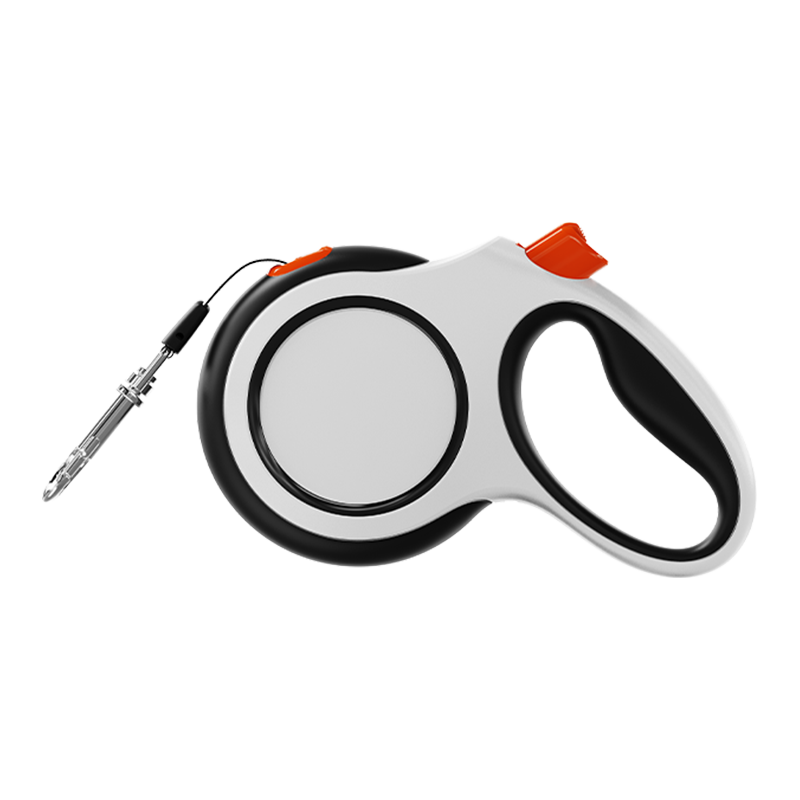
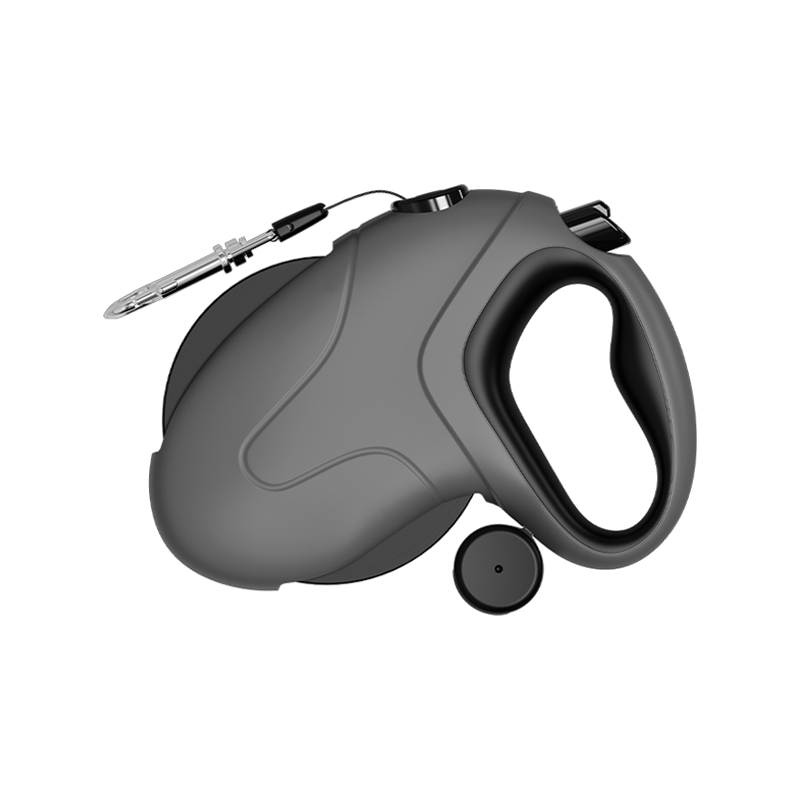
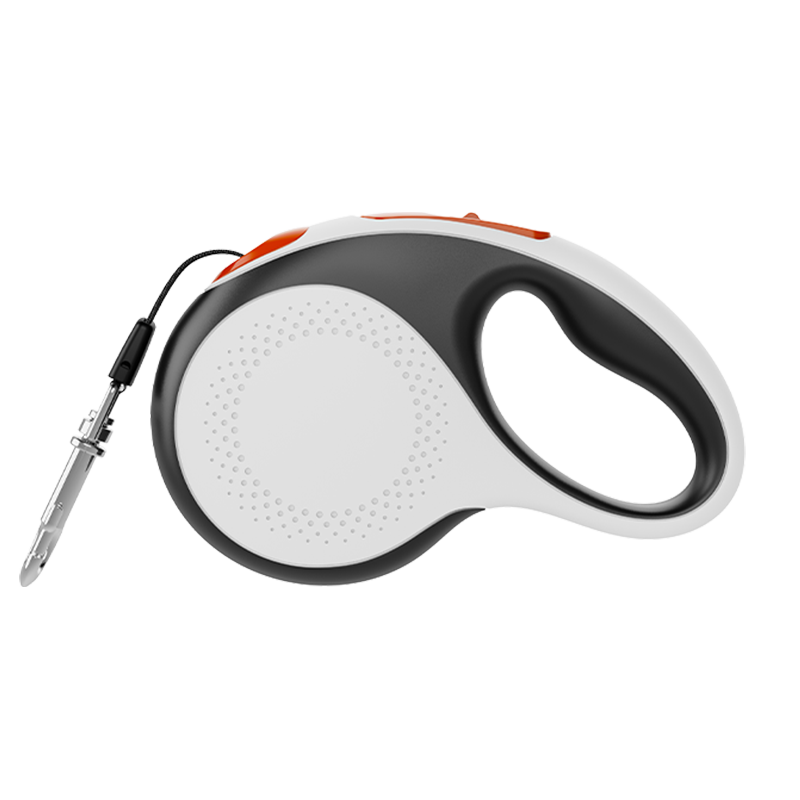
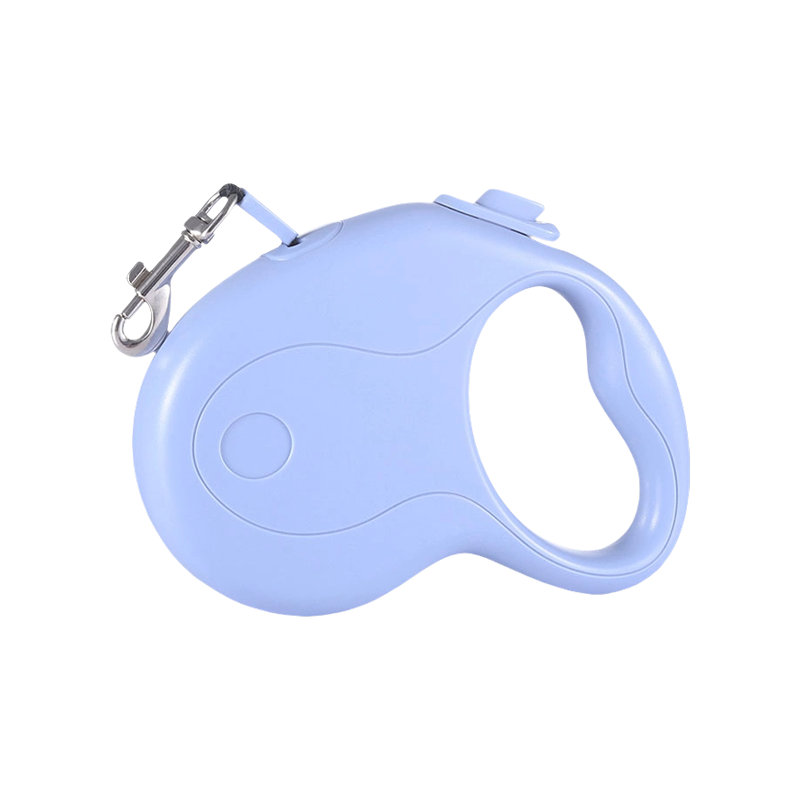
Inside the plastic housing, a spring-loaded spool holds a length of thin nylon tape or braided cord, similar to how a tape measure retracts. A button on the handle engages a brake that locks the line at whatever length has been played out, and releasing it lets the spring pull the slack back in as the dog moves closer. That mechanism is what separates it from every other leash type on this list — it's the only design that changes length while you're walking, rather than staying fixed.
Compact retractable
8 ft
Standard retractable
16 ft
Long-range retractable
26 ft
Standard fixed leash
6 ft
That extra range is the entire appeal — and, as the safety data further down shows, also the entire risk.
Retractable Leads Versus Fixed-Length Leashes for Everyday Control
A standard fixed leash holds its length the whole walk, typically 4 to 6 feet, which means the distance between you and your dog never changes without you physically shortening your grip. That predictability is exactly what makes it the safer default in most everyday scenarios.
- Reaction time near hazards: With a 6-foot fixed leash, a dog that lunges toward a passing cyclist or another dog is roughly 6 feet away at most — close enough to physically intervene almost instantly. With a lead extended to 16 or 26 feet, that same lunge puts real distance and speed behind it before the brake fully engages.
- Crowded environments: Sidewalks, vet waiting rooms, outdoor cafés, and school pickup lines all favor a fixed leash simply because a thin cord stretched across a walking path is a tripping hazard for pedestrians and cyclists that a taut 6-foot leash isn't.
- Training consistency: Loose-leash walking and heel training rely on consistent tension and distance cues. A retractable lead's variable length works against that consistency, which is why most trainers recommend a fixed leash for any dog still learning leash manners.
Veterinary and consumer-safety reporting has linked retractable leash cords to friction burns, finger amputations, and falls when the cord snaps taut around a hand, leg, or another person — injuries that are far less common with a flat, fixed-width leash held in a normal grip.
Tape Versus Cord Mechanisms Inside the Housing
Not all retractable leads are built the same way internally, and the difference matters more than most buyers expect. Tape-style leads use a flat nylon ribbon, typically 3/8 to 1/2 inch wide, while cord-style leads use a thin round cord that can be as narrow as 1/16 inch on compact models.
| Attribute | Tape Mechanism | Cord Mechanism |
| Typical width | 3/8"–1/2" | 1/16"–1/8" |
| Recommended dog weight | Up to 110 lb | Usually under 26 lb |
| Break/injury risk if grabbed | Lower | Higher (thin cord cuts more easily) |
| Housing size | Larger, heavier | Smaller, lighter |
| Best fit | Medium to large dogs | Small dogs only |
Manufacturers size the cord or tape to the dog's weight class specifically because a thin cord rated for a 15-pound dog will fray, stretch, or snap under sudden force from a 60-pound dog — a mismatch that shows up in returned-product complaints far more often than a genuine mechanical defect does.
Retractable Leads Versus Hands-Free Leads for Active Owners
Hands-free leads — a fixed-length line that clips to a waist belt — solve a completely different problem than either leash type above: freeing up the owner's hands for running, hiking, or carrying gear, rather than giving the dog more roaming distance.
Retractable Lead
Best for sniff-heavy neighborhood walks where the dog moves at a slower, exploratory pace and the owner wants to hold a handle while varying the distance without stopping.
Hands-Free Lead
Best for running, jogging, or hiking, where a fixed length paired with a shock-absorbing bungee section keeps the dog close and prevents sudden tension from wrenching the owner's back or shoulder.
Combining the two rarely works well: a retractable mechanism worn at the waist creates the same variable-distance and tangling problems as handheld use, just closer to the owner's body, which is why hands-free products almost always use fixed-length lines rather than a spool.
Retractable Leads Versus Chain and Slip Leads for Training Control
Chain leashes and slip leads sit at the opposite end of the control spectrum from retractable leads. A slip lead tightens around the dog's neck under tension and loosens when the dog stops pulling, giving handlers immediate, direct feedback — which is why they're standard equipment in shelters, grooming facilities, and structured obedience training rather than casual walking.
- Correction timing: A slip or chain lead delivers a correction the instant a dog pulls, with essentially zero lag. A retractable lead's brake introduces a moment of slack and give before the line goes taut, which blunts the timing trainers rely on.
- Everyday comfort: Chain and slip leads aren't designed for long relaxed walks; they're a training and handling tool. A retractable lead, or a padded fixed leash, is far more comfortable for a 30-minute neighborhood loop.
- Dog experience level: Puppies and dogs with no leash training should never start on a retractable lead, since they haven't yet learned to associate leash tension with a boundary — a fixed leash, sometimes paired with a slip lead during structured training sessions, builds that association first.
Matching the Lead to Dog Size and Walking Environment
Weight rating is the first filter, but environment matters just as much. A 70-pound dog walked exclusively on quiet rural trails is a reasonable candidate for a heavy-duty tape retractable, while the same dog walked daily through a dense urban neighborhood is a better fit for a fixed leash regardless of size, simply because of how many fast-approaching hazards a busy sidewalk presents.
| Scenario | Better Fit | Why |
| Open park, calm dog | Retractable lead | Room to roam and sniff without constant readjustment |
| City sidewalks, foot traffic | Fixed leash | Predictable distance, no tripping cord |
| Puppy or untrained dog | Fixed leash | Builds tension awareness and boundary training |
| Running or hiking | Hands-free lead | Free hands, shock absorption, steady length |
| Formal obedience training | Slip or chain lead | Immediate correction timing |
| Multiple dogs at once | Fixed leash (coupler or double lead) | Retractable mechanisms tangle badly between dogs |
None of these tools replace the others entirely — many households end up owning two or three types and switching based on where the walk is happening that day, which is a more realistic approach than expecting one leash to handle every situation well.

Contact Information
No. 2, Macaotou Road, Mazhu Town, Yuyao City, Zhejiang Province, China
+86-15669283739
Copyright © Ningbo Meace Pet Products Co., Ltd. Rights Reserved
