

 English
 Español
 Português
-
+86-15669283739
-

-
Home / News / Industry News / Freedom Under Control: The Engineering, Behavioral Dynamics, and Safety Analytics of the Modern Retractable Pet Lead
Freedom Under Control: The Engineering, Behavioral Dynamics, and Safety Analytics of the Modern Retractable Pet Lead
2026-06-25
Content
- 1 The Mechanical Core: Tension Spools and Braking Kinematics
- 2 Comparative Structural Analysis: Flat Tape vs. Braided Cord Liners
- 3 Behavioral Impact and Communication Dynamics Along the Line
- 4 Operational Economics: Risk Profiles and Asset Lifecycles
- 5 Environmental Adaptations and Mitigation of Physical Entanglements
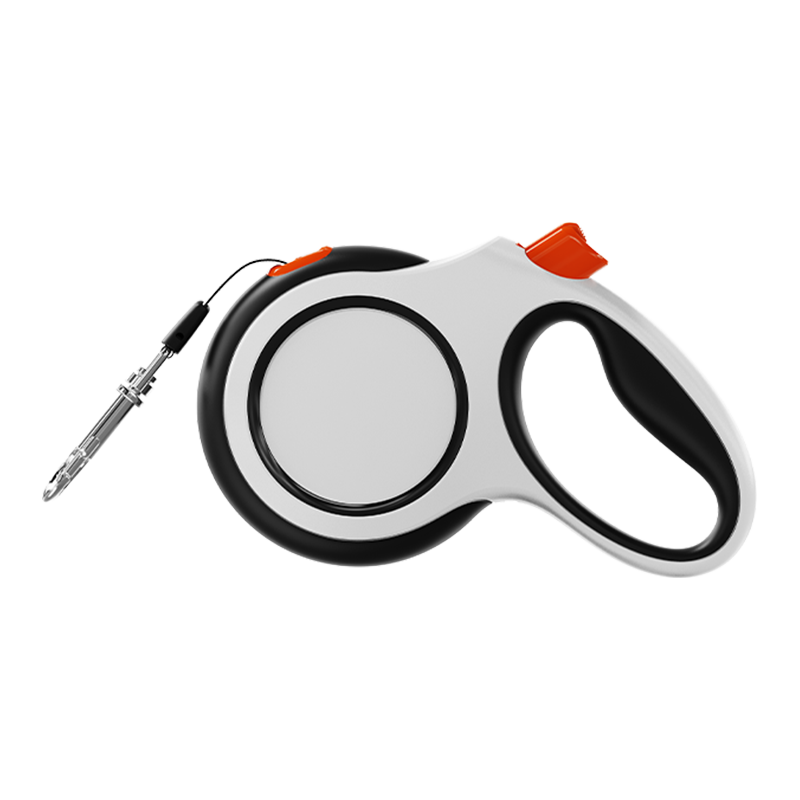
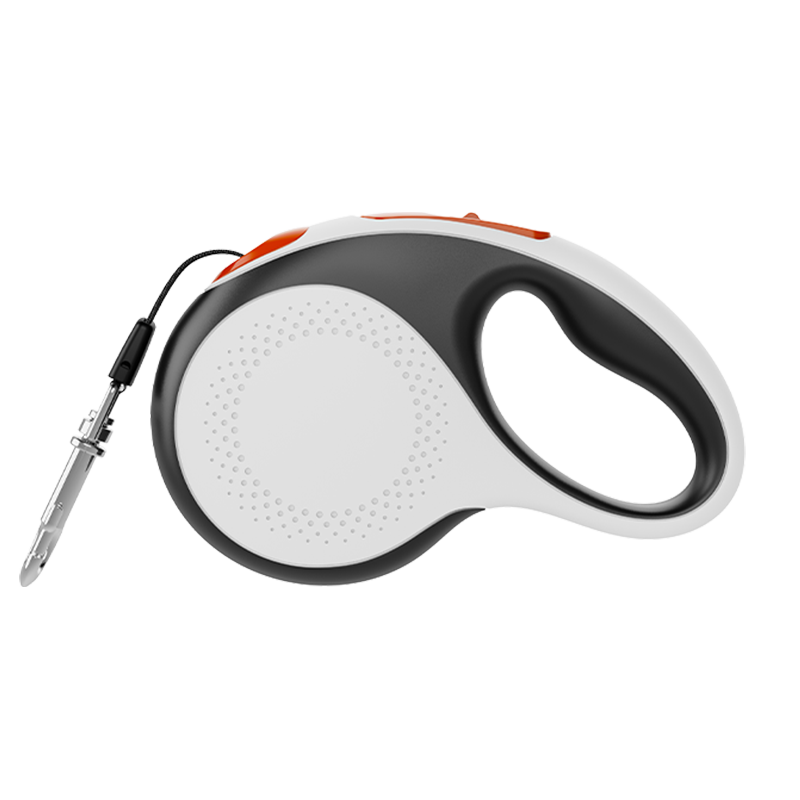
A retractable pet lead serves as a specialized dynamic tethering system that balances canine exploratory freedom with handler control by utilizing a continuous-tension, spring-loaded spool. When evaluating these devices for domestic and urban environments, high-strength nylon tape configurations offer a vastly superior safety profile and higher load-bearing structural integrity compared to traditional thin cord models. By distributing mechanical force across a flat, wide surface area, tape designs eliminate high-velocity friction burns, resist rotational twisting, and ensure reliable brake locking, making them the engineered standard for responsible, long-range pet walking.
The Mechanical Core: Tension Spools and Braking Kinematics
To understand the utility of a retractable pet lead, one must look past the external plastic ergonomic casing and examine the internal coil spring physics. Traditional fixed-length leashes rely entirely on the physical posture and arm movement of the handler to manage slack. In contrast, a retractable lead operates via an internal high-carbon steel spiral torsion spring nested inside a rotating polymer drum. This spring is calibrated to exert a gentle, continuous pulling force. As an animal moves away from the handler, the kinetic energy of its movement overcomes the tension of the coil, allowing the line to deploy smoothly. When the animal returns, the potential energy stored within the wound spring automatically drives the drum in reverse, winding the excess line backward to eliminate dangerous sagging loops on the ground.
The critical point of mechanical failure or success in these systems rests on the thumb-actuated brake mechanism. The braking assembly typically features a spring-loaded paul or a multi-tooth locking wheel that drops directly into matching recessed notches molded along the perimeter of the internal spinning drum. When a handler depresses the brake button, it halts the rotation of the spool instantly. This sudden deceleration transforms a dynamic, expanding line into a rigid, static boundary. If an animal weighing 60 pounds accelerates to a speed of 10 miles per hour before the brake is applied, the sudden arrest transfers several hundred foot-pounds of peak shock load directly through the internal locking teeth, requiring premium impact-resistant polycarbonates in the chassis construction.
Comparative Structural Analysis: Flat Tape vs. Braided Cord Liners
Professional pet equipment specifiers categorise retractable tethering machinery into two primary functional designs: high-denier flat nylon tape and tightly braided cord. While both configurations operate using identical internal spring drums, their physical behaviors under tension, human-handling safety characteristics, and structural lifecycles differ dramatically.
Flat Nylon Tape Leads: These models utilize a wide, ribbon-like weaving pattern, typically measuring between 0.5 inches and 0.75 inches in width. The flat geometry guarantees that structural loads are spread evenly across a broad surface matrix. If the line wraps accidentally around a pet’s limb or a handler’s fingers during a high-speed sprint, the wide surface area significantly diffuses the compressive force, preventing deep lacerations or friction-induced skin burns.
Braided Cord Leads: Utilizing a high-tensile, low-diameter round bundle of nylon or polyester fibers, cord leads look like thin utility lines. Because the line diameter is minimized, a much longer length of cord can be wrapped inside a smaller casing, making the hand unit lightweight and compact. However, this thin profile concentrates kinetic energy into a sharp focal point. Under load, a rapidly moving cord acts similarly to a wire saw, posing severe risks of friction injuries or entanglement entanglements if mishandled.
| Engineering & Safety Metric | Flat Nylon Tape Configuration | Braided Round Cord Configuration |
|---|---|---|
| Force Distribution Index | Excellent; wide surface plane minimizes pressure concentration | Poor; narrow profile focuses kinetic energy into a narrow cutting vector |
| Visual Tracking & Identification | High; highly visible at distances exceeding 15 feet under standard light | Low; thin profile blends into background surfaces, posing a trip hazard |
| Abrasion & Snag Resistance | High; edge-reinforced weaves resist tearing against asphalt | Moderate; outer fibers prone to fraying when scraped over concrete |
| Spooling Fluidity & Jamming | Moderate; requires a wide opening guide to prevent twisting | Excellent; round shape slides effortlessly through omnidirectional opening inlets |
| Max Weight Recommendations | Suited for large breeds up to 110 pounds comfortably | Best restricted to toy or small breeds under 25 pounds |
Behavioral Impact and Communication Dynamics Along the Line
Deploying a retractable pet lead introduces entirely different psychological and behavioral patterns compared to training with a standard, non-extending leash. In standard behavior modification, a leash is viewed as a direct channel of physical communication between handler and animal. By applying micro-tensions or allowing physical slack, the handler delivers immediate tactile feedback regarding orientation, stopping expectations, and pacing adjustments.
Because a retractable system relies on a continuous internal spring mechanism, the animal experiences a permanent baseline tension whenever it moves forward. The animal learns that pulling forward against this constant, mild resistance is rewarded with an expanding radius of exploration. If an untrained animal is permitted to pull unchecked on a retractable lead continuously, it can desensitize to neck or harness pressure, which often reinforces pulling behaviors during regular walks.
To counteract this, handlers should treat the retractable lead not as a primary behavior-shaping tool, but as an advanced conditioning asset reserved for environments with low pedestrian traffic. When used with verbal command cues, the retractable lead serves as an effective intermediate step for off-leash transition work, such as practicing long-distance recall exercises or distance-stay commands. It allows the animal to make choices within a controlled 16-to-26-foot radius while maintaining a physical safety tether if real-world distractions interfere with obedience.
Operational Economics: Risk Profiles and Asset Lifecycles
When selecting pet walking systems for commercial or institutional settings—such as animal shelters, professional dog-walking fleets, or working-dog training camps—procurement managers must balance initial capital costs against long-term liability risks and replacement rates. Standard fixed nylon leashes are inexpensive and highly durable, but they limit tactical flexibility during field evaluations.
A retractable lead introduces higher upfront acquisition costs due to its complex interior housing, but it offers substantial utility by allowing staff to observe an animal's natural tracking behavior and gait symmetry from a safe distance. However, if a low-grade retractable device is sourced, the operational costs can spike due to catastrophic internal spring failure or external housing splits when dropped on rocky terrain. High-quality retractable systems feature modular, impact-absorbing TPE overmolds and rust-proof stainless steel springs that maintain linear tension over 50,000 full expansion and retraction cycles, providing a reliable operational lifecycle.
Safety Audit Protocol: Essential Inspection Parameters
To minimize operational risk profiles and ensure complete mechanical control during daily operations, maintenance teams should execute a formal safety evaluation weekly using the following criteria:
- Full Line Expansion Verification: Manually extract the ribbon or cord to its absolute maximum length limit. Inspect the material for fiber fraying, edge-cuts, chemical staining, or sun-bleached degradation that lowers structural breaking strength.
- Brake Lock Efficiency Test: Pull out 5 feet of line, engage the brake button firmly, and apply a sudden manual tug to the exposed lead. The locking mechanism must engagement instantly without slipping or emitting internal grinding sounds.
- Recoil Vector Speed Check: Release the line completely and observe the return velocity. If the line stalls, hitches, or sags before fully entering the handle port, the internal coil spring has suffered fatigue or moisture-induced corrosion, requiring immediate retirement of the asset.
- Swivel Carabiner Evaluation: Inspect the zinc alloy or stainless steel bolt snap connector at the terminal end. Ensure the spring-gate snaps closed automatically and that the integrated swivel rotates 360 degrees without binding, preventing line twisting during deployment.
Environmental Adaptations and Mitigation of Physical Entanglements
The operational environment plays a massive role in determining whether a retractable lead is safe to deploy. In dense municipal centers with high pedestrian density, narrow sidewalks, and blind building corners, using an extended retractable line can present significant safety hazards. A dog operating 20 feet ahead of its handler can round a corner out of sight, creating an unmonitored interaction zone with cyclists, reactive animals, or moving traffic before the handler can activate the braking mechanism.
Conversely, in wide-open environments—such as open fields, sandy shorelines, or public park meadows—the retractable lead allows pets to achieve high-velocity exercise patterns that help expend pent-up physical energy. To bridge these two environments, modern retractable designs incorporate ergonomic dual-mode braking setups. This allows handlers to lock the leash at a short, fixed length (such as 4 feet) when walking through crowded urban zones, and then release the spool lock to grant wider freedom once they reach an open field environment.
To ensure long-term functionality, users must also manage environmental moisture and soil contamination. If a dog drags an extended lead through wet sand, mud, or grit, these micro-particulates adhere to the nylon surface. When the spring pulls the soiled line back into the handle housing, the grit enters the internal winding mechanism, scratching the delicate plastic drum tracks and increasing internal friction. Over time, this debris buildup causes the spring to bind or stick. Handlers can prevent this by wiping the fully extended line down with a dry microfiber cloth after wet walks, ensuring that only clean, dry material enters the internal mechanism.
References
• National Association of Professional Dog Walkers. Equipment Field Dynamics: Safety Auditing for High-Tension Tether Systems.
• Journal of Veterinary Behavior Science. Tactile Feedback Loops: Comparative Analysis of Fixed vs. Constant-Tension Leashes on Canine Pulling Biomechanics.
• Institute of Mechanical Engineers (IME). Torsion Spring Lifecycles and Structural Fatigue Testing within Handheld Polymer Consumer Housings.

Contact Information
No. 2, Macaotou Road, Mazhu Town, Yuyao City, Zhejiang Province, China
+86-15669283739
Copyright © Ningbo Meace Pet Products Co., Ltd. Rights Reserved
