

 English
 Español
 Português
-
+86-15669283739
-

-
Home / News / Industry News / Pet Water Fountain vs. Standard Water Bowl: The Hydration Upgrade Most Pet Owners Don't Know They Need
Pet Water Fountain vs. Standard Water Bowl: The Hydration Upgrade Most Pet Owners Don't Know They Need
2026-05-14
Content
- 1 Pet Water Fountain vs. Standard Bowl: A Direct Comparison
- 2 Why Moving Water Matters More Than You'd Think
- 3 The Health Case for Pet Water Fountains
- 4 Types of Pet Water Fountains: Which Design Is Right for Your Pet
- 5 Material Matters: Plastic, Stainless Steel, or Ceramic
- 6 How Pet Water Fountain Filters Work—and When to Replace Them
- 7 Cleaning a Pet Water Fountain: The Right Way and How Often
- 8 Getting a Reluctant Pet to Use a New Fountain
- 9 Reservoir Size: How Much Capacity Does Your Pet Actually Need
- 10 What to Look for When Buying a Pet Water Fountain
- 11 Common Pet Water Fountain Problems and How to Fix Them
A pet water fountain is a meaningfully better hydration solution than a standard bowl for most cats and many dogs—particularly pets that drink too little, have a history of urinary or kidney issues, or simply ignore standing water. The continuous circulation keeps water fresher, cooler, and more oxygenated, which makes pets more likely to drink consistently throughout the day. That said, a fountain is not automatically the right choice for every pet or every household. The benefits are real, but so are the maintenance requirements.
If your cat is a reluctant drinker, your dog has had a UTI, or you've noticed the water bowl going untouched for hours, a pet water fountain is likely one of the most practical upgrades you can make. Here's what you actually need to know before buying one—and how to make the most of it if you already have one.
Pet Water Fountain vs. Standard Bowl: A Direct Comparison
The differences between a pet water fountain and a traditional water bowl go beyond aesthetics. They affect water quality, pet behavior, health outcomes, and your daily routine as an owner.
| Factor | Pet Water Fountain | Standard Water Bowl |
|---|---|---|
| Water Freshness | Continuously circulated, filtered | Stagnant; degrades within hours |
| Pet Appeal | Higher (movement attracts pets) | Lower for cats; variable for dogs |
| Daily Hydration | Encourages more frequent drinking | Depends entirely on pet motivation |
| Filtration | Built-in (carbon + foam filters) | None |
| Upfront Cost | $20–$100+ | $5–$30 |
| Ongoing Cost | Filter replacements ($3–$15/month) | None (water cost only) |
| Cleaning Frequency | Weekly disassembly + deep clean | Daily rinse, easy to wash |
| Noise Level | Low hum (motor); varies by model | Silent |
| Power Required | Yes (corded or USB) | No |
| Best For | Cats, reluctant drinkers, senior pets | Dogs, budget households, travel |
Why Moving Water Matters More Than You'd Think
Cats, in particular, have an evolutionary preference for moving water. Their wild ancestors evolved in arid environments where standing water was more likely to be contaminated than flowing streams or rainfall. This instinct hasn't disappeared in domestic cats—it's one of the primary reasons so many cats prefer to drink from a dripping faucet rather than their bowl, and why chronic dehydration is so common in cats fed dry kibble diets.
A study published in the Journal of Veterinary Internal Medicine found that cats consuming wet food had significantly better urinary health markers than cats on dry food alone—largely attributable to moisture intake. For cats that won't switch to wet food, a pet water fountain can partially compensate by making water more appealing and encouraging voluntary drinking.
Dogs are generally less discriminating about water sources, but they still benefit from fresher, filtered water—especially large breeds prone to joint issues that may drink in large, infrequent gulps rather than sipping regularly. A fountain's larger reservoir and continuous flow can make a meaningful difference in daily water intake for high-energy working dogs or dogs recovering from illness.
Water sitting in a bowl at room temperature for 6–8 hours loses dissolved oxygen, accumulates airborne debris, pet saliva, and food particles, and can begin developing bacterial biofilm on the bowl surface—a slick, slimy layer that forms when bacteria adhere to surfaces and multiply. A pet water fountain's circulation and filtration system actively disrupts biofilm formation and keeps oxygen levels higher, both of which improve palatability and safety.
The Health Case for Pet Water Fountains
The connection between hydration and pet health is well established. Dehydration contributes to some of the most costly and painful conditions in companion animals, including urinary tract infections, kidney disease, bladder stones, and constipation. Understanding these risks helps explain why veterinarians increasingly recommend pet water fountains as a preventive health tool.
Urinary Tract and Kidney Health
Chronic kidney disease (CKD) affects an estimated 1 in 3 cats over the age of 10, according to the International Society of Feline Medicine. While genetics and diet play roles, hydration is a modifiable factor. Adequate water intake keeps urine dilute, reducing the concentration of minerals that can crystallize into stones or irritate the urethra and bladder lining. Cats on dry food diets produce urine that is significantly more concentrated than cats with higher moisture intake—a measurable risk factor for urinary crystal formation.
Dogs with a history of struvite or calcium oxalate bladder stones are similarly advised by veterinarians to increase water intake to reduce recurrence risk. A pet water fountain that encourages more frequent drinking can help dilute urine and maintain a healthier urinary environment between meals.
Senior Pets and Chronic Conditions
Senior cats and dogs often experience reduced thirst drive as they age—a physiological change that puts them at elevated dehydration risk even when water is available. A pet water fountain's visual movement and sound cues can serve as a passive reminder to drink, encouraging more visits to the water station throughout the day even for pets that have lost some of their natural thirst sensitivity.
Pets with diabetes, hyperthyroidism, or Cushing's disease may drink more than normal—and for these animals, having a large-reservoir fountain that doesn't run dry between top-ups is a practical safety feature, not just a convenience.
Types of Pet Water Fountains: Which Design Is Right for Your Pet
Not all pet water fountains work the same way or suit the same pets. The design affects noise level, ease of cleaning, how the water is presented, and which pets are most likely to use it comfortably.
Flower or Mushroom Fountain (Vertical Stream)
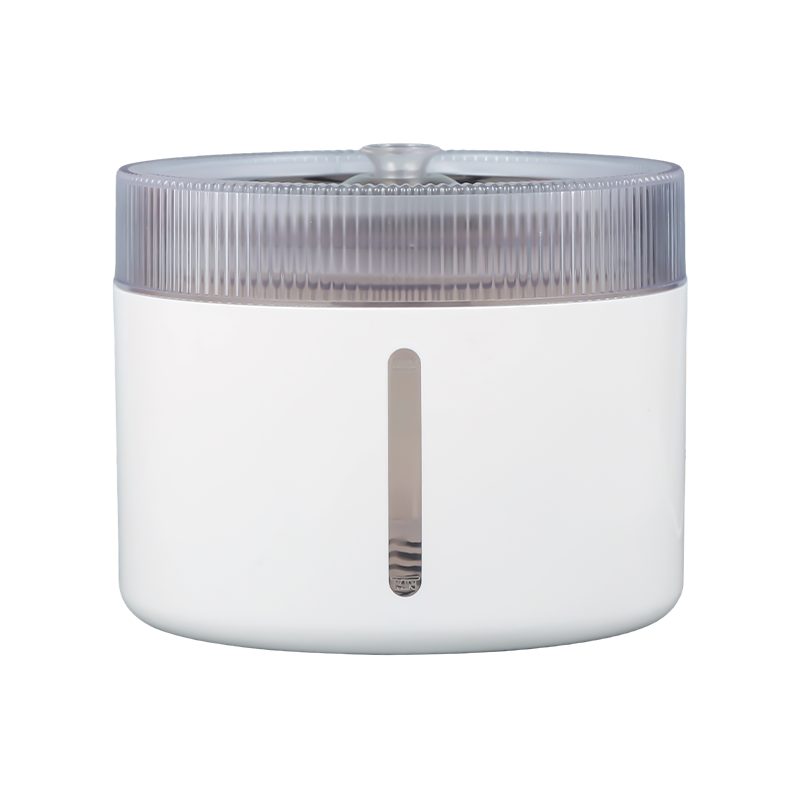
Water streams upward through a central spout and cascades outward—often through a flower or dome-shaped attachment. This design is particularly appealing to cats that seek out running faucets, since the upward stream mimics the motion they instinctively prefer. The stream height and flow are often adjustable. These models typically have a lower reservoir and work best in households with one or two cats.
Waterfall or Cascading Fountain
Water flows over a ramp or ledge and falls into the basin below. The wider basin surface area is better suited to dogs and flat-faced breeds (brachycephalic cats and dogs like Persians and Pugs) who struggle to drink from a narrow stream. The sound of the waterfall is also calming for many pets and owners. These models tend to have larger reservoirs—typically 1.5 to 3 liters—making them suitable for multi-pet households or large dogs.
360-Degree or Ring Fountain
Water flows outward in all directions from a central point, creating a ring of water around the base. Multiple pets can drink simultaneously from different sides—ideal for multi-cat or multi-dog homes where resource guarding around a single spout could be an issue. The open design also allows pets to choose between drinking from the stream or the calmer standing water in the basin.
Ultra-Quiet or Submersible Pump Fountains
Some pets—particularly anxious cats—are deterred by the motor noise of a standard fountain pump. Models with fully submersible pumps operate nearly silently, often at noise levels below 40 decibels (quieter than a library). If a pet approaches the fountain but then backs away or swats at it, noise is often the culprit, and switching to a low-noise model resolves the issue.
Material Matters: Plastic, Stainless Steel, or Ceramic
The material a pet water fountain is made from affects hygiene, durability, cost, and how easy it is to clean—and the differences are significant enough to be a primary buying consideration.
- Plastic fountains are the most common and affordable option, typically ranging from $20 to $45. They are lightweight and come in the widest variety of designs. The downside is that plastic scratches easily, and those microscopic scratches harbor bacteria that can cause chin acne in cats—a condition called feline acne that appears as blackheads or pustules along the chin and jaw. If your cat develops chin acne after switching to a plastic fountain, the material is almost certainly a contributing factor.
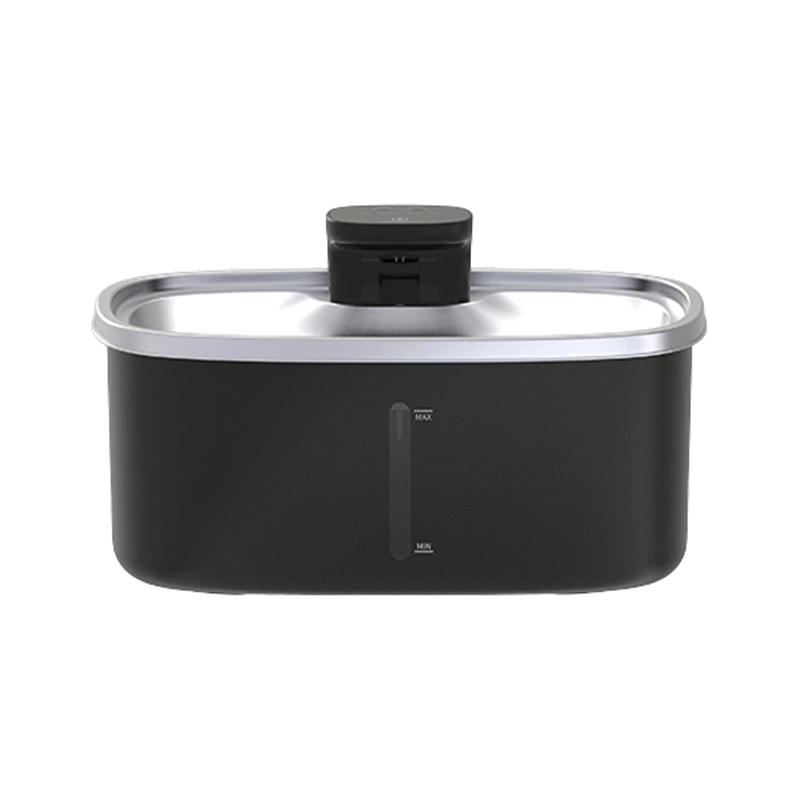
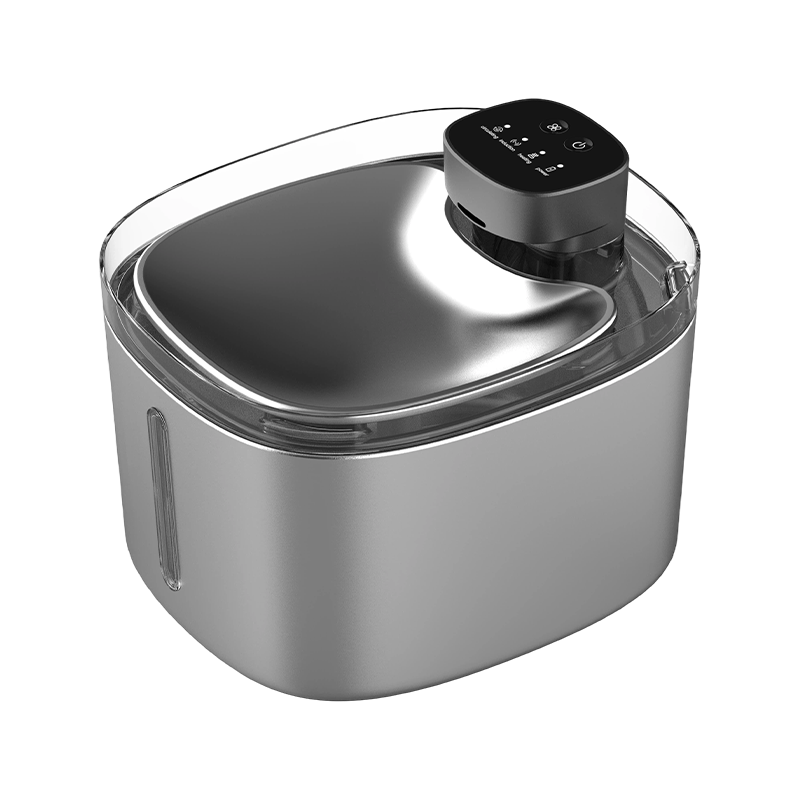
- Stainless steel fountains cost more—typically $40 to $90—but are non-porous, scratch-resistant, and dishwasher-safe. Bacteria cannot embed into the surface the way they do in plastic. Stainless steel is considered the most hygienic option for multi-pet households or pets with sensitive skin. The material is also more durable; a stainless fountain maintained properly can last 5–10 years.
- Ceramic fountains occupy the premium tier, often ranging from $50 to $120+. Like stainless steel, ceramic is non-porous and does not harbor bacteria the way plastic does. Ceramic is heavier—which means it won't slide around the floor when a large dog is drinking—and it maintains a cooler water temperature naturally. The primary risk with ceramic is fragility; dropping a ceramic fountain typically means replacing it entirely.
For most households, stainless steel offers the best balance of hygiene, durability, and price. Ceramic is worth the investment for design-conscious owners or cats with recurring chin acne. Plastic is acceptable with disciplined weekly cleaning but is not recommended for pets prone to skin sensitivities.
How Pet Water Fountain Filters Work—and When to Replace Them
Most pet water fountains include a two-stage filtration system: a foam or sponge pre-filter that catches hair, debris, and food particles, and an activated carbon filter that removes chlorine, odors, and dissolved impurities from the water. Some models add an ion exchange resin layer that softens water by capturing calcium and magnesium ions—useful in hard water areas where mineral deposits can clog the pump quickly.
Filter replacement schedules vary by manufacturer, but the general guidance is:
- Foam pre-filter: Rinse under running water every 1–2 weeks; replace every 4–6 weeks or when it begins to look discolored or retain odors after rinsing.
- Activated carbon filter: Replace every 2–4 weeks in single-pet homes; every 2 weeks in multi-pet households. Once carbon is saturated, it stops adsorbing impurities and may actually release previously captured compounds back into the water.
- Ion exchange resin (if included): Typically replaced on the same schedule as the carbon filter, or more frequently in very hard water areas.
One of the most common mistakes fountain owners make is running the unit with a spent filter—or no filter at all—under the assumption that circulation alone is enough. It isn't. An exhausted carbon filter can make water taste and smell worse than a fresh bowl, which defeats the purpose of the fountain entirely. Budget for filter replacements when calculating the true cost of ownership.
Cleaning a Pet Water Fountain: The Right Way and How Often
The biggest complaint about pet water fountains—by far—is the cleaning burden. Unlike a bowl that takes 30 seconds to rinse and refill, a fountain must be fully disassembled for effective cleaning. Skipping this leads to slime buildup, pink or orange biofilm (typically Serratia marcescens bacteria), and pump clogging from mineral scale.
Here is a practical cleaning routine that keeps a pet water fountain in genuinely hygienic condition:
- Daily: Top up the water level. Check that the pump is running and the flow looks normal. Remove any visible debris from the basin surface.
- Weekly: Fully disassemble the fountain. Remove the pump and disassemble its impeller housing. Wash all components with warm water and a pet-safe dish soap. Use a small brush (many fountain kits include one) to scrub inside tubing, the pump impeller housing, and any narrow channels where biofilm accumulates. Rinse all soap residue thoroughly before reassembling.
- Monthly: Soak the pump in a solution of white vinegar and water (1:1 ratio) for 30–60 minutes to dissolve mineral scale. Rinse thoroughly. Inspect the impeller (the small spinning component inside the pump) for hair or debris wrapped around it—this is the most common cause of pump failure and noise.
- As needed: If you notice pink or orange slime (biofilm), clean immediately rather than waiting for the weekly cycle. Biofilm colonies can grow quickly and may cause gastrointestinal upset if consumed in significant quantities.
Fountains with dishwasher-safe components (excluding the pump and filter) make the weekly cleaning significantly faster—a feature worth prioritizing if cleaning consistency is a challenge in your household.
Getting a Reluctant Pet to Use a New Fountain
Some pets—especially cats—are suspicious of new objects in their environment and may avoid a new fountain entirely for days or even weeks. This is normal, and forcing the transition rarely works. A gradual introduction strategy almost always succeeds given enough patience.
- Place the fountain near the old bowl first. Don't remove the bowl immediately. Allow the pet to investigate the fountain on their own terms while their familiar water source remains available. Most cats will sniff and eventually drink from the fountain within 3–7 days.
- Start with the pump off. If your pet is startled by the motor sound or water movement, introduce the fountain as a static bowl first. Turn it on after a day or two once the pet is comfortable approaching it.
- Use a treat or a drop of tuna water. Placing a small amount of something appealing near or in the fountain's basin can draw a hesitant pet close enough to discover the water on their own.
- Try a different location. Cats especially dislike drinking near their food bowl—an instinct linked to avoiding water sources contaminated by prey. Place the fountain at least 3–5 feet from the food station and away from the litter box.
- Gradually move the old bowl away once the pet is using the fountain consistently—moving it a few inches farther each day rather than removing it all at once.
Reservoir Size: How Much Capacity Does Your Pet Actually Need
Reservoir size is a practical factor that affects how often you need to refill the fountain and how safe it is if you're away from home. Running a fountain dry even briefly can burn out the pump motor—most pumps are designed to operate submerged and will overheat rapidly without water.
Here's a general guide to reservoir sizing:
| Household | Recommended Reservoir | Typical Refill Frequency |
|---|---|---|
| 1 cat | 1.5–2 liters | Every 2–3 days |
| 2–3 cats | 2.5–3.5 liters | Every 2 days |
| 1 small-medium dog | 2–3 liters | Daily to every 2 days |
| 1 large dog | 4–6 liters | Daily |
| Mixed cat + dog home | 3–5 liters | Every 1–2 days |
If you travel frequently or work long hours, prioritize a larger reservoir and consider a model with a low-water indicator or auto-shutoff feature that cuts the pump before it runs dry.
What to Look for When Buying a Pet Water Fountain
With dozens of models on the market ranging from $20 to over $150, the features that actually matter in daily use are often buried beneath marketing language. Here's what to prioritize:
- Ease of disassembly: The more complex the fountain is to take apart, the less likely you are to clean it thoroughly and regularly. Count the number of components before buying—fewer moving parts means faster weekly cleaning.
- Dishwasher-safe parts: Any component that can go in the dishwasher (excluding the pump and filter) dramatically reduces cleaning time. Check whether the basin, housing, and any detachable trays are dishwasher-safe before purchasing.
- Filter availability: Some fountain brands sell proprietary filters that are difficult to find or expensive to ship. Before committing to a model, verify that replacement filters are available locally or through multiple online retailers at a reasonable ongoing cost.
- Adjustable flow rate: Some pets prefer gentle trickles; others like a stronger stream. A fountain with an adjustable pump speed or flow restrictor gives you flexibility to find what works best for your pet.
- Pump quality and warranty: The pump is the most failure-prone component. Look for models with pumps rated for at least 2,000 hours of continuous operation and a manufacturer's warranty of at least 12 months on the motor.
- BPA-free certification: If choosing a plastic fountain, verify it's made from BPA-free materials. Bisphenol A is an endocrine-disrupting compound found in some polycarbonate plastics that can leach into water, particularly as the plastic ages or is exposed to warm water during cleaning.
Common Pet Water Fountain Problems and How to Fix Them
Even well-maintained fountains run into issues. These are the most frequently reported problems and their solutions:
Fountain Is Noisy or Making a Rattling Sound
The most common cause is pet hair wrapped around the impeller inside the pump. Disassemble the pump and remove the impeller (it typically pulls or twists out). Clear any debris, rinse, and reinstall. A rattling sound may also indicate the fountain is nearly empty and the pump is drawing air—top up the water level and the noise should stop immediately.
Slime or Pink Residue on the Basin or Tubing
Pink or orange slime is typically Serratia marcescens, a bacterium common in moist environments that is not dangerous in small quantities for healthy pets but indicates the cleaning interval has been exceeded. Disassemble and scrub all components thoroughly. For persistent biofilm in narrow tubing, use a pipe cleaner or the small brush included with your fountain. Increase cleaning frequency to every 5 days until the problem resolves.
Pump Has Stopped Running
Before replacing the pump, check three things: whether the impeller is clogged, whether there is enough water in the reservoir for the pump to operate, and whether mineral scale has built up around the impeller housing. A 30-minute vinegar soak resolves mineral deposits in most cases. If the pump runs silently but no water moves, the impeller is almost certainly seized with debris or scale.
Pet Refuses to Use the Fountain
Rule out noise, location, and material. If the pet approaches and then retreats, try reducing the flow rate or switching the pump off temporarily. If the pet never approaches, move the fountain to a different location—particularly away from the food bowl or litter area. Some cats genuinely prefer still water; for these animals, a fountain with a large, calm basin rather than an active stream may be more effective than a high-flow model.



Contact Information
No. 2, Macaotou Road, Mazhu Town, Yuyao City, Zhejiang Province, China
+86-15669283739
Copyright © Ningbo Meace Pet Products Co., Ltd. Rights Reserved
