

 English
 Español
 Português
-
+86-15669283739
-

-
Home / News / Industry News / Smart Pet Litter Box vs. Traditional Litter Box: Key Features, Costs, and Cat Health Benefits
Smart Pet Litter Box vs. Traditional Litter Box: Key Features, Costs, and Cat Health Benefits
2026-05-21
Content
- 1 Smart Pet Litter Box vs. Traditional Litter Box: A Practical Comparison for Cat Owners
- 2 What a Smart Pet Litter Box Actually Does — Beyond Self-Cleaning
- 3 Smart Pet Litter Box vs. Traditional Litter Box: Full Comparison
- 4 Where a Smart Pet Litter Box Genuinely Earns Its Cost
- 5 Where Traditional Litter Boxes Still Make More Sense
- 6 Litter Compatibility: A Critical Factor Most Buyers Overlook
- 7 Setting Up and Transitioning a Cat to a Smart Pet Litter Box
- 8 What to Look for When Evaluating Smart Pet Litter Boxes
Smart Pet Litter Box vs. Traditional Litter Box: A Practical Comparison for Cat Owners
A smart pet litter box is worth the investment for cat owners who value hands-off maintenance, odor control, and real-time health monitoring — and are willing to pay a significant upfront premium to get it. A traditional litter box remains perfectly adequate for single-cat households where daily scooping is manageable and litter costs are a budget priority. The decision is not about which product is objectively better; it is about which one fits your household size, your cat's behavior, and how much friction you are willing to accept in a daily chore.
The smart pet litter box market reflects how seriously this product category has matured. Globally, the automatic and self-cleaning litter box segment was valued at approximately USD 1.1 billion in 2023 and is projected to grow at a compound annual rate of 12.4% through 2030, driven by rising pet ownership rates, urban apartment living with space and odor constraints, and growing consumer interest in pet health data. In the United States alone, roughly 46 million households own at least one cat, and an increasing proportion of those owners are treating pet care with the same technology-first approach applied to home automation and wearable health tracking.
What a Smart Pet Litter Box Actually Does — Beyond Self-Cleaning
Most buyers encounter smart litter boxes through their self-cleaning feature, but the technology stack in premium models extends well beyond automated waste removal. Understanding the full feature set helps clarify whether the product addresses real pain points in your specific situation.
Automated Waste Removal Mechanisms
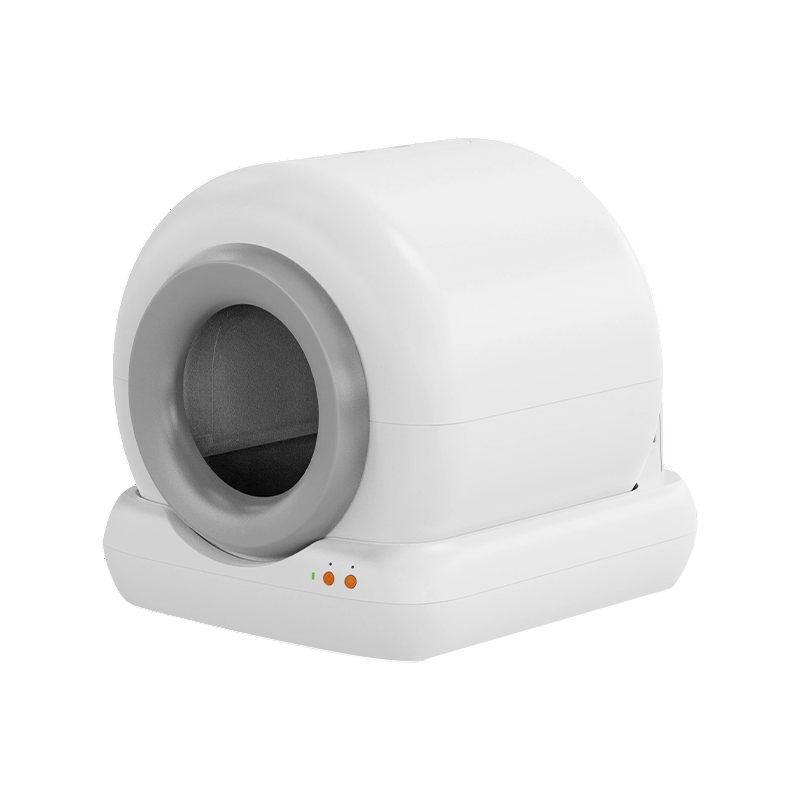
Smart litter boxes use one of three primary mechanisms to separate waste from clean litter. Rotating globe designs turn the entire litter chamber upside down or at an angle, causing clumped waste to fall through a sifting screen into a sealed drawer below. Rake-based systems drag a comb through the litter surface after each use, pushing clumps into a side or rear waste compartment. Conveyor belt systems continuously or periodically move litter through a sifting mechanism. Each approach has different noise profiles, litter type compatibility, and maintenance requirements — factors that matter more in practice than the marketing descriptions suggest.
Most automated cycles are triggered by a combination of motion sensors and timers. The box detects when a cat has entered and exited, then waits a programmed delay — typically 3 to 30 minutes, user-adjustable — before initiating the cleaning cycle. This delay prevents the mechanism from activating while the cat is still inside, which is the primary safety concern with automated systems.
Health Monitoring and Usage Tracking
This is where smart pet litter boxes offer something a traditional box categorically cannot: passive, continuous health data. Premium models use weight sensors built into the base platform to log each cat's visit — recording entry weight, duration of stay, and visit frequency. Over time, this data reveals patterns that correlate with urinary tract health, digestive regularity, and weight fluctuation.
Veterinary context makes these metrics meaningful. Increased visit frequency with short duration is a classic early indicator of feline lower urinary tract disease (FLUTD), which affects an estimated 1–3% of cats per year and can escalate to life-threatening urinary blockage — particularly in male cats — if not caught early. A smart litter box that sends an app alert when a cat's visit frequency doubles over a 48-hour period provides the kind of early warning that a visual inspection of a traditional box simply cannot match. In multi-cat households where individual visit attribution requires RFID microchip reading, the health tracking capability becomes even more valuable.
Odor Control Systems
Smart litter boxes address odor through two complementary approaches. First, rapid automated waste removal — within minutes of a visit rather than hours or days — dramatically reduces the time ammonia-generating waste is exposed to air. Second, many models include active odor control: carbon filter systems, UV-C sterilization lamps, ionic air purifiers, or ozone generators built into the waste compartment or enclosure. The effectiveness varies by design; sealed waste drawer systems with carbon filtration consistently outperform open-drawer models where odors can escape into the surrounding room.
Smart Pet Litter Box vs. Traditional Litter Box: Full Comparison
The table below compares both formats across the criteria that matter most in daily use, long-term cost, and cat welfare.
| Criteria | Smart Pet Litter Box | Traditional Litter Box |
|---|---|---|
| Upfront cost | USD 300–700+ | USD 10–60 |
| Manual scooping required | None to minimal (waste drawer emptied weekly) | Daily or twice daily |
| Odor control | High — rapid removal + active filtration | Low to moderate — depends on scooping frequency |
| Health monitoring | Weight, visit frequency, duration tracking via app | None — visual inspection only |
| Litter consumption | Lower — efficient sifting reduces waste | Higher — manual scooping less efficient |
| Noise level | Moderate — motor noise during cleaning cycle | Silent |
| Multi-cat suitability | High — frequent cycling keeps box clean between uses | Low — requires near-constant manual attention |
| Power dependency | Requires AC power or USB; outages affect function | None — fully passive |
| Cat acceptance rate | Variable — some cats refuse enclosed or motorized units | Very high — familiar open format |
| Annual ongoing cost (litter + supplies) | USD 150–250 (compatible litter + replacement filters) | USD 100–180 (litter only) |
| Travel / power outage resilience | Limited without power | Fully functional anywhere |
Where a Smart Pet Litter Box Genuinely Earns Its Cost
Multi-Cat Households
Veterinary behaviorists recommend one litter box per cat plus one additional — meaning a three-cat household ideally maintains four boxes. Managing four traditional boxes with daily scooping is a substantial time commitment. A smart pet litter box that cycles automatically after each visit keeps the box acceptably clean between uses without manual intervention, reducing the effective maintenance burden to emptying waste drawers once or twice per week. For households with three or more cats, the time savings alone — estimated at 20–30 minutes per day compared to manually managing an equivalent number of traditional boxes — represent a compelling practical argument.
Frequent Travelers and Remote Workers
One of the most consistent pain points for cat owners who travel for work is litter box management during absences. A smart pet litter box with a week-capacity waste drawer and app-based monitoring can maintain hygiene for a cat left with a pet sitter or alone for extended periods without daily manual scooping. App notifications alert the owner — or a remote caretaker — when the waste drawer needs emptying, and health monitoring data provides a passive check-in on the cat's wellbeing without requiring physical presence.
Senior Cats and Cats with Chronic Health Conditions
Cats over ten years old face elevated risk of chronic kidney disease, hyperthyroidism, and diabetes — all of which alter litter box usage patterns. A senior cat with early kidney disease may increase water intake and urination frequency significantly before clinical symptoms become obvious. Smart litter box tracking that logs visit frequency and estimated waste volume creates a continuous baseline that makes deviations immediately visible. Owners of cats with known chronic conditions report that this data becomes a practical tool for managing medication timing, tracking disease progression, and providing veterinarians with objective usage data rather than owner estimates during consultations.
Apartment Living with Odor Sensitivity
In compact urban living spaces, litter odor is not a minor inconvenience — it is a meaningful quality-of-life issue. A smart pet litter box that removes waste within five minutes of a visit and seals it in a carbon-filtered drawer effectively eliminates the ammonia release cycle that makes traditional boxes malodorous within hours. For apartment dwellers who work from home, host guests regularly, or share walls with neighbors in buildings where pet odors can become a tenancy issue, the odor control capability of a smart litter box addresses a real and recurring problem.
Where Traditional Litter Boxes Still Make More Sense
Cats That Refuse Automated Units
Cat acceptance is the most common reason smart litter box purchases fail. Cats are sensitive to both spatial changes and unexpected mechanical sounds. A rotating globe mechanism, an enclosed entry tunnel, or a motor noise during an automated cycle can cause a cat to avoid the box entirely — a problem that can escalate to inappropriate elimination and the behavioral and hygiene issues that follow. Industry surveys suggest that 15–25% of cats show initial reluctance or refusal with automated litter boxes, and a meaningful proportion of those cats never fully adapt regardless of transition time. For cats with known anxiety or a history of litter box aversion, a traditional open-format box eliminates this risk entirely.
Kittens Under Six Months
Most smart litter box manufacturers specify a minimum weight threshold — typically 1.5 to 2.5 kg (3.3 to 5.5 lbs) — before a cat is safe to use an automated unit. Below this threshold, the safety sensors may not reliably detect the cat's presence, creating a risk that the cleaning mechanism activates while the kitten is still inside. Until kittens reach the minimum recommended weight and have reliably learned litter box habits, a traditional shallow-sided box is both safer and more appropriate.
Budget-Constrained Households with One Cat
For a single-cat household where the owner is present daily and scooping takes under three minutes, the cost-benefit arithmetic of a smart litter box rarely closes. A USD 500 smart box versus a USD 25 traditional box represents a 20-year equivalent in traditional box replacements — and the traditional box requires no software updates, no replacement filter purchases, and no troubleshooting of Wi-Fi connectivity or motor malfunctions. The maintenance simplicity and zero dependency on power or connectivity are genuine advantages that no amount of technology features can fully offset for this use case.
Litter Compatibility: A Critical Factor Most Buyers Overlook
Smart pet litter boxes are not compatible with all litter types, and this restriction has real cost implications. Most rotating and sifting mechanisms require clumping litter specifically — non-clumping clay, crystal, or lightweight paper litters either do not separate cleanly from waste or damage the mechanical components. Many smart box models further specify compatible litter granule sizes and weights, effectively limiting the owner to a narrower selection of products than a traditional box allows.
Silica gel crystal litters, which are popular for odor control and low dust, are compatible with some smart litter boxes but not all — and they require more frequent full replacement rather than the clump-scooping cycle that automated systems are designed around. Before purchasing a smart litter box, confirm compatibility with the litter type your cat currently accepts. Switching litter types simultaneously with introducing a new box is a common mistake that compounds the cat acceptance challenge.
Litter Type Compatibility by Box Mechanism
- Rotating globe mechanisms: Require clumping clay or clumping tofu/plant-based litter. Crystal and non-clumping litters fall through the sifter screen without clumping, making waste separation impossible.
- Rake-based systems: Compatible with clumping clay; may struggle with lightweight or fine-grain litters that scatter during rake movement. Some models accept silica gel crystals with adjusted rake settings.
- Conveyor belt systems: Generally require medium-weight clumping litter; fine or dusty litters can clog the conveyor mechanism and void warranties.
- Traditional boxes: Compatible with all litter types — clay, crystal, tofu, paper, wood pellet, corn, and wheat — giving owners full flexibility to optimize for their cat's preferences and any respiratory or allergy sensitivities.
Setting Up and Transitioning a Cat to a Smart Pet Litter Box
A thoughtful introduction process significantly improves cat acceptance rates. Rushing the transition is the most common reason smart litter boxes get returned or relegated to storage within the first month.
- Place the smart box next to the existing traditional box for the first one to two weeks without activating the automated cleaning function. Allow the cat to explore and use it at their own pace while the familiar box remains available.
- Transfer a small amount of used litter from the traditional box into the smart box to establish a familiar scent marker that encourages the cat to recognize it as a toilet location.
- Enable the automated cycle only after the cat is using the smart box consistently — typically after one to two weeks of voluntary use. Begin with the longest available delay setting (15–30 minutes) so the cycle sound becomes familiar gradually.
- Keep the traditional box available for at least two to four weeks after enabling the automated cycle, then gradually make it less accessible rather than removing it abruptly.
- Monitor app data during the transition period to verify the cat is using the new box regularly. A gap of more than 24 hours without a logged visit is a signal to slow the transition and reintroduce the traditional box temporarily.
Cats that are introduced to a smart litter box during kittenhood — after reaching the minimum weight threshold — show significantly higher long-term acceptance rates than adult cats being transitioned from traditional boxes. If acquiring a kitten, introducing a smart litter box as the first and only toilet option from the beginning produces the smoothest outcome.
What to Look for When Evaluating Smart Pet Litter Boxes
With dozens of models now available at a wide range of price points, the following criteria help distinguish genuinely capable products from those that underdeliver on their core promises.
- Waste drawer capacity: Expressed in liters or in days between emptying for a single cat. A drawer capacity of less than five days for one cat means the maintenance burden is only marginally better than traditional scooping. Look for models rated at seven days or more per cat under normal use conditions.
- Safety sensor redundancy: The most reliable smart litter boxes use multiple safety mechanisms — infrared sensors, weight sensors, and time-based delays — rather than a single detection method. A box that relies solely on an infrared beam can fail to detect a small or thin cat, creating a safety risk during automated cycles.
- App data granularity: Basic models log entry/exit timestamps. Premium models record weight at each visit, estimate waste volume, flag anomalies, and generate trend graphs over 30- or 90-day periods. If health monitoring is a priority, verify that the app provides individual cat attribution in multi-cat households, which requires RFID microchip reading capability.
- Noise level specification: Most manufacturers do not publish decibel ratings. User reviews are the most reliable source for real-world noise assessment. Rotating globe models tend to be louder than rake-based systems; models with rubber-dampened motors are noticeably quieter than those with direct-drive mechanisms.
- Replacement part availability and subscription cost: Carbon filter cartridges, waste drawer liners, and replacement motor components should be available for purchase independently at reasonable cost. Some manufacturers lock owners into proprietary consumables at premium pricing — factor this into the total annual cost of ownership before purchase.
- Manual override and power-off safety: Verify that the box defaults to a safe, inert state during power outages and that all automated cycles can be immediately interrupted via a physical button — not only through the app — in case a cat enters the box during a cleaning cycle.

Contact Information
No. 2, Macaotou Road, Mazhu Town, Yuyao City, Zhejiang Province, China
+86-15669283739
Copyright © Ningbo Meace Pet Products Co., Ltd. Rights Reserved
