

 English
 Español
 Português

-
+86-15669283739
-

-
Home / News / Industry News / Smart Cat Litter Box Buying Guide: Features, Costs, and Practical Tips
Smart Cat Litter Box Buying Guide: Features, Costs, and Practical Tips
2026-10-22
Content
Twice a day, you scoop, bag, and carry out litter clumps. With two cats, the task doubles, and the bin needs attention every other day. The sharper the ammonia smell in the hallway, the more often you ask yourself whether there is a better way. There is: a smart cat litter box automates the separation of waste from clean litter, and for most owners the real decision is not whether to switch, but which mechanism and feature set fit the cat's size, temperament, and the room where the box will sit. This guide explains how these devices work, what to check before buying, and which costs decide whether the upgrade is worth it.
What Makes a Litter Box "Smart"?
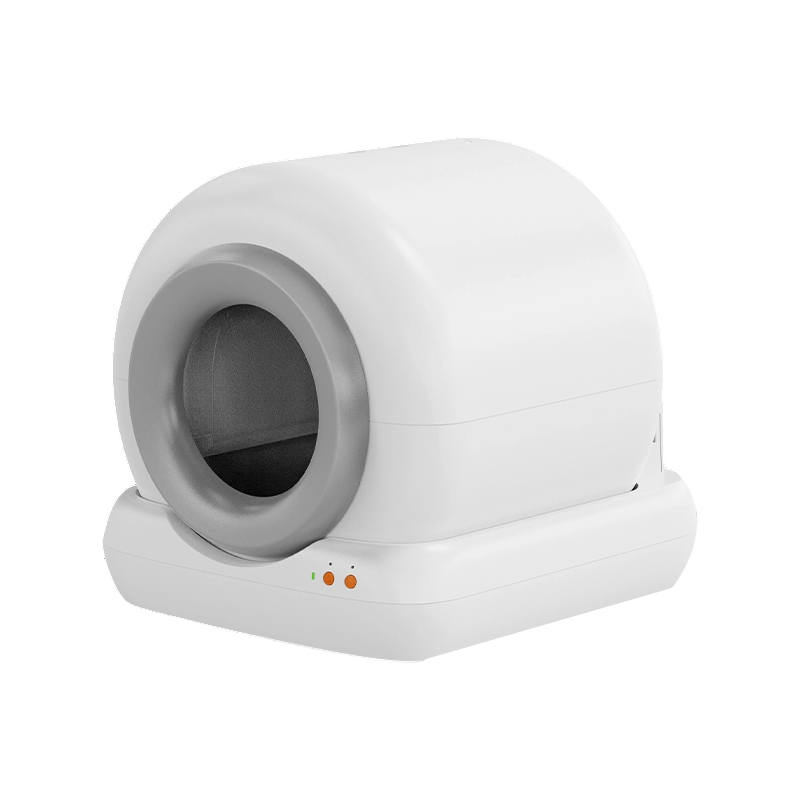
A smart litter box is not just a motorized scooper. The label applies only when three elements work together: a cleaning mechanism that removes waste shortly after each visit, sensors that detect when the cat has entered and left the unit, and a sealed waste compartment that keeps odor inside until you empty it. Many models add app connectivity and send notifications when the bin is full or when the cat's visit pattern changes.
The sensors decide when the cycle starts. Most units use weight or infrared detection. When the cat steps off the platform, the controller waits a short interval, usually 3 to 10 minutes, so the clump dries and hardens, and then runs the cleaning cycle. Safety sensors interrupt the motor if the cat re-enters mid-cycle. Understanding this sequence helps you compare the specifications that matter: detection method, waiting time, cycle length, and the logic that governs an interrupted cycle.
Three Cleaning Mechanisms, Three Trade-Offs
Most self-cleaning boxes use one of three mechanisms: a sifting tray, a rake, or a rotating drum. The mechanism determines the noise level, the amount of litter wasted, the litter types you can use, and how often the unit needs deep cleaning.
| Mechanism | How It Works | Litter Compatibility | Typical Noise | Main Trade-Off |
|---|---|---|---|---|
| Sifting tray | A perforated tray lifts or slides through the litter and separates clumps into a waste drawer. | Clumping clay | Moderate | Simple mechanism, but wet or dusty litter can clog the grates. |
| Rake | A horizontal rake drags through the litter and pushes clumps over a trapdoor into a sealed bin. | Clumping clay | Low to moderate | Compact footprint; oversized clumps can occasionally block the rake path. |
| Rotating drum | The drum rotates, screens clumps against a grid, and drops them into a tray below. | Clumping clay; some lighter alternatives | Higher | Very litter-efficient, but needs more floor space and headroom. |
Whichever mechanism you choose, the waste bin still has to be emptied by hand. A smart box reduces how often you touch waste; it does not eliminate that chore entirely.
Figure 1. Approximate weekly time spent on litter chores in a one-cat household
Conventional box, scooped twice daily
~70 minutes
Smart box, bin emptied twice a week
~20 minutes
Smart box with larger bin, emptied weekly on single-cat households
~10 minutes
What to Check Before You Buy
Start with safety and daily usability, then compare price. A discounted unit with weak safety detection is not a bargain, and a premium unit your cat refuses to enter is a larger loss. Work through this checklist before committing to a model.
- Cat size and weight range. Confirm the stated minimum and maximum cat weight. Many units ignore cats under 2 kg (about 4.4 lb), and larger breeds may not fit comfortably through the opening.
- Safety sensor logic. Look for infrared or pressure sensors that stop the cycle within a second of detecting motion. Ask how the unit behaves after an interruption: the cycle should resume only after the cat leaves.
- Litter compatibility. Most smart boxes require clumping clay litter. Crystal, silica, and plant-based litters often pass through the sifting grid or clog the rake. Read the specification before buying litter in bulk.
- Noise level. Measured output ranges from about 35 dB, similar to a whisper, up to 60 dB or more, closer to normal conversation. If the unit sits near a bedroom, noise matters more than the product photos suggest.
- Bin capacity and odor seal. A waste drawer that fills in two days works for a single cat. Multi-cat households should look for a larger bin or a design that accepts disposable liners.
- Ease of disassembly. The unit will need a monthly deep clean. Check that the drum, rake, or tray comes apart without tools and tolerates warm water and mild detergent.
It is also worth asking about spare-part availability. Manufacturers that run their own mould and injection-moulding workshops are far more likely to supply replacement rakes, drums, or sensors years after the original purchase. For a device that runs several times a day, that can be the difference between a five-year product and a one-year disappointment.
The Real Cost Picture
The unit price is only the first number in a five-year cost calculation. Litter consumption, bin liners, filters, and electricity decide whether the box is economical or merely expensive.
| Cost Driver | Conventional Box | Smart Litter Box |
|---|---|---|
| Initial hardware | $20–60 | $150–600 |
| Clumping litter | ~$15–25 per month | ~$12–20 per month |
| Liners and filters | None | ~$6–12 per month |
| Electricity | None | ~$1–3 per month |
| Weekly time | ~70 minutes | ~10–20 minutes |
Over five years, the smart box usually narrows the litter-cost gap because each cycle removes only the clump, while manual scooping tends to pull out extra clean litter. That advantage is partly offset by liners, filters, and a higher purchase price. The honest conclusion: a smart litter box rarely pays for itself on litter savings alone. Its real return is the weekly time recovered and the reduced ammonia exposure. Buy it as a time-saving household appliance, not as a way to shrink consumables spending.
Maintenance That Keeps Sensors Honest
Smart boxes fail more often from neglected sensors than from motor wear. A thin dust layer on an infrared lens can make the unit think the cat is still inside, or cause it to skip cycles entirely. Wipe all sensor lenses once a week with a dry microfiber cloth. Once a month, disassemble the drum or tray and wash it with warm water and mild soap. Avoid abrasive pads and solvent cleaners, which scratch plastic and leave residue that traps odor. Dry every part completely before reassembly, and unplug the unit before any wet cleaning. If the unit uses a charcoal filter, replace it on schedule; a saturated filter absorbs nothing and simply becomes dead weight.
How to Choose the Right Smart Litter Box
Choose in this order. First, measure the available space and check the entry height and width against the cat's size. Second, pick a mechanism that matches your tolerance for noise and your cat's tendency to startle. Third, verify safety detection, litter compatibility, and bin capacity. Fourth, calculate the total cost over three years, including liners, filters, and expected spare parts. Fifth, confirm that the unit disassembles easily and that replacement parts are likely to be available after purchase. If a model passes all five steps, it will probably serve the household well for the life of the product.
A smart litter box is a practical investment in the daily routine, not a novelty gadget. The right model works quietly in the background, keeps the room fresher, and reduces the chore to a short bin change every few days. That is exactly what most cat owners are actually looking for.

Contact Information
No. 2, Macaotou Road, Mazhu Town, Yuyao City, Zhejiang Province, China
+86-15669283739
Copyright © Ningbo Meace Pet Products Co., Ltd. Rights Reserved
